
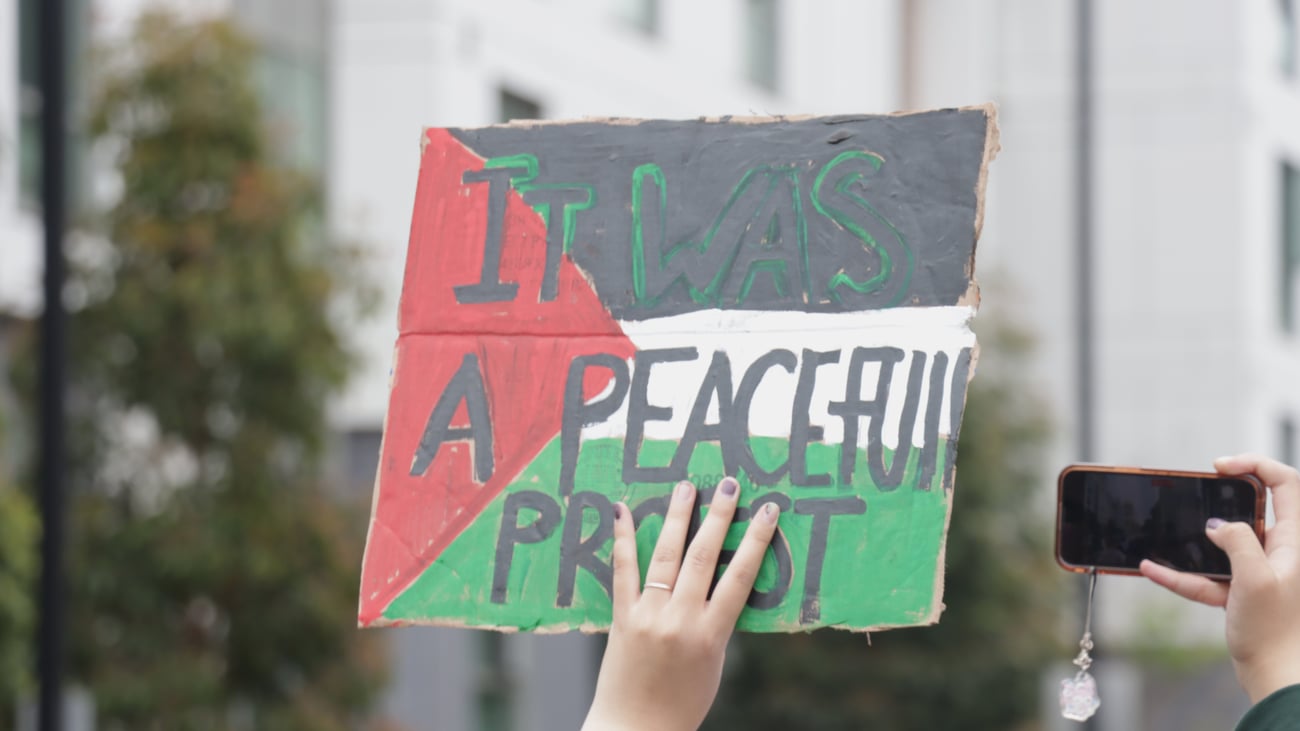
A Texas law passed in the wake of large-scale pro-Palestinian protests requires universities to ban all speech between 10 p.m. and 8 a.m. and to restrict expressive activities during the last two weeks of term.(CN) — Officials from the University of Texas system asked a Fifth Circuit panel Tuesday to reverse an injunction blocking them from enforcing portions of a state law restricting campus speech.Student groups at the University of Texas at Austin and the University of Texas at Dallas challenged portions of Senate Bill 2972, also known as the Campus Protection Act — a Texas law passed following pro-Palestinian protests on university campuses.The plaintiffs specifically object to provisions of the law requiring public universities to adopt policies banning all “expressive activities” between 10 p.m. and 8 a.m., as well as expressive activities during the last two weeks of each term that involve invited speakers, amplified sound or percussive instruments.Last year, a Texas federal judge issued a preliminary injunction blocking the challenged portions from being enforced in the University of Texas system, finding they likely violate the First Amendment.But Texas Assistant Solicitor General Daniel Ortner said the lower court lacked jurisdiction to enter the injunction, as the law regulates universities, not students.“SB 2972 directs universities to enact student speech policies,” Ortner said. “It is not itself a student speech policy, but plaintiffs sought a preliminary injunction only from SB 2972 itself, and not from any of the specific campus policies. They cannot do so.”U.S. Circuit Judge Andrew Oldham seemed to agree with this argument.“You may be injured. I totally understand why you would think you would be,” he told attorney Adam Steinbaugh, representing the plaintiffs. “But it sounds like all of the injuries are [due] to the way that the law is effectuated and the policies, not from the law itself.”But Steinbaugh, from the Foundation for Individual Rights and Expression, argued the statute limits students’ speech by telling universities they must impose specific restrictions.“The statute here commands these defendants,” Steinbaugh said. “It tells them ‘shall,’ that they ‘shall’ implement these policies, and that has very predictable downstream impacts on the students here. It chills their speech. It’s not just the chill latent in the statute, but it makes the students’ speech the direct object or the ultimate object of the statute itself.”Steinbaugh said the law prohibits a reporter for The Retrograde, a student newspaper at the University of Texas at Dallas that is one of the plaintiffs in the suit, from covering breaking news after 10 p.m.Meanwhile, he said, the Fellowship of Christian University Students at the University of Texas at Dallas, another plaintiff organization, wouldn’t be allowed to invite ministers to campus for their weekly meetings during the last two weeks of the semester or to hold morning prayer meetings before 8 a.m.“If you look at the plain text of this statute, it applies to a breathtaking amount of speech,” Steinbaugh said.U.S. Circuit Judge Edith Brown Clement, a George W. Bush appointee, and U.S. Circuit Judge Dana Douglas, a Joe Biden appointee, joined Oldham, a Donald Trump appointee, on the panel.Subscribe to our free newslettersOur weekly newsletter Closing Arguments offers the latest about ongoing trials, major litigation and rulings in courthouses around the U.S. and the world, while the monthly Under the Lights dishes the legal dirt from Hollywood, sports, Big Tech and the arts.Additional Reads
University of Texas asks Fifth Circuit to unblock campus speech law
Full Article
Original Source
Read the full article at Courthousenews →KhanList aggregates and links to publicly available news content. We do not host full articles from third-party sources. Always verify important information with original sources.