
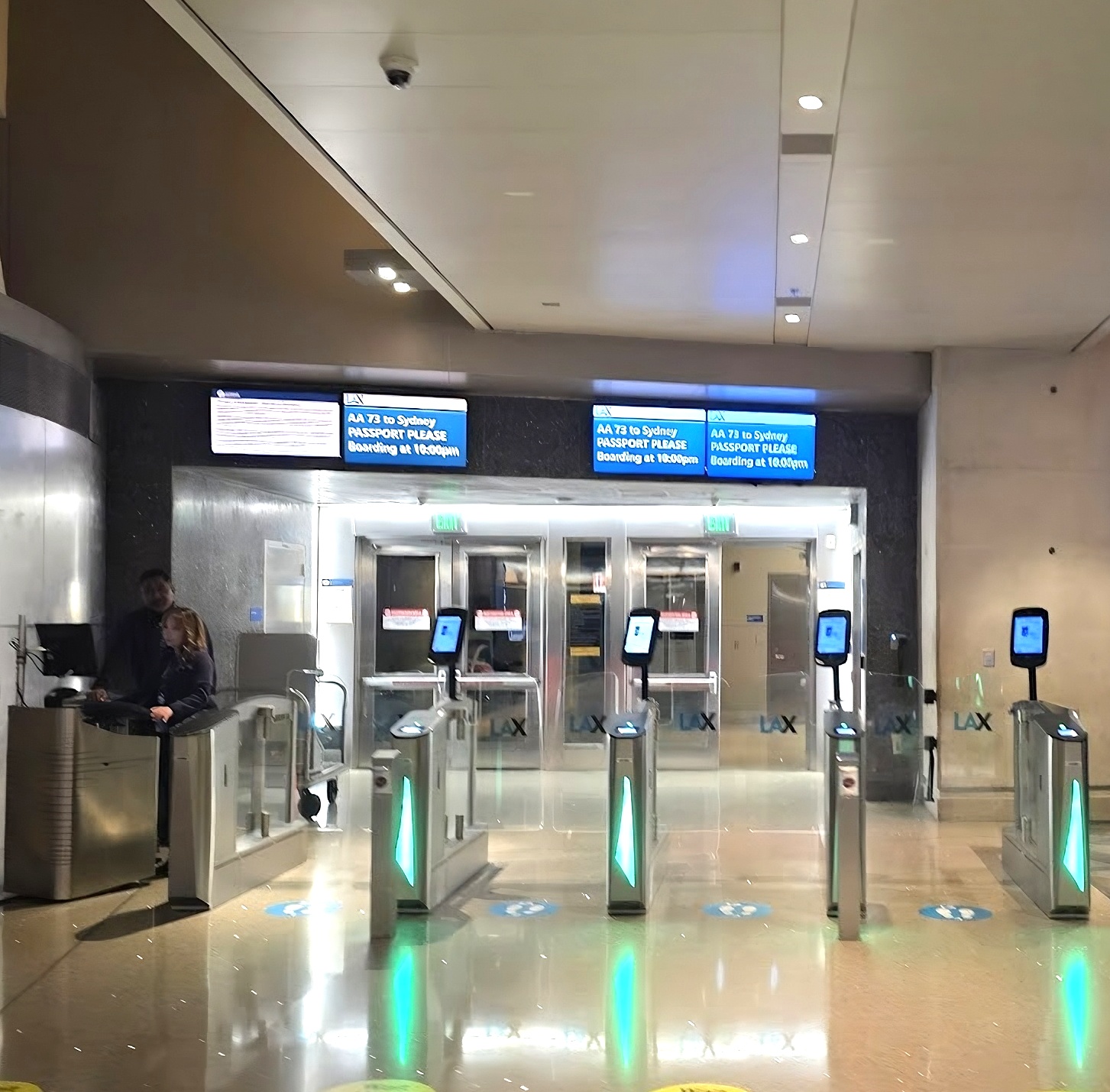
United Airlines CEO Scott Kirby flew American Airlines, saw its new electronic boarding gates at Dallas-Fort Worth airport, and emailed his team asking why United wasn’t doing the same thing. His employees told him similar gates were already planned for Houston. He saw it as something worth copying. When American announced the equipment, I thought it would make flying worse. Kirby says he’s flown American, Delta and Southwest at least three times each over the past year, looking for things they do better than United. He lives in Dallas, and is regularly spotted on American but Southwest is based at Dallas Love Field as well. American supplied this rendering when it announced the gates in April: The glass barriers open after the system validates a boarding pass. American says the equipment can control the pace at which passengers enter the jet bridge, reduce manual work (cost savings on gate agents), and let employees spend more time helping customers (or just pocket the labor savings). The airline has since opened its new DFW Terminal C pier with the technology at all nine gates. Airports are increasingly moving to e-gates, where facial recognition is used to confirm identity. So far this has mostly been used for international departures. The government wants more than a person looking at you and confirming it against the photo in your passport. At many international departure gates, a camera is mounted at the gate or held by a government customs officer or airline staff member, to take a live photo of each passenger during boarding. That image is sent to the Customs and Border Protection cloud-based Traveler Verification Service, which compares each person’s mugshot to a gallery built from your passport or visa photo and compares it to the flight manifest. The government has already checked the flight manifest and decided who can travel and who can’t. Now they want to match people against the manifest. If there’s a match, you’re allowed to depart the country. If there’s no match, you get a manual document check. The biggest boarding bottlenecks aren’t actually the act of scanning a barcode. In fact, without human assistance each passenger may take longer to scan and wait for the gate to open. Too many carry-ons, limited overhead bin space, gate-checking bags, families bunching up during preboarding and standby processing at the gate seem to be bigger issues. These gates do not solve any of that – just queue management and access control. The worst part of the experience is actually what Kirby says is his standard for judging this: “I think of air travel for customers through the lens of traveling with small children,” Kirby said. “I have seven kids. I know what it’s like. I’ve tried to make it easy for people to travel with young children because if we do that, it’s going to be great for everybody.” There’s also the privacy concern I flagged when American announced the rollout. The manufacturer offers facial recognition as an option. Where the data is drawn from, the error rates, and what happens to your photo after all are areas of concern. Topics on this page
United’s CEO Loves New American Airlines Boarding Gates—Here’s Why They Make Flying Worse
Full Article
Original Source
Read the full article at Viewfromthewing →KhanList aggregates and links to publicly available news content. We do not host full articles from third-party sources. Always verify important information with original sources.