
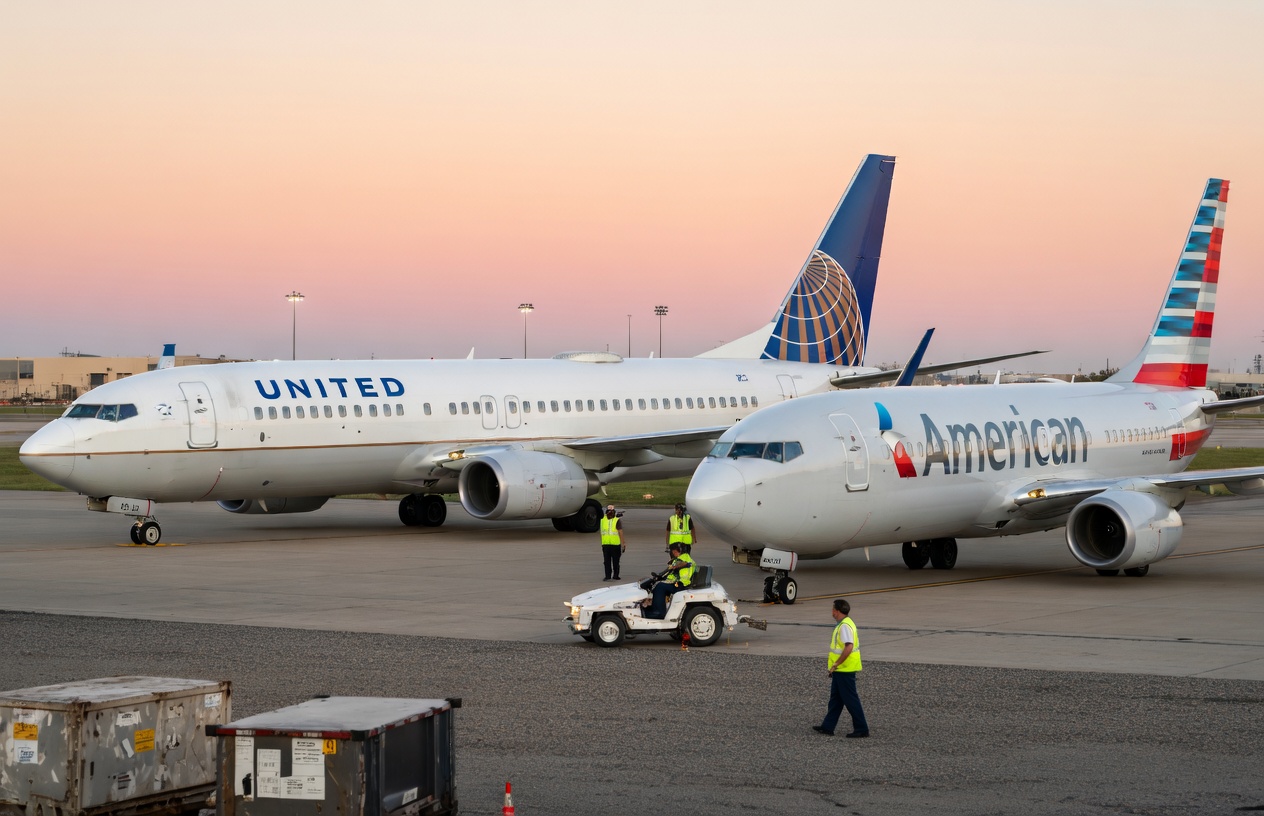
United Airlines CEO Scott Kirby says American Airlines talked with him about a merger and hadn’t said no. He learned they were rejecting it from a press release. American disputes his account. And Kirby’s own explanation back in April sounded fairly different. He’s also still arguing critics didn’t understand the airline he wanted to build. If that were true, that would be on him. But I understood it. I even wrote about the potential benefits at the time. None of that made it plausible. In a new interview with The Dallas Morning News, Kirby says American’s public rejection surprised him: “They talked to us and they hadn’t said no.” “I texted [American Airlines CEO] Robert [Isom] and he said he was going to call me, and I said, ‘I read the public statement.’” American says it disagrees with Kirby’s account, but doesn’t offer particulars. On April 17, they issued their public rejection: “American Airlines is not engaged with or interested in any discussions regarding a merger with United Airlines.” I pointed out then that American hadn’t denied having earlier conversations. They were describing their position at that moment. Kirby’s account suggests this was right. Then ten days later, Kirby put out this explanation: “I was hoping to pitch that story to American, but they declined to engage and instead responded by publicly closing the door.” He tells the newspaper he personally wrote that April 27 message while staying at Amangiri, during an hour his wife spent at the spa. His April account left the impression of an approach American wouldn’t entertain. Now he says they were having conversations and thought those would continue until American ended it publicly. Kirby is frustrated that the proposal leaked and that people dismissed it. “All of the criticism about this would not get through regulatory muscle was looking at it through a traditional commodity lens, and I am the one person who knows what we were planning to do for 100% certainty because I’m the one that was going to do it.” His argument was that United would grow the combined airline and improve its product, rather than simply cut its way to a profitable deal. He also acknowledged back in April though that domestic divestitures would be necessary, shedding some of the combined airline’s size. I’ve argued that American has assets with far more potential than its management has delivered. United was in a somewhat similar position a decade ago. Kirby could bring a clear vision, better technology and somewhat more consistent execution. But airlines already compete over schedules, nonstop flights, extra legroom, lounges, internet and how they handle a cancellation. The government’s merger guidelines already recognize quality, innovation and choice. Antitrust analysis isn’t just about commodity seats. American can improve while remaining an independent competitor. And a better American gives United more reason to keep improving. Kirby even supplies an example in this interview: he admired American’s electronic boarding gates at Dallas-Fort Worth and asked his team why United wasn’t doing the same thing. I’m skeptical of the gates, but he saw something a competitor did and wanted his airline to respond. Kirby has explained that he wants a substantial Miami hub and more access to New York JFK (they’ll relaunch JFK next year with JetBlue slots). His approach to President Trump could have helped with the federal government’s position. But I laid out in April why Washington wouldn’t be the end of the process. States could still sue. A federal settlement doesn’t bind state attorneys general who aren’t parties to it. During the T-Mobile-Sprint merger, a group of states pursued its own challenge despite the Justice Department’s settlement. United would have to deal with that risk even with a friendly administration. Foreign regulators would have their own say. American and US Airways needed European Commission approval for their merger. Combining United and American’s international operations would raise competition issues outside the United States, too – in Europe, Japan, Australia and South America at least. Kirby knows what he intended to do. In this interview, he doesn’t explain the remedies he’d offer in Chicago, how he’d reorganize those international partnerships, or how he’d satisfy the authorities outside Washington. Those were problems with the proposal even for people who understood why he wanted to buy American. Topics on this page
United CEO Says American Airlines Considered His Merger Pitch—Then Blindsided Him With A Press Release
Full Article
Original Source
Read the full article at Viewfromthewing →KhanList aggregates and links to publicly available news content. We do not host full articles from third-party sources. Always verify important information with original sources.