
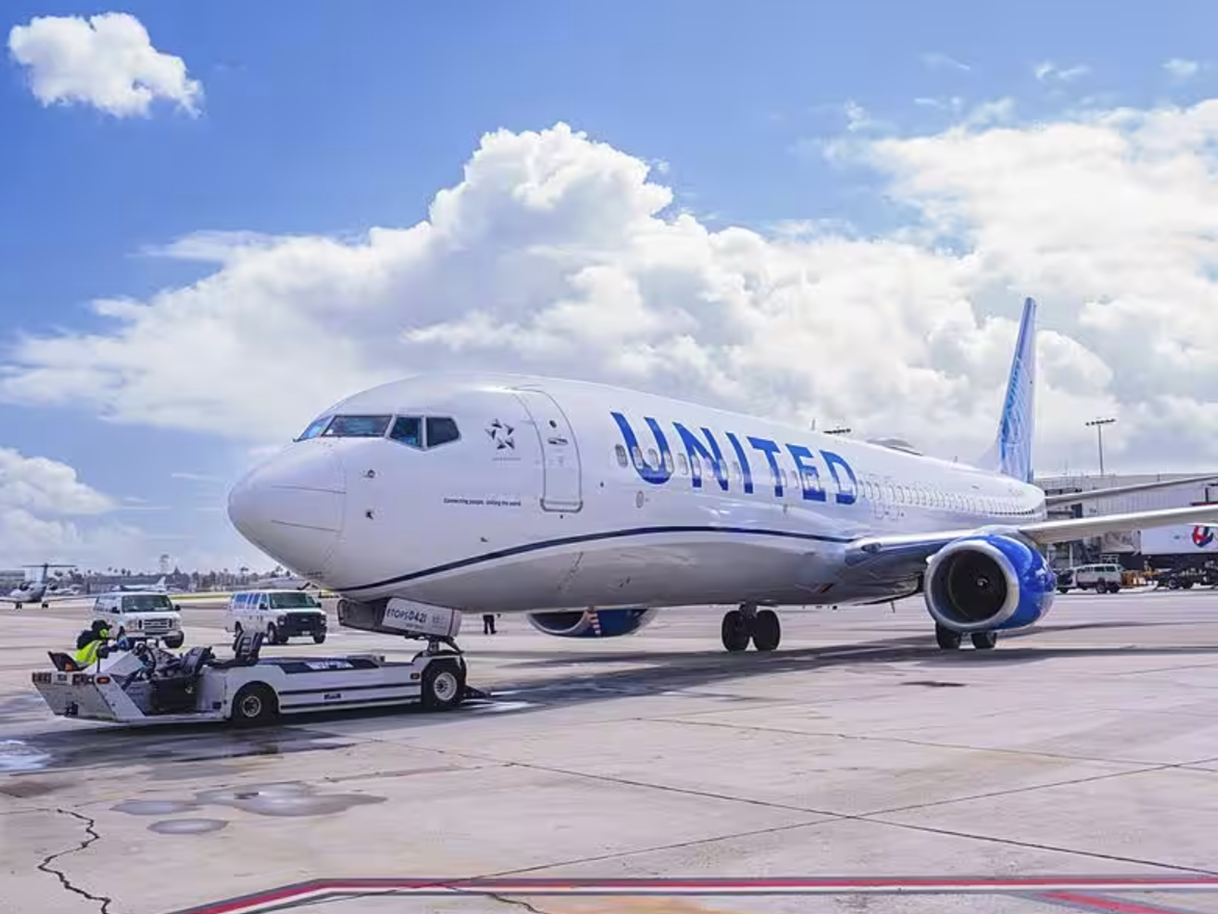
United Airlines has hundreds of lie flat business class seats sitting in storage for an aircraft that was supposed to enter service six years ago. The Boeing 737 MAX 10 still isn’t certified. And now it may turn out that the seats United bought for the plane can’t actually be installed. CEO Scott Kirby told CNBC that United has “a bunch of lie-flat seats” it doesn’t know what to do with because they don’t fit on other aircraft. Enilria flagged the predicament and suggested that United could use the seats on MAX 10s flying to Hawaii. But AirInsight reports that United may have a more fundamental problem: the MAX 10’s floor beams might not be able to support the weight and mounting loads of United’s planned premium cabin. United Boeing 737 MAX How United Was Supposed To Use These Planes And Seats United became the MAX 10 launch customer in 2017, initially converting orders for 100 smaller MAX aircraft. Deliveries were expected to begin in 2020. In 2018, then-United President Scott Kirby said they were testing lie flat seats for some of the planes. The idea was to replace premium Boeing 757s on routes such as Newark–Los Angeles and San Francisco and to expand lie flat service to markets such as San Francisco–Washington Dulles. The reported plan eventually developed into a dedicated subfleet with about 22 direct aisle access lie flat seats in a 1-1 configuration. At one point as many as 50 MAX 10s were expected to receive the premium cabin. By 2023, patent drawings showed the seat concept: an extremely dense herringbone design with passengers facing the aisle at a 49-degree angle. The design shared space between adjacent passengers, one received shoulder room above space used by the next passenger’s arm, in order to squeeze direct aisle access into a 737 fuselage. AirInsight identifies the stored seats as Elevate Altitude seats, adapted at a slightly different angle from the product United now uses on its Airbus narrowbodies. If the original 50-plane plan called for 22 seats apiece, that would have meant more than 1,100 seats before accounting for spares. The MAX 10’s certification slipped year after year. They switched several orders for MAX 9s, and shifted their premium transcontinental strategy to the Airbus A321neo. United’s new Coastliner fleet will have 20 Polaris suites, 12 Premium Plus seats and 129 economy seats. Forty of the 50 aircraft are supposed to be flying by early 2028. Kirby says the stored seats don’t fit these aircraft. Seat tracks, attachment geometry, cabin curvature, electrical systems, monuments, seat angles and certification assumptions are all specific to an installation. United can’t simply bolt a 737 seat into an A321. And the MAX 10 doesn’t have the range to take over the transatlantic missions planned for United’s A321XLRs. The MAX 10 Is Finally Nearing Certification The MAX 10 completed its final planned certification flight on July 28 after 976 flights and more than 2,060 flight hours. The smaller MAX 7 received Federal Aviation Administration certification on August 3, including changes to the engine anti-ice system and cockpit alerts that are also being incorporated into the MAX 10. Boeing expects the MAX 10 to be certified this year, with deliveries beginning in 2027. WestJet, not United, is expected to get them first though United still has 167 MAX 10s on firm order. Its latest schedule calls for up to about 20 in 2027. Most of those planes can receive United’s standard domestic interior, reportedly with 20 first class recliners (American says they’re putting in 24), 64 Economy Plus seats and 105 regular economy seats. United’s Lie Flat Seat Is Approved, But The Installation Isn’t Enilria reports that the seats themselves received Federal Aviation Administration approval but that changes to the MAX 10 may prevent their installation. That distinction is entirely plausible. A seat manufacturer can demonstrate that its product satisfies dynamic crash testing, restraint and injury requirements. The airline and aircraft manufacturer still have to prove that the exact installed configuration works in that aircraft—at that angle, attached to those seat tracks and floor beams, surrounded by those monuments and wired into those systems. If AirInsight’s report is correct, potential fixes include revised fittings, spreader plates, relocating the seats, changing their angle, reducing weight or reinforcing part of the floor. Each could require new engineering, testing and regulatory approval. Flydubai and Copa already operate lie flat products on smaller MAX variants. Thompson markets its VantageSOLO direct-aisle seat for both Airbus A320-family and Boeing 737-family aircraft. The problem with this seat, in this layout, seems to be transferring loads through this installation. That could still be costly enough that United decides not to bother. Enilira explains that, The seats have to withstand significant force during an emergency landing so that seats don’t break loose. Lie flat seats are heavy with myriad moving parts and in the event of a forward impact, they can be pulled forward. The MAX 10 is the longest version of the 737, and uses lightweight material to compensate. A thinner structure might have difficulty supporting these seats. And the FAA has taken an exacting approach to MAX certification after the grounding of the aircraft and the door plug issue at Alaska Airlines. They seats themselves could be certified, but installation on this aircraft might become a problem without reinforcing how they’re attached which becomes its own cost and certification issue. Delta Has Certification Problems With Its 44-Seat First Class A321s Delta’s premium Airbus A321neo program provides a remarkably close comparison. Delta planned seven A321neos with 16 Delta One flat-bed suites, 12 Premium Select seats, 54 Comfort seats and 66 regular economy seats. But its planned Safran VUE suite wasn’t certified. The first aircraft intended for the premium layout arrived in 2024 and sat rather than entering service. Delta eventually filled the otherwise empty space with an absurd 44 domestic first class recliners: 11 rows, more than twice the usual 20 seats. That allowed the seven aircraft to earn revenue between Atlanta and Los Angeles, San Francisco, Seattle and San Diego rather than continuing to sit in storage. Delta called this a temporary response to a supply chain problem. But it now appears to have abandoned the Safran seat entirely in favor of the already-established Thompson VantageSOLO, pushing the intended premium product back at least another couple of years. The difference is that Delta’s planned seat wasn’t certified. United’s seat reportedly is, but may not be approved for a MAX 10 installation. Either way, that could mean standard first class seats that aren’t as heavy, and using the aircraft on missions appropriate for that product. Topics on this page
United Bought Hundreds Of Lie Flat Seats For Its Delayed 737 MAX 10—Now They May Not Fit
Full Article
Original Source
Read the full article at Viewfromthewing →KhanList aggregates and links to publicly available news content. We do not host full articles from third-party sources. Always verify important information with original sources.