
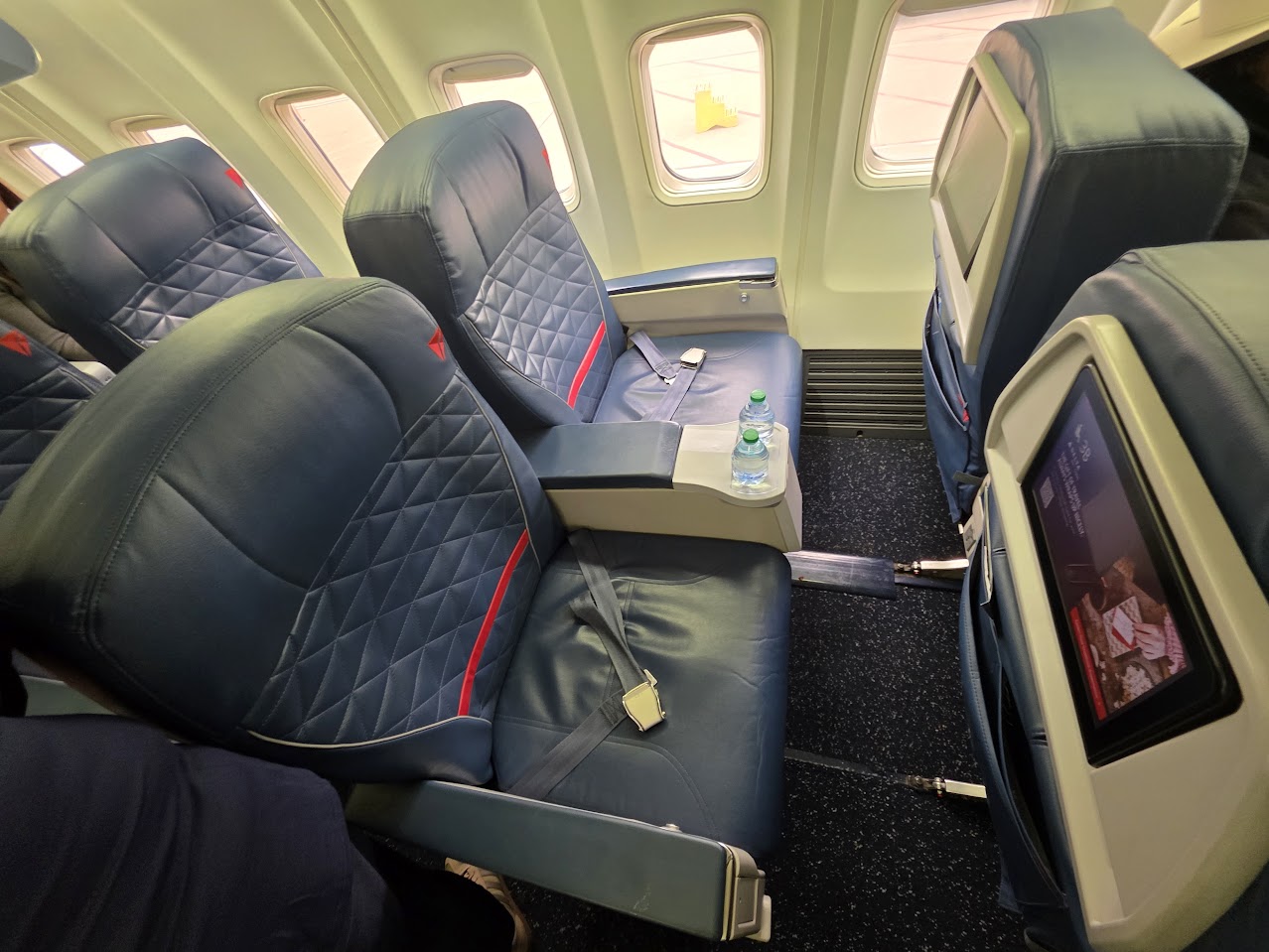
Delta now sells domestic first class tickets with a $300 change fee and no advance seat assignment. United is introducing its own version, with fewer included bags and no flight changes. JetBlue’s new BlueFirst cabin hasn’t even debuted, and already there’s a stripped-down fare for it. Airlines think they can make more money by selling first class as two different products, one where you charge passengers extra fees to escape the hassles they associate with coach. That way they can charge higher prices for the people willing to spend more. But it’s also giving American Airlines an opportunity: make first class the ticket customers buy when they want those hassles to end. My bet is that American copies United and Delta. But an airline trying to persuade customers it’s finally worth paying more to fly ought to consider what it could earn by refusing. What Basic First Class Takes Away These fares retain the seat and onboard service (such as it is) of the cabin purchased. They make the experience surrounding the seat worse. United First Base is scheduled to roll out this fall. Choosing your seat costs extra. One checked bag is included instead of two. A carry-on remains included. Voluntary itinerary changes aren’t permitted. Voluntary cancellation incurs a fee. Reducted mileage-earning United is also introducing Base fares for short-haul international business class, which is essentially domestic first. A general member without an eligible United card earns no redeemable miles. An eligible cardholder without elite status earns 3 miles per dollar, with higher rates for elites. That’s a remarkable treatment of someone buying a premium cabin ticket. Delta First Basic has been available in some domestic and short haul Latin markets since July 8. Restrictions include: Seats assigned after check-in, with advance selection available for a fee in some cases. One included checked bag instead of two, before any additional eligible card or status benefits. A $300 change or cancellation fee for trips originating in the United States or Canada. Cancellation incurs a fee. No same-day confirmed changes or same-day standby, even for elites. Base mileage earning of 2 miles per eligible dollar rather than 5. A regular domestic coach ticket can offer more flexibility than a basic first class ticket costing far more. JetBlue has released restrictions for BlueFirst Base, with seat assigned to you before departure, change and cancellation fees, standby incurs a fee, and points-earning cut by two-thirds. Spirit Had This Idea Already Breeze sells the first class seat separate from the ‘Nicest’ bundle. Buying the seat doesn’t have to include the carry-on or checked bags. Frontier is going to have a big recliner and so will Allegiant. That’s the competitive set that United, Delta and JetBlue have positioned their product alongside. The budget airlines are moving toward the majors’ physical product while these major airlines converge on restrictions like an ultra-low cost carrier. Spirit pioneered the Big Front Seat proposition, which they found themselves with when they converted to a low cost carrier fee-based model because it was too expensive to remove the seats. It could be a great value, but you were still flying Spirit! United and Delta still provide meals. Even Starlink will only be a brief advantage for United, it isn’t fully rolled out yet and Frontier is adding it (Frontier will thus offer a better experience than Delta). If the customer starts thinking of the purchase as just a bigger chair, rather than a seamless experience, the premium halo dissipates. First Class Sells The Feeling That You’ve Escaped The Hassles People buy first class for several reasons. Some need the room. Some want to work. Some are spending their employer’s money. Some are celebrating, or rewarding themselves, or simply buying the feeling that this trip will be easier. The product’s value includes not having to deal with about every little thing. You pick your seat, you bring your bags, you don’t have the frictions or mental load of separate transactions. And in first class the seats are usually almost identical, unless you’re just trying to avoid the bulkhead. First class isn’t a Veblen good as such, where the high price drives demand because of the status it confers. But it has an aspirational component. People pay for more than seat width + drink + meal. That’s undermined if passengers experience it is as fees and restrictions. Then you notice that, The food isn’t very good. Service may be inconsistent at best. It’s still just a domestic recliner, often with tight pitch. Extra legroom coach can be perfectly comfortable, especially with an aisle seat. If seat width is the main concern, buying the coach seat next to you can be a cheaper way to get the same thing. Most airlines will sell you two seats! Bringing Price Discrimination To The Forward Cabin Airlines want to sell empty premium seats to someone who won’t pay regular price, without letting every passenger who would have paid more buy the cheaper ticket. That’s part of why they sell discounted upgrades to passengers who already bought coach. One way to do it is advance purchase restrictions – cruise passengers might booking many months out, and be more price sensitive than business travelers (but they might not be!), but it’s often closer to departure that the airline knows what their excess inventory actually looks like. So differentiating the product rather than gating the fare can separate out customers. That creates the strategy of making the product worse to try to earn more from it. But domestic first class seats are similar enough that a solo traveler won’t pay much to select one. Someone booking close to departure may not value flexibility very highly. An elite may already have enough of an extra baggage allowance. So mild restrictions may not actually even be enough to work. But when they’re painful enough to matter they also damage the experience and it’s no longer aspirational. There’s also a longer-term effect that won’t show up clearly in early revenue reports. Customers become less willing to pay for the brand and the cabin at all. Measuring success requires accounting for customers eventually trading down and moving to competitors not just the percentage who buy up to standard. Qatar And Emirates Have More Luxury To Give Up Qatar Airways sells Business Lite without included Al Mourjan lounge access. Emirates charges Business Special customers for advance seat selection. Both retain premium brands even with the unbundling. That pushes back against my thesis. It’s possible for restrictions on premium products to coexist with a premium brand. But it doesn’t show that a U.S. domestic recliner cabin can absorb the same hit just as well. They’re still offering flat seats and better service and a reputation nurtured over decades. American Could Seize This Opportunity Renée Zellweger famously says in Jerry Maguire that “first class used to be a better seat, now it’s a better life.” Ironically the product had been in broad decline when the film came out in 1996, and would get much worse (the meals especially)! Nonetheless, American has an opportunity to promote that first class can be just a seat on competitors, but on American it’s a more seamless experience. American’s premium push is fundamentally about generating more revenue. I’ve written about Robert Isom’s shift toward revenue production and the connection between product investment, premium customers and loyalty. That’s a much stronger business than trying to cut costs at the margin from a high cost operation, leading to declining revenues. It’ll be tempting to copying competitors’ new fees. But they have an opportunity to offer a value proposition that’s finally better than their competitors, without even new costs, by explaining simply that when you buy first class, choosing your seat, checking your bags and changing your plans are included. American could sell first class as the purchase that ends the friction. That should make their product preferred among premium customers who don’t need to read the fine print on every ticket purchase. I’m not betting that they pursue this strategy. Topics on this page
United And Delta Are Cheapening First Class—American Airlines Could Win By Refusing To Follow
Full Article
Original Source
Read the full article at Viewfromthewing →KhanList aggregates and links to publicly available news content. We do not host full articles from third-party sources. Always verify important information with original sources.