
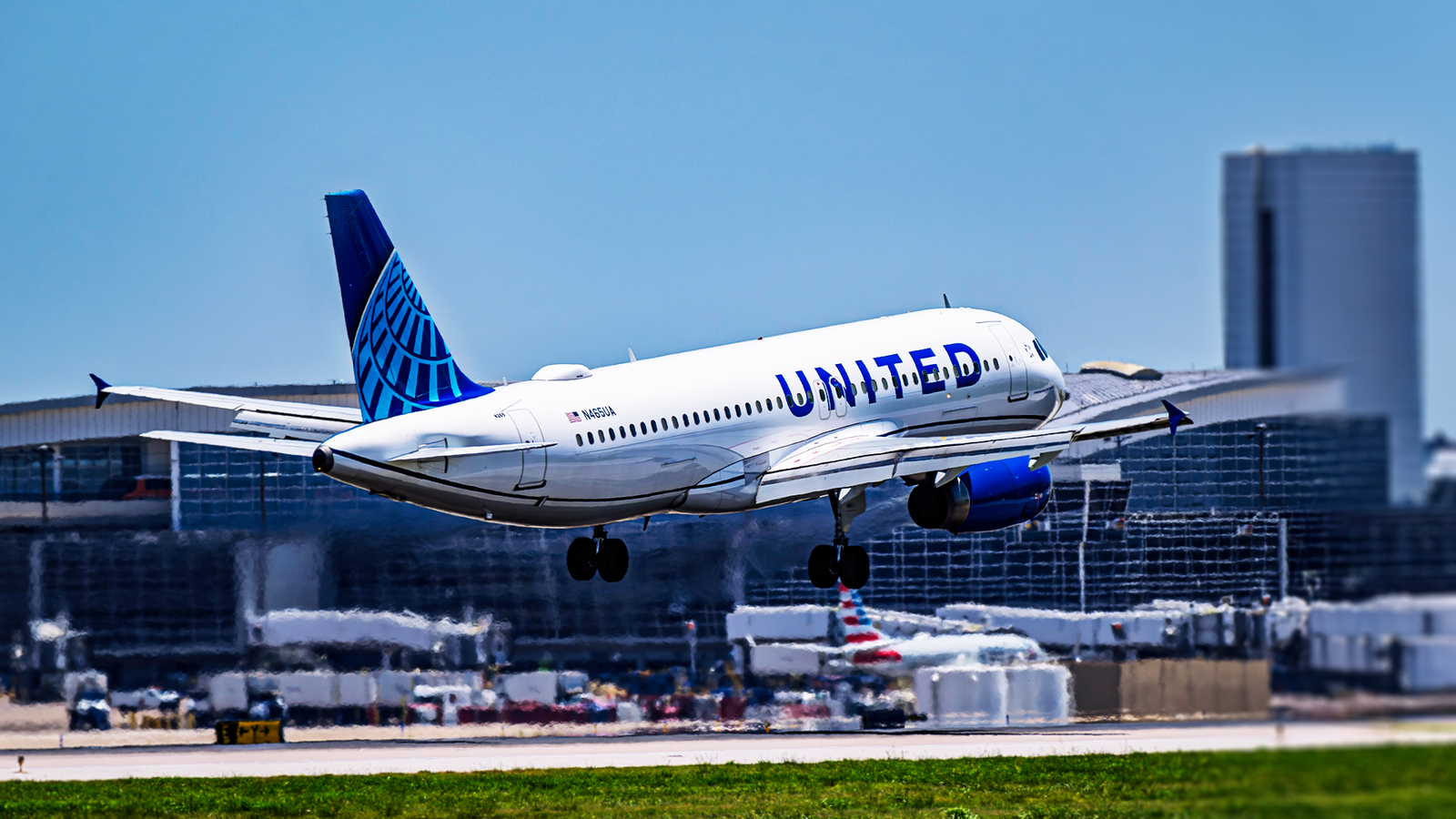
Out on the remote hardstands of Ronald Reagan Washington National Airport (DCA), an unusual retirement scene has caught the attention of many looking out of a cabin or terminal window. Parked without titles, stripped of its engines, and bearing the raw scars of a ground accident on its lower aft fuselage, Airbus A320-232 registration N470UA sat for several months, being disassembled piece by piece. For the aviation community, watching a classic twenty-five-year-old narrowbody get written off is a familiar aviation rite of passage. What makes this particular airframe's demise uniquely painful, however, is that it had just spent its final operational years showcasing United Airlines' flagship cabin modernization project before a freak ramp accident cut its career short. Was Supposed To Be An Ordinary Day The sequence of events leading to N470UA's premature retirement began in the early morning hours of May 16, 2026. Having completed an overnight positioning and revenue run from Chicago O'Hare International Airport(ORD), the twinjet touched down at Reagan National, with a quick turnaround before heading back out on the domestic network, as reported by Simple Flying. Instead, a high-clearance catering truck operating on the ramp collided with the aircraft's rear fuselage, inflicting substantial structural damage to the lower tail section and skin frames. Ground crews immediately grounded the airframe, canceled its return leg, and towed it to a maintenance holding area, where engineering inspectors assessed the extent of the kinetic impact. Initial ramp assessments quickly revealed that the impact had compromised key structural load paths in the lower tail assembly. With the aircraft formally logged as damaged beyond economical repair, United Airlines faced an immediate choice: commit to a massive structural rebuild or pull the plug on the quarter-century-old hull. Why Was The Aircraft Retrofitted? The real operational tragedy of N470UA's write-off lies in the timing of its heavy maintenance history. As shown in a passenger cabin walkthrough from PC Aviation, this airframe previously cycled through maintenance to receive the comprehensive United NEXT interior upgrade, bringing a 2001-delivered legacy hull up to modern standards for its final months of service. The airline upgraded the older A320 fleet to match the interior standards of newer aircraft as these aircraft begin their retirement. Passengers boarding during its final year of flying experienced a completely transformed cabin environment featuring high-definition seatback touchscreens, Bluetooth audio pairing, USB-C fast-charging ports, spacious overhead bins, and dynamic LED mood lighting, as highlighted by Live and Let's Fly. United had invested significant capital into modernizing these older cabins to ensure passenger comfort matched its incoming fleet deliveries. Cabin Feature Previous A320 Configuration United NEXT Retrofit Configuration Inflight Entertainment Personal device streaming only Seatback touchscreens with Bluetooth pairing Power Provision Overhead or shared power ports Individual AC, USB-A, and USB-C ports at every seat Overhead Bin Volume Standard luggage capacity Enlarged bins accommodating roller bags upright Cabin Ambience Standard fluorescent lighting Programmable multi-zone LED mood lighting Pouring millions of dollars of cutting-edge cabin hardware into an airframe delivered in February 2001 made strategic sense for maintaining fleet consistency across short-haul routes. On the other hand, upgrading a high-time hull makes the sudden loss through a ground accident an exceptionally bitter financial pill to swallow. No Way Back To Service? When a major structural damage event occurs, airline engineering teams don't necessarily share the same sentimental attachment to an airframe that many aviation enthusiasts do. Instead, they have to work with the reality of the situation. A strike to the rear lower fuselage near the pressure bulkhead and tail cone attachment frames is a real problem for an aircraft, necessitating intricate, multi-month structural surgery that few carriers are willing to fund on an aging narrowbody, even if it has a more modern interior. Repairing such damage means shoring up the fuselage, drilling out thousands of fatigued rivets, splicing in replacement skin panels, and recertifying the pressurized hull for cyclic fatigue. For a modern, factory-fresh aircraft with three decades of life ahead, that capital expenditure is justifiable. For an airframe that has already logged twenty-five years of intense domestic cycles, the repair bill quickly eclipses the asset's residual market value. Faced with those prohibitive repair costs, United Airlines chose the pragmatic path major fleet operators worldwide have taken. Sinking capital into a prolonged structural overhaul didn't make sense for United, so the airline elected to retire the airframe permanently and let it serve a second life as a parts donor. Are The Wings Already Gone? Once an airline decides to write off an airframe, it begins dismantling almost immediately to reclaim high-value components for the active fleet. At Reagan National, technical teams wasted no time removing parts from N470UA, taking off parts like the engines and cockpit avionics modules. Images uploaded to Reddit showed the aircraft sitting without its wings and the entire tail section, though United Airlines confirmed to Simple Flying that "the dismantling concluded earlier this month" and made no impact to their operations. Of course, parts are always in high demand to fill the secondary parts market, but what about the upgraded cabin inside? The high-end cabin components installed during its United NEXT retrofit, including the brand-new seatback entertainment servers, touchscreens, and galley inserts, are incredibly valuable inventory. Just like the aircraft components, these pristine interior parts will be carefully extracted and reallocated as line-replaceable units across United's remaining retrofitted Airbus A320 and Airbus A319 fleets, ultimately to make sure that the modernization investment is not entirely wasted. Salvage Component Category Primary Destination Post-Write-Off Turbofan Engines Spares pool for active A320 operational support United NEXT Cabin Screens Inventory spares for remaining retrofitted narrowbodies Avionics & Flight Controls Certified pre-owned component pool for line maintenance Aluminum Airframe Shell Industrial recycling and scrap metal processing Even though N470UA will never carry revenue passengers again, its components continue to support the airline's daily operations across North America. As noted in analysis from Simple Flying, United's A320 fleet is on borrowed time, with the airline looking to phase out these aircraft entirely in favor of more modern variants from the A320 family like the Airbus A321neo. Despite this, the A320ceo is still in service, so the loss of N470UA isn't a complete disaster for United. Where Does The A320 Really Fit In A Massive Fleet Overhaul? Credit: Airbus The loss of a single retrofitted A320 is undoubtedly disruptive, but it comes against the backdrop of a massive, deliberate fleet modernization campaign affecting the entire United fleet. The airline has publicly laid out plans to phase out its aging Airbus narrowbody fleet entirely by around 2030, as Engine Cowl reported. The intended replacement aircraft, like the A321neo, have already seen great success for United, especially in the 'Coastliner' subfleet, which brings a more premium feel to United's Airbus narrowbody fleet. With next-generation single-aisle jets arriving in steady waves from production lines, the operational impact of losing one older airframe is easier to manage. Although N470UA retired several years ahead of its scheduled sunset date after an unfortunate ramp mishap, it still aligns with a long-term strategy that prioritizes modern twin-jets over an outgoing frame. If this were a brand-new aircraft, it would be an entirely different story. United's overarching fleet transition cushions the blow of losing a recently modernized aircraft. The expansion doesn't stop at upgrading the A320 fleet; United expects to integrate over 800 new jets by 2032 as part of the United Next initiative. This will give the carrier enough structural flexibility to manage isolated line losses without altering its long-term capacity projections. Rather than leaving a gap in daily operations, the unexpected withdrawal of N470UA simply accelerates a scheduled fleet transition, allowing United to reallocate active flight deck crews and maintenance resources toward incoming twin-jets that offer significantly lower seat-mile costs across the domestic network. A Continuation Of The A320 Story The premature demise of N470UA is a striking reminder of how fragile commercial aircraft assets truly are. Despite a multi-million-dollar cabin overhaul that brought its twenty-five-year-old interior up to date, a single moment of carelessness on a busy airport ramp abruptly sealed its fate. Passengers flying across United's domestic network will continue enjoying the updated cabin standards on other retrofitted airframes that received the same upgrades as N470UA. That said, this particular jet's story ends not in the skies above Chicago, but in the disassembly bays at Washington Reagan. Its legacy will still live on, however, as parts from the aircraft aid others still in service. N470UA's story really is a fascinating case study in aviation economics, where the cost of repairing structural damage on an aging airframe outweighs even the finest modern interior upgrades an airline can buy.
United Airlines Wrote Off An Airbus A320 After Recently Refreshing It With The NEXT Mod
Full Article
Original Source
Read the full article at Simpleflying →KhanList aggregates and links to publicly available news content. We do not host full articles from third-party sources. Always verify important information with original sources.