
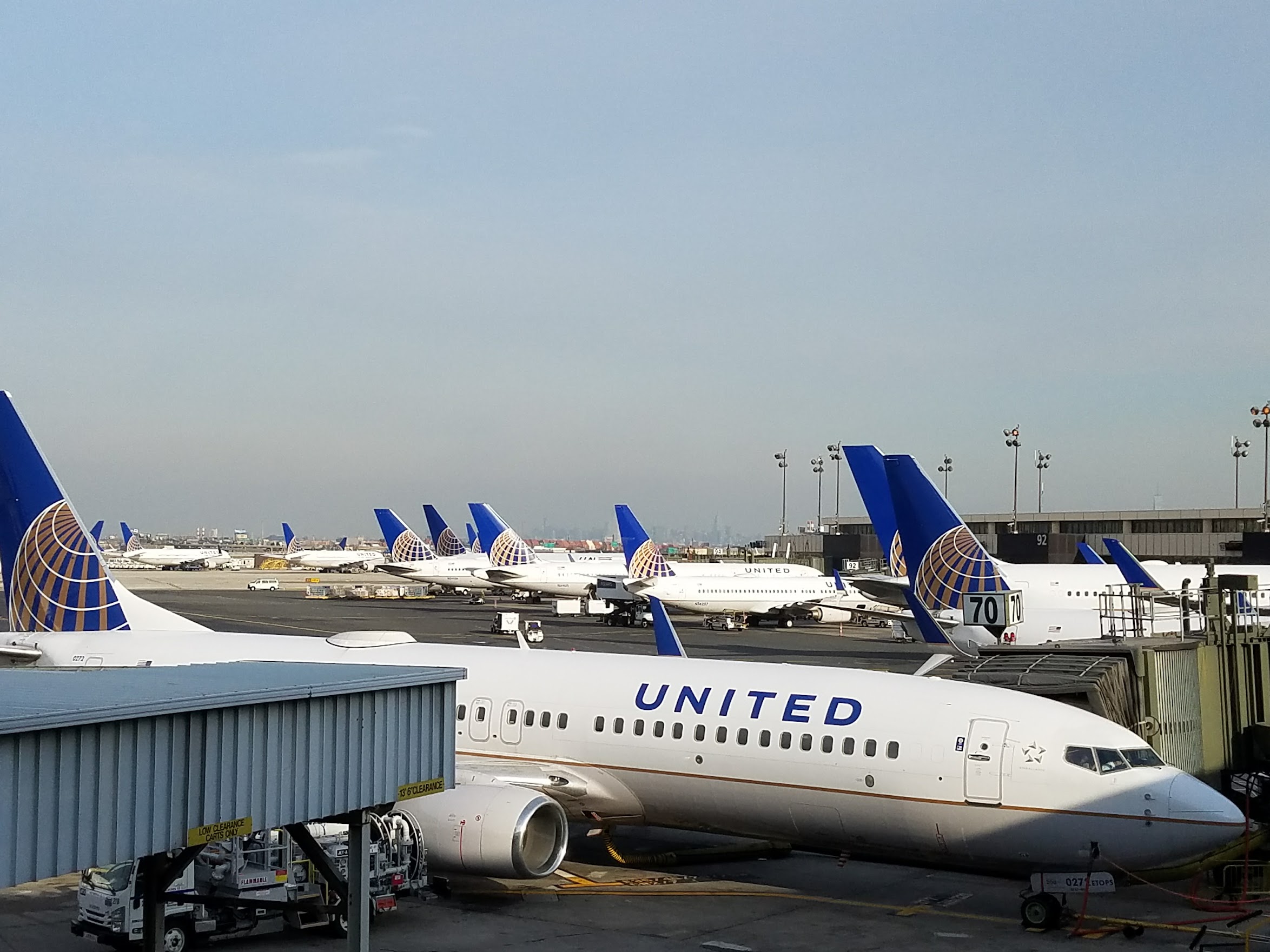
United Airlines generated $11.5 billion in ancillary revenue in 2025, more than any airline in the world, according to a new IdeaWorksCompany report, United Is Winning The Race For Brand-Loyal Consumers. United Airlines CEO Scott Kirby argues they’re winning the race for ‘brand loyal customers’ And this report treats revenue, and things to sell, as being the same thing as (a) premium and (b) loyalty. But they aren’t. United has gotten very good at merchandising. But they’re not actually super premium, and their offerings aren’t necessarily making customers more loyal. United is good at giving customers reasons to spend more, and charging a premium when they do. That isn’t the same thing as becoming a premium airline. And neither of these things demonstrates that customers love the brand – although United is clearly a much better airline than when Scott Kirby joined a decade ago. What Makes Up United’s $11.5 Billion Number IdeaWorks uses an expansive definition of ancillary revenue. It includes bags, assigned seats and onboard sales, but also miles sold to banks and other partners, commissions, advertising and the value it assigns to features inside fare bundles. United uses the term more narrowly in its SEC filings. The airline says it collected $4.8 billion in 2025 from baggage, premium seats, inflight amenities and other ticket-related fees, up from $4.5 billion in 2024 and $4.1 billion in 2023. That filing and the IdeaWorks total roughly reconcile with $6.6 billion to $6.7 billion of MileagePlus-related accounting, including revenue recognized when miles are redeemed and partner-related marketing and travel benefits. Of United’s $4.8 billion direct-fee bucket, federal data identify $1.35 billion as checked bag fees. The remaining $3.45 billion includes seats, inflight amenities, change and cancellation fees and other ticket-related items. Using United’s rounded totals of $59.1 billion in operating revenue and 181 million passengers, the IdeaWorks figure works out to about 19.5% of revenue and $63.50 per passenger. It increased about 8.5% from $10.6 billion in 2024, while the per-passenger number rose about 4%. IdeaWorks’ prior yearbook put 2024 total ancillary revenue at $10.6 billion for United, $10.2 billion for Delta and $9.2 billion for American. Yet MileagePlus revenue was only $6.2 billion, behind both SkyMiles and AAdvantage at $7.1 billion each. Subtract those rounded figures and United had about $4.4 billion of non-loyalty ancillary revenue, versus $3.1 billion at Delta and $2.1 billion at American. United won the ancillary race despite its weaker credit card economics, not because MileagePlus beat Delta. United’s underlying credit card deal was negotiated in 2015. It was inferior to Delta’s and American’s. It ran through 2025. Scott Kirby was frustrated with this, and in February 2020 got Chase to agree to increase what it paid each year, and extended the deal through 2029 Kirby regularly complains about living under an ‘old deal’ but he actually extended that deal. But United really is a seat fee machine. A Senate investigation found $1.3 billion of United seat fees in 2023, more than the airline’s $1.2 billion of bag fees. United disclosed 2.6% of revenue from seats, versus 1.8% at American. Delta reported much less, but excluded most Comfort+ revenue because it treats that as a separate cabin while United included Economy Plus. So it is fair to say United plainly out-monetized American on seats. United has more premium seats, including extra legroom seats, than competitors. United’s international mix probably reduces the incidence of some bag and ordinary seat assignment fees. But long trips also encourage people to pay – and pay more – for extra legroom and upgrade buy ups. None Of This Supports United Success In Brand Loyalty There’s no measure here of retention, share of wallet, willingness to pay, card acquisition, card spend or preference data. And there’s also a timing problem. 2025 results are reported, and then United’s initiatives are detailed. However, Relax Row doesn’t begin until 2027, and the report’s $928 price example belongs to Air New Zealand, not United. The A321XLR row with a blocked middle seat goes on sale later in 2026. There is no United price or take rate. The premium-heavy Elevated 787 began flying in April 2026. Premium Plus and Polaris Base fares began in 2026. (Customers also aren’t ‘more loyal’ and United isn’t ‘more premium’ by giving customers less than before at the same price.) None of these products generated United’s 2025 result. MileagePlus Is Becoming A Paid Subscription Program The report is most revealing when it describes United’s 2026 loyalty changes as “new, bold, and powerful.” A general MileagePlus member used to earn 5 miles per dollar on a standard fare. Now a member without a United card earns 3, while a member holding an Explorer card or better earns 6. On Basic Economy and the new premium-cabin Base fares, a general member without the card earns nothing while a qualifying cardholder earns 3. Cardholders also receive at least a 10% award discount, rising to at least 15% for Premier members with a card. The report calls the cards a subscription that purchases better earning, which is exactly right. It suggests that savings from cutting non-cardholder earnings were used to fund cardholder benefits, but I’d point out that by making the program less valuable for non-cardholders that encourages people to take the card today but sacrifices the attractiveness of the program for new members which means fewer people likely to take the card in the future In other words, they’re pulling future card acquisitions into the present. They’re simultaneously accelerating growth and risking long-term value, which makes it a fascinating play to watch play out. And making membership more valuable by making the outside option worse is lock-in, not evidence of affection. High retention created by switching costs may wind up smart, but isn’t suggestive of customers believing United offers the best airline or the best loyalty program. It also leaves out high-value customers who cannot or will not get a United card, including many foreign residents and new arrivals to the United States. An international airline shouldn’t define loyalty only around access to a Chase account. United Is Premiumized More Than It Is Premium United has the most interesting international network of any U.S. airline. It has an excellent app and Polaris Lounges can be good (but aren’t the best). It offers abundant Economy Plus and premium cabin inventory. Its wine game is strong, and the airline has a meaningful execution lead as it installs seatback screens and Starlink. United says its newer Signature Interiors produce Net Promoter Scores 10 points higher than older interiors, while Kirby says seatback entertainment lifted scores by 15 points on packed holiday flights. In 2025 premium revenue grew 11%, loyalty revenue 9% and Basic Economy revenue 5%. This is premiumization and segmentation, not a wholesale transformation into Singapore Airlines. Standard Polaris business class is perfectly decent. It was engineered to provide a flat bed and direct aisle access while preserving density. The new suites with doors are different and better, but remain a tiny new-delivery subfleet rather than the ordinary United experience. Premium Plus is competitive. Economy Plus is extra legroom, not a separate premium service. They even lag by charging those passengers for drinks. United’s food has usually lagged, despite its recent wine spending. Service is variable and not meaningfully differentiated from peers. Delta remains generally better at operational and service consistency, though it’s declined in reliability. MileagePlus offers Star Alliance reach, no fuel surcharges and useful cardholder inventory, but its award pricing has deteriorated and it is not obviously better than AAdvantage or Alaska’s Atmos Rewards. Survey data doesn’t show a premium leader. In the 2026 J.D. Power study (which I’m not generally a fan of) United didn’t rank among the top three in business, premium economy or economy. ACSI places United below Delta and American and just below the industry average. Screens distinguish United from today’s American and Southwest, but not Delta, and American has now announced their return. Starlink is terrific and United is ahead in deployment, but American, Alaska and Southwest are adopting it. United has very temporary advantages here. United has more premium seats. United has a stronger premium revenue mix, which is also a function of hub location and stage length. United attracts and monetizes valuable customers. Which is all different from United being a premium brand customers prefer even when schedule and price are equal. Scott Kirby’s Real Moat Is The Network Scott Kirby’s theory is that no single $5 million decision to improve wine will make enough customers switch airlines. String several hundred decisions together, he says, and the brand becomes different. He now calls United’s advantage “structural, permanent and irreversible.” But the product is not actually meaningfully better than that of competitors today. Kirby’s argument that only two U.S. premium airlines can succeed is actually geographic. It is about holding strong positions in New York, Chicago, San Francisco and Los Angeles while maintaining a comprehensive global network — not actually offering a better product, better service, or better loyalty offerings. The original strategy Kirby articulated when he first got to United was make the network more useful and win more local customers and corporate business, which makes MileagePlus and the card more attractive, which would fund a still better network. I recently looked at United’s claimed brand gains in Chicago. From 2019 through 2025 United’s domestic seat share at O’Hare rose 3.9 points while American’s fell 3.8 points. Their passenger-share gap moved almost exactly with the capacity gap. The schedule can explain much of what Kirby calls loyalty. Loyalty can move share but that doesn’t seem to be what United has achieved. They’ve built back a network that was allowed to deteriorate under disgraced CEO Jeff Smisek. And they’ve gotten very good at merchandising – offering products to upsell into, actually executing on sales, and pairing that with a network that makes buying up attractive and necessary. United does not need to offer the world’s best business class or friendliest flight attendants. It needs to be the most useful airline for enough valuable customers, then be good enough across hundreds of details that they stop looking elsewhere. The app reduces friction. Routes create excitement. Screens, Wi-Fi, lounges and wine remove reasons to defect. Status and a credit card raise the cost of leaving. The really interesting question is what United could actually accomplish if it delivered more elite benefits than extra legroom seats without booze, better business class seats across its fleet, and consistently elevated service. But those aren’t things that explain the success United has had to date. Topics on this page
United Airlines Makes $11.5 Billion From Extras—But Paying More Doesn’t Mean You’re Getting More
Full Article
Original Source
Read the full article at Viewfromthewing →KhanList aggregates and links to publicly available news content. We do not host full articles from third-party sources. Always verify important information with original sources.