
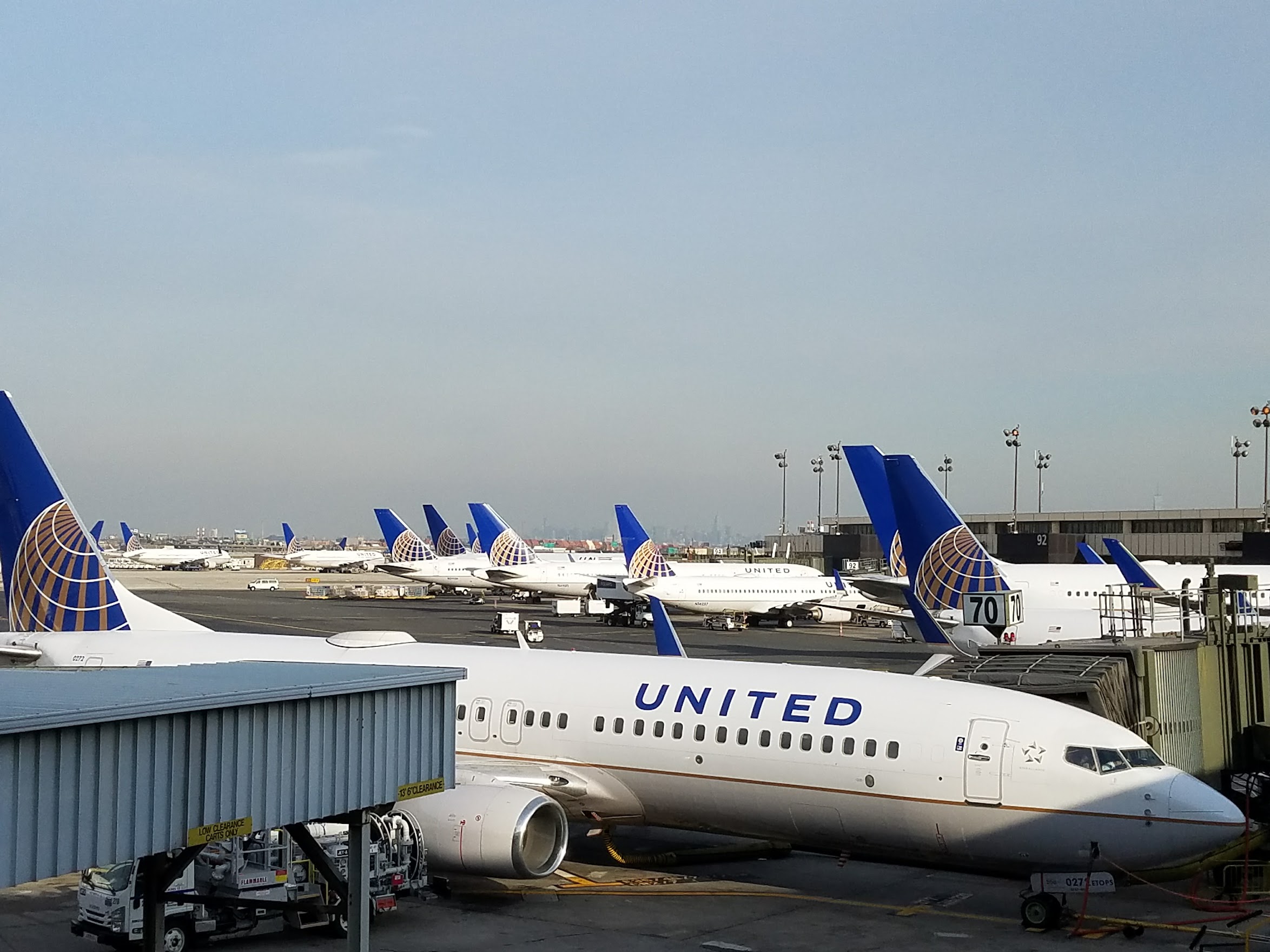
United Airlines is now worse than American at handling checked bags. Delta’s cancellation rate has nearly doubled. And American, which has spent years bumping more passengers than any other airline, cut involuntary denied boardings 84% in the third quarter. The latest federal airline statistics show some results that don’t fit the usual reputations. It also shows why calling an airline “premium” requires more than nicer seats and better wifi. Strong operational performance isn’t enough but it’s the table stakes. An airline needs to get the basics right first, including delivering bags alongside their owners, as close to on-time as possible. The Department of Transportation’s November Air Travel Consumer Report covers September and the first nine months of 2026. Here’s the domestic flight performance through September, and I take a look at how this performance compares to earlier trends. Airline On time2025 On time2026 Canceled2025 Canceled2026 Alaska Airlines* 77.44% 78.64% 1.01% 1.30% Delta Air Lines 79.57% 78.31% 1.19% 2.25% United Airlines 76.77% 76.20% 1.34% 1.75% American Airlines 73.09% 73.30% 2.57% 2.99% Southwest Airlines 78.10% 73.08% 0.85% 0.96% Allegiant Air 74.69% 72.59% 0.44% 0.73% Frontier Airlines 69.96% 70.21% 1.78% 2.15% JetBlue Airways 73.42% 67.74% 1.43% 4.08% Every airline listed canceled a larger share of flights than a year earlier. American ranks fourth for punctuality with an improvement of just 0.21 percentage points. Southwest and JetBlue each lost more than five points. United’s Premium Pitch Gets Ahead Of Its Operation United has improved its cabins, technology and network. I’ve argued that its broader schedule explains a lot of the customer preference Scott Kirby attributes to the brand. It’s a better airline than it used to be. Its operational results still don’t support treating it as anything close to an all-around leader. United blames the locations of its hubs, and says that it does well considering where it opreates. Its annual report points to hubs at the “most congested and constrained airports in the country.” It also benchmarks departures against competitors at its own hubs, rather than treating all airports as equally easy places to operate. In September, the category covering air traffic control, airport operations, traffic volume and ordinary weather accounted for delays on 8.57% of United’s flights, versus 5.78% at Delta. United also canceled a smaller percentage of flights than Delta or American through September, and it ranks third for on-time arrivals. But its punctuality declined and its cancellation rate rose from 1.34% to 1.75%. That’s nearly a 1/3 increase. And the weaknesses extend beyond on-time performance and completion factor. United ranks last for mishandled baggage. American was worst in full-year 2024, while United finished last in 2025. United remains last for the first nine months of 2026, and finished last separately in July, August and September. Here are mishandled bags per 1,000 checked bags, with a lower number being better. This includes delayed, damaged, lost and stolen bags. Airline network Jan.–Sept. 2025 Jan.–Sept. 2026 Allegiant Air 0.9 1.3 Southwest Airlines 3.9 3.2 JetBlue Airways 3.1 3.4 Delta Air Lines 4.2 3.6 Alaska Airlines* 5.1 5.0 Frontier Airlines 3.8 5.2 American Airlines 6.8 6.6 United Airlines 7.4 6.9 United mishandles bags at nearly twice Delta’s rate. American remains last if you look only at the mainline airline: 7.2 per 1,000, versus United’s 6.6. United Express drags down United’s network result, while American Eagle improves American’s. Missed connections can cause bags to miss flights, too. So baggage problems aren’t entirely independent of congested hubs and delayed aircraft. Passengers buying connecting travel, though, have choices on which airline to connect and United doesn’t get a pass there because its hubs are less reliable. Then there are wheelchairs. United and Delta handled almost identical volumes: 105,534 at United and 105,559 at Delta. United mishandled 1,269. Delta mishandled 373. Delta Warned That Its Problems Would Last Through Summer. They Did. Back in May, I covered Delta’s cancellation problems and its executives’ warning that fixing them would take through the summer. Pilot availability, crew scheduling and recovery after disruptions were central problems. Chief Operating Officer Dan Janki said, “It’ll take us a little bit of time here as we work through it through the summer.” And Delta’s pilots didn’t actually go along with changes to contractual provisions that would boost reliability. They want something in return, and Delta hasn’t been willing to pay. Delta’s cancellation rate rose about 89%, from 1.19% to 2.25%. Subtracting the first-half figures from the latest report gives a third-quarter cancellation rate of 2.08%, versus 1.13% a year earlier. This is still a problem. Southwest’s Boarding Changes Had Costs That Were Easy To See Coming I warned before Southwest introduced checked bag fees that pushing luggage into the cabin would slow boarding and create more gate checking. Assigned seating then removed the incentive to board quickly to grab the best available seat, while making passengers hunt for bin space near a particular row. By March, flight attendants were pushing back over the consequences. Southwest was trying to get more flying out of its aircraft while making boarding less efficient. Through September, Southwest’s on-time arrival rate fell from 78.10% to 73.08%. Southwest handled 71.1 million checked bags, down from 84.7 million, while scheduling almost exactly the same number of domestic flights. That’s 16% fewer checked bag enplanements, now that they charge most passengers separately. People are now carrying their bags into the cabin instead of checking them as often. JetBlue’s Nice Onboard Product Can’t Make Up For Their Operation I’ve long described JetBlue as good in the air and a mess on the ground. Mint can be excellent. Even coach offers has been relatively pleasant, although JetBlue is enshittifying it in order to make room for domestic first class seating. But the operation lets down the product. The first nine months were bad: 67.74% on time and 4.08% canceled, both worst in the industry and their cancellation rate was nearly three times the same period last year. The summer was worse. Combining the July, August and September figures, only 61.85% of scheduled flights arrived on time during the third quarter. JetBlue canceled 6.28%, about one in sixteen flights. In July alone, it canceled nearly one in ten. September improved substantially, to 71.98% on time and 2.13% canceled. JetBlue still finished last on both measures that month. Actually getting a handle on this won’t fix JetBlue’s finances. They’re a baseline for a turnaround. Disruptions add expense, make repeat business harder to win, and undermine the value of the product the airline is spending money to improve. JetBlue needs customers to be able to buy its flight without budgeting for everything going wrong. Alaska Has Been A Perennial Leader Alaska leads the network on-time rankings at 78.64% and canceled 1.30% of its flights. That’s a better cancellation rate than any of the three largest network airlines. This is a longstanding strength. Back in 2015, I was asking why Alaska didn’t get more recognition for running such a strong operation when Delta received so much of the credit. Buying Hawaiian added an operation benefiting from the islands’ generally favorable weather. I pointed out that statistical advantage last year, and Hawaiian is now included in Alaska’s figures. But Alaska’s ability to run a good airline wasn’t something it bought with Honolulu. It was doing that long before the acquisition. American’s Bumping Numbers Are Finally Changing American involuntarily bumped 684 passengers in the third quarter, down from 4,318. That’s an 84% reduction, with almost unchanged passenger volume. Mainline American’s count fell nearly 90%, from 2,042 to 208. I broke the news of American’s new mandate against involuntary bumping. Airport managers can approve more compensation to find volunteers. Employees are supposed to keep the door open and take a delay if necessary. Volunteers can even be confirmed onto the very next departure when it’s already full. That directive took effect September 30. Nearly the entire quarter measured here came before it. The 84% decline shows the improvement that was already underway as American became more willing to pay volunteers. There’s another American improvement buried in the network totals. Comparing the third quarter with the same period last year: Mainline cancellation rate: improved from 2.21% to 1.46%. Regional partner cancellation rate: worsened from 2.44% to 3.17%. Combined network: almost unchanged, from 2.33% to 2.34%. American’s own flights became materially less likely to cancel over the summer, while American Eagle erased that improvement in the combined result. The bumping change also leaves Frontier looking particularly bad. It accounted for 69% of all involuntary bumps in the third-quarter table, despite carrying about 4% of the passengers. Delta secured 49,231 volunteers that quarter and involuntarily bumped nobody. Frontier recorded 841 volunteers and 2,514 involuntary bumps or roughly three unwilling passengers for every volunteer. Topics on this page
United Airlines Is Now Worst For Checked Bags, Delta’s Cancellations Nearly Doubled—What The Latest Federal Data Shows
Full Article
Original Source
Read the full article at Viewfromthewing →KhanList aggregates and links to publicly available news content. We do not host full articles from third-party sources. Always verify important information with original sources.