
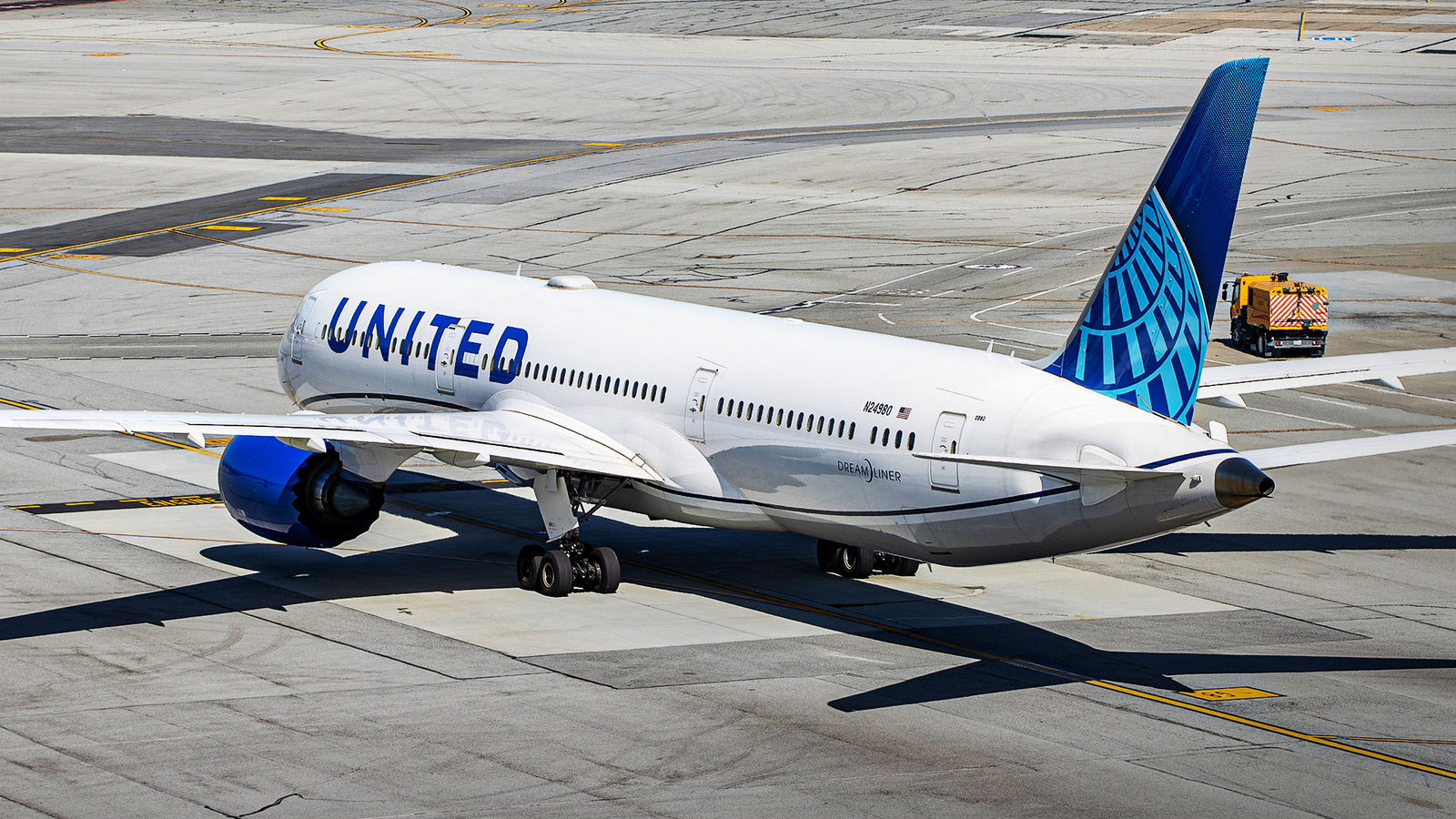
Published Sep 18, 2026, 7:00 AM EDT Daniel comes to Simple Flying with a business focused approach to the aviation world. Daniel enjoys analyzing strategy and how companies move against each other to gain a step ahead in the skies. Besides strategy, Daniel also has a passion for aircraft design and the history of aviation. Based in New York The Boeing 777-300ER is the literal flagship of United Airlines' fleet, but in practice, it's the Boeing 787 that is the pride of the airline. It's the 787 that is prominently featured in company advertising, and earlier this year, United debuted its latest long-haul interiors on the 787-9. Dubbed the 'Elevated Interior', the airline now offers all-new Polaris suites with doors, front-row Polaris Studio seats, as well as updated Premium Plus and economy seats on these planes, along with a new premium-heavy layout that includes 64 Polaris suites and 35 Premium Plus seats. The Elevated 787-9s, which are United's flagship planes, were first delivered in early 2026, and their first international route was United's flagship service from San Francisco International Airport (SFO) to Singapore Changi Airport (SIN), operating as UA1. The departure to SIN went well, but the return service to SFO ended up turning around due to mechanical issues. The same aircraft that suffered these problems continued to be plagued by technical faults and was even sent back to Boeing for repairs. The Aircraft In Question N61101, tail number 1101, is United Airlines' 49th 787-9, and its first aircraft to feature the Elevated Interior. In addition, the aircraft also features a new seating configuration with 64 Polaris suites, 35 Premium Plus seats, and 123 economy seats (including 39 Economy Plus seats), for a total of 222 seats. This aircraft is part of the carrier's '78L' subfleet, and there are four aircraft coded as 78L. The remaining Elevated 787s are coded as 78K and feature a higher gross weight. In total, there are 11 787-9s with the Elevated Interior and the premium-heavy layout. Proudly wearing the airline's '100 Years' livery, 1101 was first delivered to United in February 2026 and initially entered service operating familiarization flights from San Francisco to Washington-Dulles and Houston. The aircraft made its international debut on April 22, flying from SFO to SIN, while the Elevated 787-9s also began flying to London Heathrow Airport (LHR) shortly afterwards. Today, the fleet operates both daily flights between SFO and SIN, all three daily flights between SFO and LHR, as well as daily flights from SFO to Zurich and Seoul. These aircraft feature United's best interiors and most premium-heavy layout, while also having more range than anything else in the carrier's fleet. It's therefore being deployed on the carrier's routes with the highest premium demand, and the Singapore route is also notable for being United's longest year-round route (its services from Houston to Sydney are longer, but are seasonal). The 787 is performing exceptionally well on these routes, including to Singapore, but the problem, at least in the recent past, was operational reliability. Problems With 1101 April 22 wasn't just 1101's international debut, but it was also the first international flight for the Elevated 787-9 as a whole. The overnight flight, UA1, went as planned, and the aircraft landed uneventfully in the early hours on April 24. However, when the aircraft was headed back to SFO as UA2, onboard crew reported an electrical odor, prompting the pilots to return to SIN less than an hour after departure. Engineers worked to discover the issues, and 1101 was subsequently ferried to SFO for maintenance. The aircraft returned to passenger service shortly afterwards and initially operated domestic flights again, before being deployed to Singapore in early May. 1101 ended up being grounded in Singapore and had to be ferried again to SFO for maintenance. Technicians worked on the aircraft again, and the plane reentered service, but was grounded once again in Singapore on June 4. The plane was ferried to SFO, and on June 13, 1101 was deployed to London Heathrow Airport (LHR). After the flight, the plane was grounded for a fourth time. After having to cancel four flights due to technical issues with 1101, United decided to return the plane to Boeing so that the manufacturer could perform more thorough repairs. On June 20, 1101 was ferried from SFO to Moses Lake (MWH), home to a major Boeing facility, and the manufacturer's technicians promptly began working on the aircraft. While new planes can experience teething issues at the start of their lives, it's rare that an airline has to send an aircraft back to the manufacturer. The Repairs Made To 1101 Credit: Vytautas Kielaitis I Shutterstock 1101 spent ten days in Moses Lake under Boeing technicians' scrutiny, then flew back to SFO on June 30. Until then, the public didn't know what was happening beyond the fact that the aircraft had electrical issues, but it would later be reported that 1101 had issues with hardware related to its TCAS system. At MWH, Boeing technicians replaced both of the plane's TCAS antennas, and the aircraft reentered service on July 2, flying from SFO to LHR. The return flight on July 3, however, was canceled due to technical issues. The issue was again related to the TCAS system, and workers in London found problems with the wiring, which was repaired before the aircraft was flown back to the US. 1101 was then sent on domestic proving flights to demonstrate that the TCAS issues were fixed. Its original domestic schedule was extended, but after this, the plane performed with no issues at all and was finally cleared to begin operating international flights in late July. 1101 has been relatively trouble-free since then. It's important to note that, while Boeing ended up performing repairs on 1101 at MWH, the TCAS hardware on the 787 is actually supplied by Collins Aerospace. As such, it's not clear if the issue originated from an assembly problem at the factory or if it was attributed directly to a faulty component. Regardless, it's unusual that an aircraft experiences faults this often and has to be sent back. But while 1101 had an unusually problematic service history, it appears to be functioning normally today. Issues With The Elevated 787-9 Operation Credit: Tada Images I Shutterstock 1101 wasn't the only one of United's Elevated 787-9s to experience technical problems, although it was the most problematic of the batch. N51104 (tail number 1104) suffered multiple maintenance issues that led to flight cancellations, as did N21102 (tail number 1102). At one point in May, United only had one of its 787-9s in operation while three were out of service. The teething problems with these planes caused a major issue for United, because they're meant to serve some of its most important routes. United Airlines is not only going up against stiff competitors like British Airways on the London route and Singapore Airlines on the Singapore route, but it's now promising customers an upgraded onboard experience. Repeated flight cancellations harm the airline's image with customers, and having planes grounded while the subfleet was still small meant that aircraft with older interiors had to be substituted in on occasion. This lack of consistency on these routes had further potential to harm United's image with customers. United Elevated 787s Tail Number Delivery Month N61101 (78L) 1101 February 2026 N81107 (78K) 1107 June 2026 N21102 (78L) 1102 March 2026 N71108 (78K) 1108 July 2026 N61103 (78L) 1103 March 2026 N61109 (78K) 1109 July 2026 N51104 (78L) 1104 March 2026 N81110 (78K) 1110 July 2026 N81105 (78K) 1105 May 2026 N61111 (78K) 1111 September 2026 N61106 (78K) 1106 May 2026 Of course, this was temporary, and the damage done to customer perceptions was quite minor. While 1101 remained troublesome, United has continued to take its 787-9s at a rapid pace, and having one out of commission had a minor effect on the fleet's overall operations. Meanwhile, United now operates 11 Elevated 787-9s, and 1101 is performing normally. Although the initial operating period for the subfleet was rough for the carrier, the fleet is now succeeding operationally while also providing lucrative operating economics. The Advantages Of The Elevated 787-9 Credit: Markus Mainka I Shutterstock The Elevated Interior brings suite doors to business class at United Airlines, while also introducing a business class plus product and industry-leading technology in all cabin classes. In addition, the layout was, until recently, the most premium configuration of any airliner in the US. United's standard 787-9 layout was already premium-heavy, with 48 Polaris seats and 257 total seats, but the 78L/78K layout takes it to the next level with 64 Polaris suites, 35 Premium Plus seats, and just 222 seats in total. It is, in fact, one of the least dense 787-9 layouts in the world. These aircraft have enormous revenue potential because of their huge premium cabins, which make them ideal for maximizing per-departure revenue to key markets such as London and Zurich. In addition, because the new 787s have a fairly low capacity, they face fewer payload restrictions on ultra-long-haul services such as the SFO-SIN route, or services between Houston and Sydney. The 78K subfleet is even more compelling because of its higher Maximum Takeoff Weight (MTOW) of 259.2 tons. Boeing 787-8 Boeing 787-9 Boeing 787-10 Former higher MTOW option 227.9 tons 254.7 tons 254 tons Current highest MTOW option 227.9 tons 259.2 tons 260.4 tons American Airlines is now flying Boeing 777-300ERs with 70 business class seats and 44 premium economy seats, while Delta Air Lines is also upping premium seat capacity across its widebody fleet. Demand for business and premium economy seats is at an all-time high in the US, and United is well-positioned to capture this demand with its premium 787s.
United Airlines' Brand-New Boeing 787-9 Failed Its Highest-Profile Route Within Days
Full Article
Original Source
Read the full article at Simpleflying →KhanList aggregates and links to publicly available news content. We do not host full articles from third-party sources. Always verify important information with original sources.