
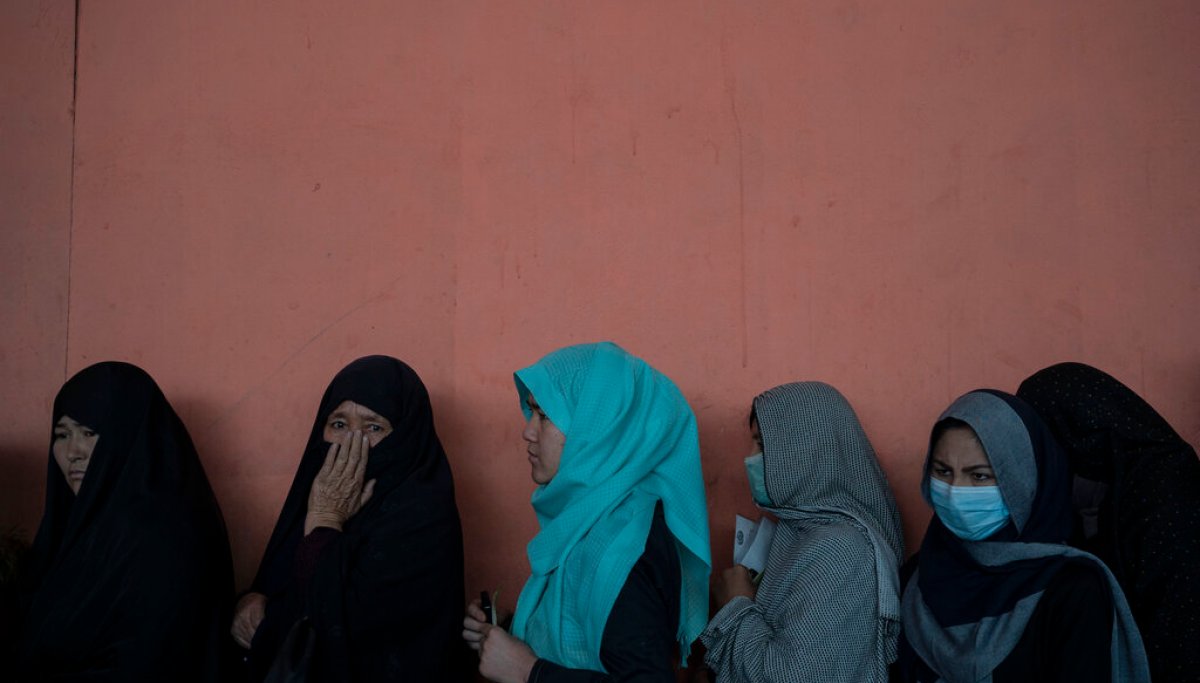
Strains between long-standing allies have become a familiar part of world politics, and they are now surfacing in the South Caucasus. Turkey and Azerbaijan, whose leaders like to describe their bond as “one nation, two states,” are quarreling over religious dress, national sovereignty, and accusations of political interference.The spark was a school dress code. On Sept. 21, Azerbaijan amended its school uniform rules to ban clothing that conflicts with the prescribed uniform or with the secular character of public education. The rules never mention the hijab by name, but schools have turned away some girls wearing headscarves, and some teachers have reportedly been turned away as well. Protests followed, and Azerbaijan’s Interior Ministry said 37 people were detained for disrupting public order.Turkey reacted quickly. On Oct. 12, Oktay Saral, chief adviser to President Recep Tayyip Erdoğan, called the exclusion of headscarf-wearing students unacceptable and urged Azerbaijan to reverse course. Lawmakers from Erdoğan’s Justice and Development Party joined the criticism together with Islamists on social networks. Azerbaijan’s ruling New Azerbaijan Party called the remarks populist and irresponsible and accused Turkish figures of meddling in Azerbaijan’s domestic affairs. Baku’s sensitivity makes more sense in context. Azerbaijan is a mostly Shia Muslim country, yet decades of Soviet rule left it one of the most secular states in the Muslim world, and its constitution defines the state as secular. Turkey, which is mostly Sunni, has its own painful history with headscarves. Restrictions there were lifted gradually between 2010 and 2017. The dispute therefore touches national identity as much as school policy.Israel adds another layer. Azerbaijan has close ties with Israel, which reportedly supplies it with advanced weapons, and Baku is considered to be a leading supplier of oil to the Jewish state. Some pro-government Turkish media have blamed Israel for the school uniform rules and for a visit by Israeli President Isaac Herzog to Baku in October. Azerbaijan’s ruling party rejected these claims, as the regulations were introduced earlier.Then the dispute escalated. On Oct. 16, Azerbaijan’s prosecutor general charged Celal Çiftçi, a columnist for the Turkish newspaper Şanlıurfa Olay, with repeatedly calling for a violent seizure of power in Azerbaijan and promoting religious extremism. He was declared internationally wanted. Prosecutors said the case concerns social media posts, including some made with artificial intelligence, that circulated after the uniform decree, and they asked Turkish authorities for help. On Wednesday, Azerbaijan also barred 31 Turkish nationals from entering the country.These steps show that tensions are rising fast, but they do not prove that Ankara planned or supported a coup. Çiftçi himself has said he respects Azerbaijan’s sovereignty and constitutional order, even as he maintains that people should not be excluded over their clothing. Many prominent secular Turks support Baku’s independent decision, as it agrees with Mustafa Atatürk’s ideology.The timing matters for Washington. In mid-October, Secretary of State Marco Rubio visited Uzbekistan, where he met the foreign ministers of five Central Asian countries and led a delegation of more than 200 American business leaders. The goal was to compete with Russia and China in a region where both hold great influence.The Caucasus is part of that same contest. It sits between Russia and Iran and offers a possible route between Europe and Central Asia. The Trump Route for International Peace and Prosperity is central to the American effort. This planned transit corridor through southern Armenia would link mainland Azerbaijan to its Nakhchivan exclave, which is surrounded by Armenia, Iran, and Turkey. It grew out of the peace declaration that Armenia and Azerbaijan signed at the White House in August 2025.Projects such as the TRIPP need stable neighbors who can manage their disagreements. A public rupture between Turkey and Azerbaijan would weaken confidence in exactly the regional cooperation that American policy hopes to encourage.Even so, a lasting split looks unlikely. Turkey backed Azerbaijan in its 2020 war with Armenia, and the two countries cooperate closely on defense, energy, and transportation. Both also stand to gain from a calmer South Caucasus, where better transport links and larger energy flows could bring in revenue and strengthen their positions. Turkish officials have already tried to calm tensions, and one senior figure in Erdoğan’s party said the two sides can settle their problems privately.TO DEFEAT IRAN’S UNDERSEA THREATS, TRUMP MUST WEAPONIZE THE ABRAHAM ACCORDSFor the United States, the first task is to recognize the strategic weight of this dispute without exaggerating how long it will last. Ankara and Baku have weathered competing interests before, and their incentives to cooperate remain strong. Still, close partnerships are not immune to disagreement, especially when religion, national identity, and outside influence collide.The Caucasus has always depended on a delicate balance between larger powers and smaller states determined to stay independent. Turkey and Azerbaijan have usually strengthened each other within that balance. Their current quarrel shows the limits of even a deeply rooted partnership. Whether the crack spreads or the two governments patch it will help decide how much room Russia and Iran have to maneuver, and how well the U.S. can pursue its interests across the region.Wesley Alexander Hill is the assistant director of the Energy, Growth, and Security Program at the International Tax and Investment Center. He is an expert on grand strategy, geo-economics, and international relations with a regional specialization in China, Eurasia, and Sub-Saharan Africa. Wesley has unique expertise concerning Chinese influence in Central Asia and Sub-Saharan Africa, Chinese foreign and macroeconomic policy, and Sino-American competition.
Unexpected split in the Caucasus threatens US interests
Full Article
Original Source
Read the full article at Washingtonexaminer →KhanList aggregates and links to publicly available news content. We do not host full articles from third-party sources. Always verify important information with original sources.