
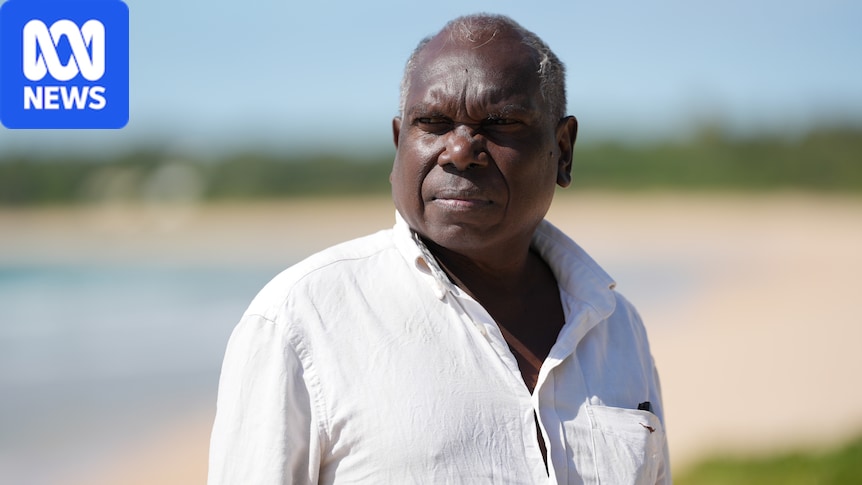
Organisations in north-east Arnhem Land say they have been left to wear the frustrations of hundreds of local residents who missed a tight registration window for a major class action lawsuit, while lawyers and administrators walk away with millions.Aboriginal and Torres Strait Islander readers are advised that this article contains the names and images of Indigenous people who have died, used with the permission of their family.In 2024, former station worker Minnie McDonald settled a $202 million class action that she led against the Commonwealth for historical wage theft in the Northern Territory.She brought the lawsuit on behalf of thousands of Aboriginal workers who worked for little or no pay on pastoral stations, missions and other workplaces in the NT between 1933 and 1971.Minnie McDonald was the lead applicant in the class action against the Commonwealth. (Supplied)In August 2025, the Federal Court heard that figure was reached based on estimates there were up to 8,750 NT workers paid little or no wages in that time frame.However at that point only 5,761 of those workers and their descendants had lodged claims, and in February — months after the close of registrations — the court heard the scheme had about 500 less claimants than originally anticipated.Both of Wanyubi Marika's parents worked during the period of time covered by the class action claim. (ABC News: Dane Hirst)Wanyubi Marika, the chair of the powerful Rirratjingu Aboriginal Corporation, which has business interests across the NT's Gove Peninsula, said he was one of many in the region who was unaware when the October 2025 deadline came and went.Both of Mr Marika's parents worked within the years covered by the class action — his father Milirrpum working as a labourer for the Australian Defence Force (ADF), and his mother Liyapidiny as a nurse's assistant in Yirrkala.Milirrpum Marika worked as a labourer for the Australian Defence Force. (Supplied: National Museum of Australia)According to the Australian War Memorial, the ADF employed Aboriginal people in the Northern Territory from 1933 under similar conditions to those at cattle stations, with "long hours, poor housing and diet, and low pay"."They only get [work] for clean-em-up, cleaning yard or stock works, and all that with very small money, where the Balanda [Westerners], they get higher package level," he said.Mr Marika said his mother Liyapidiny at times worked all hours of the night as a nurse and midwife, and on Sundays she administered congregations for the local Methodist church."Very, very hardworking woman, and for that health djama [work] she received an Order of Australia medal," he said.Liyapidiny Marika worked as a nurse and midwife at the time and was an ordained Uniting Church minister. (Supplied: Uniting Church)Mr Marika said in his home community of Yirrkala, there was lingering confusion about the substantial cash payments that had landed in the bank accounts of some residents across the region earlier this year.He said it was only after some received the payments that others like himself found out about the class action."Families [are] getting this stolen wages money, and there's a question mark there," the Rirratjingu elder said."How? Why? What's that stolen wages?"Local organisation Aboriginal Resource and Development Services (ARDS) said in a statement it was approached by the class action's litigators, Shine Lawyers, in May last year because "they were finding it difficult to sign Yolŋu up to the class action".Chief executive Julie Wormer said ARDS had been given eight weeks and "a small amount of funding" to get the message out to communities in north-east Arnhem Land.She said ARDS staff had been able to help 350 people register, in trips made to about a dozen communities and homelands in the region."The applications involved a complicated 12-page form in English and explanation of difficult legal concepts which required upwards of two hours to complete per person including follow up," Ms Wormer said.On August 29 last year the court granted an extension of the registration deadline to October 3.ARDS confirmed that it was only contracted to do the outreach work until the end of August, but said they did continue until the October deadline, mostly unpaid.Workers on cattle stations are among those who have been reported to have experienced stolen wages. (Source: Australian News and Information Bureau)A Shine Lawyers spokesperson said the court had ordered the involvement of community groups like ARDS in their outreach work, and directed further questions to Deloitte.Deloitte declined to comment.Lawyers' fees, registration windows criticisedA large amount of the $202 million settlement cost went to Shine Lawyers ($15 million), litigation funders LLS Fund Services ($30 million), and administrator Deloitte ($3.2 million), while the claimants themselves received "at least $10,000" each as compensation.In approving the settlement, Federal Court Chief Justice Debra Mortimer criticised Shine for the "excessive" human resources it had devoted to the case, and said it had "elected to plan what I consider was the most expensive way that the outreach and registration process and the book build could have been undertaken".Debra Mortimer previously criticised Shine Lawyers for how it managed the class action case. (Supplied: Federal Court of Australia)In the months after compensation reached claimants this year, organisations in north-east Arnhem Land said they had been left to field hundreds of enquiries about how to apply for payments from the class action settlement."In March 2026, seeing the spread of misinformation and the confusion amongst Yolŋu in relation to the class action, ARDS shared up-to-date information with Yolŋu both in plain English and Yolŋu Matha [language] about the class action on our ARDS and Yolŋu Radio Facebook pages," Ms Wormer said"Between the end of October 2025 to present, ARDS have not been funded to do this work."Glenda Abraham says her organisation has needed to respond to the consequences of people missing out on the class action. (ABC News: Dane Hirst)Laynhapuy Homelands Aboriginal Corporation (LHAC) worked alongside ARDS last year to convey information about the class action to residents of homelands and outstations in the region."We've got the strongest connection to homelands, the strongest connection to those people who are impacted, and as a result we are the ones who have started to wear the frustration and the questions," chief executive Glenda Abraham said.Ms Abraham said significant resources had been devoted to standing up programs in homelands specifically to address the consequences of claims being unevenly awarded."We're wearing the full cost of all that," she said."One of the concerns we have in homelands is eldership abuse and particularly financial abuse, and so we're starting to see that play out."She said establishing a national redress scheme for wage theft victims would be "the most logical" way for compensation to be distributed, saying "there are definitely people who have missed out all over the country, and even within the [Territory]".Thalia Anthony says a national redress scheme is needed for the issue of stolen wages. (ABC News: Jack Ailwood)University of Technology Sydney law professor Thalia Anthony, who has been researching historical wage theft for 25 years, said she agreed with Ms Abraham that the Commonwealth should set up a national redress scheme, which would stay open for a period of years and pay out compensation based on written and oral evidence."It's been a very ad hoc approach where each state has dealt with it in very different ways," Professor Anthony said."So we've got really uneven outcomes, and so it needs to be uniform and harmonised, and it needs to be established with the partnership of Aboriginal organisations."Malarndirri McCarthy says she acknowledges people are frustrated with how the class action was managed. (ABC: Matt Roberts)Indigenous Australians Minister Malarndirri McCarthy did not respond to questions about whether a national redress scheme was warranted, but said she "acknowledged the disappointment of members of the Yolngu community with the Administrators' operation of the scheme"."Given the independence of the Settlement, the Commonwealth cannot influence the way Deloitte administers the settlement, including to extend the registration date," she said in a statement.Professor Anthony said there were potentially thousands of people across Australia who had missed opportunities to make claims under various state-based class actions."Now that there is some momentum following the failure of the compensation set-up in the Northern Territory, hopefully there'll be ongoing litigation or other forms of campaigning that will bring light to this issue," she said.
Uneven distribution of class action payments causing havoc in Arnhem Land
Full Article
Original Source
Read the full article at Abc →KhanList aggregates and links to publicly available news content. We do not host full articles from third-party sources. Always verify important information with original sources.