
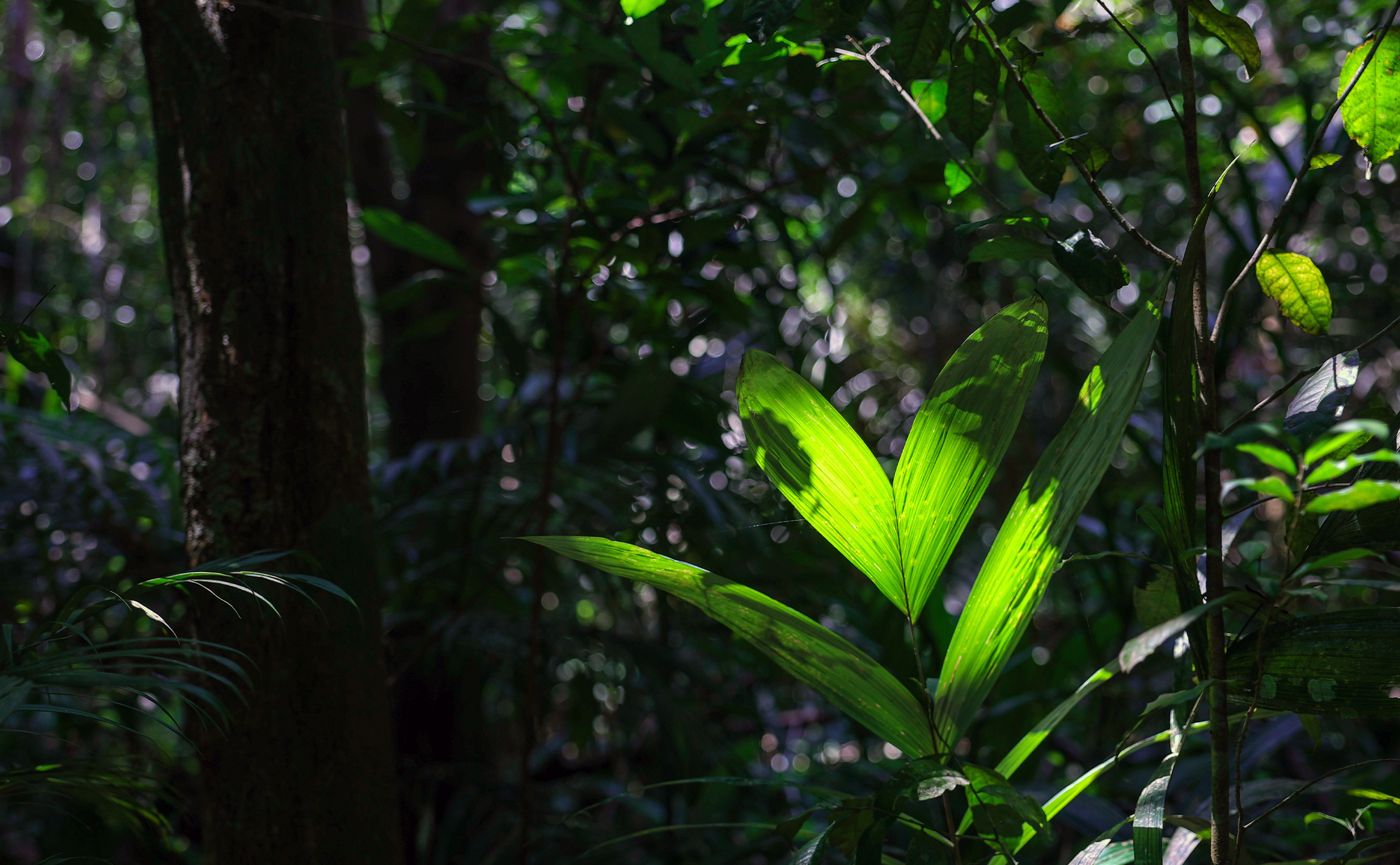
Tropical forests hold up to $714 billion in potential drug value, with the Amazon accounting for $215 billion of the total, according to a new analysis.Ongoing deforestation threatens to permanently erase undiscovered plant species and lifesaving medicinal compounds before scientists can study them.While pricing nature highlights its economic value to counter clearing, experts warn it risks repeating past extraction and resource grabs unless paired with strict benefit-sharing and local scientific leadership. An analysis by the London-based group Zero Carbon Analytics (ZCA) supports a claim conservationists have made for decades: Tropical forests are worth more standing than cleared, with the Amazon as the world’s “crown jewel” in this context. According to the ZCA analysis released in July, tropical forests worldwide could hold a median of $714 billion — within a range of $382 billion to $1.176 trillion — in potential commercial value from undiscovered drugs based on flowering plants. The Amazon alone holds around $215 billion, or roughly 30% of the total, the largest share compared with regions such as Southeast Asia and the Congo Basin. Natural compounds are central to medicine. Roughly three in four cancer drugs approved between 1940 and 2014 were derived from or inspired by natural products, and an estimated 99% of the chemical compounds plants produce remain unscreened. In that logic, the Amazon stands out: It “hosts potentially the greatest commercial option value for medicines from flowering plants” of any major forested region, co-author of the ZCA analysis Joanne Bentley-McKune told Mongabay. But deforestation is eroding this value. ZCA estimates that tropical forest clearing since 2001 has already put $86 billion in commercial drug value at risk globally. In the Amazon, the pharmaceutical benefits of some extinct species may be gone forever. “Over the last 20 years, many endemics, or plants that occur nowhere else, might have been lost due to deforestation in Brazil, across different regions,” Bentley-McKune said. The Amazon alone holds roughly 30% of the potential commercial value from undiscovered drugs based on flowering plants in tropical forests worldwide. Image by Rhett A. Butler/Mongabay. A treasure trove still largely unknown Experts agree that the Amazon holds unique value for uncovering groundbreaking drugs. Still, they point to structural bottlenecks and cultural challenges that must be addressed to fully tap this potential, while avoiding the billion-dollar value that adds a new layer of resource grab. “Brazil is considered the richest country in biodiversity in the world,” Bráulio Ferreira de Souza Dias, director of conservation and sustainable use of biodiversity at Brazil’s Ministry of Environment, told Mongabay, with the Amazon as the guarantor of this title. Dias mentioned some estimates suggesting that no more than 10% of the country’s biodiversity is known to science, with a new plant species being described in Brazil roughly every two days. Geography is one challenge. According to Dias, most known Amazon biodiversity is along rivers, which function as “roads” cutting through thick forest cover that makes land travel so challenging in the region. The interflow — the immense areas between rivers — remains largely unexplored, and reaching it would require opening roads, the main threat to the biodiversity scientists want to preserve. The result, Dias said, is “an enormous level of scientific ignorance” about the interflow. Funding is another obstacle. Most of Brazil’s federal science money flows to cities like São Paulo and Rio de Janeiro, home to the country’s biggest universities and research centers. Less than 3% goes to the Amazon, Dias said, even though the region contributes roughly 10% of Brazil’s GDP. Fixing this imbalance, he said, is crucial for the Amazon to reach its full potential. Studying plants from the Amazon. The interflow of the forest — the immense areas between rivers — remains largely unexplored. Image by Aber TREC via Flickr (CC BY-NC 2.0). Reframing social value Commercial value tells only part of the story, ZCA says. New drugs also bring social value as health benefits to patients — benefits that keep growing once patents expire and cheaper generics reach the market. Using health economics models, the analysis estimates that undiscovered drugs in tropical forests hold around $7 trillion in social value and that deforestation since 2001 has already cost about $860 billion of it. The experts Mongabay interviewed agree that social value is a key aspect of drug development, but they reframe the concept by adding one variable: What happens to the places and people the natural compounds come from. “There is a difference between having value and that value being translated into something,” Eduardo Brondízio, an anthropologist at Indiana University Bloomington in the U.S. who has studied Amazon forest economies for decades, told Mongabay. For that to change, he said, companies should work with the region’s universities and research centers, municipalities, Indigenous organizations, and rural associations to ensure free, prior, and well-informed consent, knowledge sharing, technology transfer, value aggregation, and job creation for the local population. Giving back could also be seen as reparation since, according to Brondízio, pharma companies have historically used traditional knowledge as a shortcut to new drugs. Instead of screening plants at random, researchers often started with what Indigenous peoples and local communities already knew about native species. Dias agreed, calling the Amazon’s Indigenous peoples “great observers” of a forest whose plants they have explored for over 20 millennia. Pharmaceutical interest in traditional knowledge isn’t new. In the 1990s and 2000s, Brondízio said, a wave of bioprospecting projects led to partnerships between drug companies, governments and communities worldwide, offering an alternative to deforestation by using local knowledge to identify new medicines and provide economic returns to communities. Instead, expectations went unmet and conflicts over intellectual property emerged, leading to frustration and distrust. Avoiding those mistakes, Brondízio said, requires abandoning “immediatism” and accepting that building trust and fruitful collaborations takes time, as does drug research and development. Drug test at the U.S. Food and Drug Administration (FDA), for decades, pharma companies have profited from research by Brazilian scientists on natural compounds found in the country. Image by Michael J. Ermarth/FDA via Flickr. For Dias, Brazilian researchers must also better protect their rights to discoveries. They often publish findings before filing for patents, he said, allowing any company to use that information and patent a discovery. Captopril, for example, is a widely used blood pressure drug developed by a U.S. drugmaker from research on jararaca pit viper venom at the University of São Paulo (USP). “Neither Brazil nor USP earn anything from it,” Dias said. Part of the problem, he said, is that scientists have no time to keep up with complex legislation, so universities, institutions and companies should create dedicated units to guide them. In the United States, he noted, universities routinely assess the commercial potential of findings before publishing, and patent licensing helps fund research. “Unfortunately, this is a culture we still do not have in Brazil,” Dias said. A shaman in Peru holds up medicinal plants from the Amazon. Image by Howard G Charing via Flickr (CC BY-NC 2.0). Rules for sharing the gains International agreements and local legislation already support fairer deals. The Nagoya Protocol, adopted under the U.N. Convention on Biological Diversity (CBD) in 2010, set rules on consent and fair benefit-sharing. Brazil ratified it in 2021, and its 2015 Biodiversity Law implements the protocol nationally. These instruments, Brondízio said, are improving the involvement of regional institutions, as well as Indigenous peoples and rural communities, as partners in bringing new pharmaceuticals, food, cosmetics and a variety of other products to society. “Today, it’s more difficult to treat communities and regional research organizations as secondary players,” he added, and Indigenous organizations, in particular, “have a much stronger voice and are better prepared to consider the terms of potential collaborations.” The newer challenge is digital. Companies increasingly use genetic data from online databases rather than physical samples, and some countries argue the Nagoya Protocol doesn’t cover that data. “This digital sequence doesn’t fall from the sky,” Dias said, adding that databases don’t require users to disclose where they collected material, enabling biopiracy. The Cali Fund, created at the CBD’s 2024 summit in Colombia, was designed to fix this. It asks companies using digital sequence information to contribute 0.1% of their revenue or 1% of their profits. Dias said the fund offers a simpler route than the Nagoya Protocol, which depends on bilateral agreements and more bureaucracy. But contributions are voluntary: By August, the fund had received just $6,000 from two companies — far short of the $1 billion a year it was expected to raise. Flower of the mountain soursop (Annona montana), a small tree with edible fruit and medicinal use native to Central America, the Amazon, and islands in the Caribbean. Image by Tatters ✾ via Flickr (CC BY-SA 2.0). The unique value of a standing forest With all the caveats, one consensus is clear: Keeping the forest alive is the best way to protect its value and uncover new treatments. ZCA estimates that halting tropical deforestation globally by 2030 could preserve a median of $79 billion in commercial value and $0.8 trillion in social value by 2050. Getting there in the Amazon will take a change in mentality, Brondízio said, because many Brazilians and policymakers still see standing forest as unproductive land. “There is still this notion that productive land is land cleared of forests,” he said. The forest-based production of food, oils, medicines, cosmetics and materials “represents a giant economy in the Amazon, but it is largely hidden and undervalued, and as such continues to be replaced by less productive and environmentally degrading land uses.” The Amazon’s drug potential follows a similar pattern: Huge, invisible value, with gains captured far from the forest. Benefit-sharing rules offer a starting point. With more investment in science, regional partnerships, and patience, the forest could benefit not only patients worldwide, but also Brazil and the communities that keep it standing. Banner image: Brazil is considered the richest country in biodiversity in the world, with the Amazon as the guarantor of this title. Experts estimate that no more than 10% of Brazil’s biodiversity is known to science. Image courtesy of Agência Brasil. Secret Amazon species may be new source of ibogaine for addiction treatment Amazon jambu blends tradition and science for numbing flavors and healthcare Citations: Lewinsohn, T. M., & Prado, P. I. (2005). How many species are there in Brazil?. Conservation Biology, 19(3), 619-624. doi:10.1111/j.1523-1739.2005.00680.x Brazil Flora Group, Gomes‐da‐Silva, J., Filardi, F. L., Barbosa, M. R. V., Baumgratz, J. F. A., Bicudo, C. E., … & Cabral, T. S. (2022). Brazilian Flora 2020: Leveraging the power of a collaborative scientific network. Taxon, 71(1), 178-198. doi:10.1002/tax.12640 Villarreal, C. F., Nascimento, P. G. B. D., Ferreira, B. R., & Funez, M. I. (2023). Sérgio Ferreira beyond Pharmacology: His Role as a Science Communicator. Toxins, 15(9), 516. doi:10.3390/toxins15090516 FEEDBACK: Use this form to send a message to the author of this post. If you want to post a public comment, you can do that at the bottom of the page. Cite this articleRafael Spuldar (2026). Undiscovered Amazon drugs could be valued at $215 billion, analysis finds. Mongabay Conservation news. DOI: https://doi.org/10.66709/news-330895 Credits Topics
Undiscovered Amazon drugs could be valued at $215 billion, analysis finds
Full Article
Original Source
Read the full article at News →KhanList aggregates and links to publicly available news content. We do not host full articles from third-party sources. Always verify important information with original sources.