
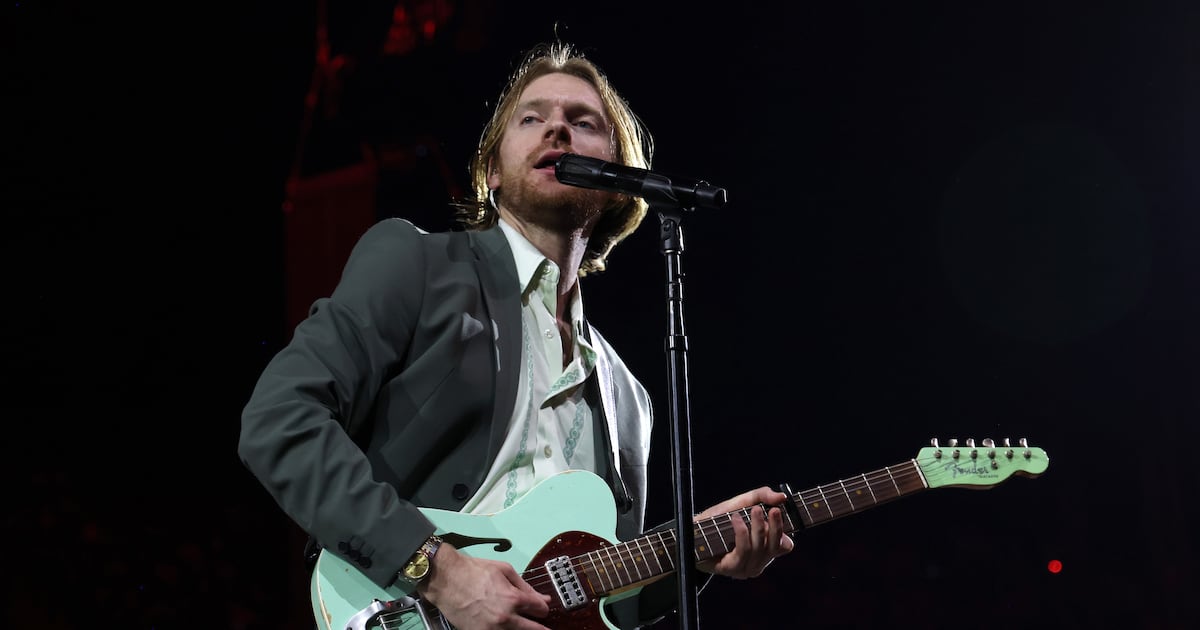
The Palestinian queer activist Ghadir Shafie once said, “Ask what you can do, not what you can lose.” This quote appears in the book The Fantasy and Necessity of Solidarity by Sarah Schulman. In it, Schulman uses the Palestine solidarity movement as a framework to explore the complexity of solidarity, and offers this thought: “The machinery of dominance can make it impossible for the afflicted to win justice on their own steam. At that point, the collaboration and fellowship of people at other levels of power becomes necessary to create more justice for all.” Last week, acts of solidarity by Irish artists and American and Danish artists with Irish heritage – who withdrew from Ed Sheeran’s tour – cracked something open. And not just in the live music industry, but in the Palestine solidarity movement more generally. The reason for these musicians walking away from the tour of a lifetime is now well known. Billionaire and stadium-owner Robert Kraft intervened over Sheeran’s support act, Macklemore, saying “Free Palestine” on stage and forced Macklemore off the tour. According to Macklemore, he rallied other stadium-owners to block concerts with Macklemore on the line-up. The infringement on artists’ freedom of expression was too much to bear for those lower down the bill. READ MOREThis is also a music industry story, because at Sheeran’s level of the industry, the be-all and end-all is money. Until now, there has been a perception and reality that speaking out against Israel’s genocide in Palestine will hurt the bottom line. The fear generated by this has been sufficient to render a majority of the most wealthy artists in music mute. Irish artists are the buzzing fly in this toxic ointment. Acts from Ireland with global reach, such as Fontaines DC, CMAT and Hozier have continued to practice their freedom of expression in relation to solidarity with Palestine. Perhaps this has a detrimental impact on aspects of their careers, but they are also all bigger than ever. Kneecap, currently effectively shut out from touring in the US since they spoke out at the Coachella festival last year, now draw the kinds of crowds almost inconceivable at their outset. [ Irish acts Aaron Rowe and Beoga quit Ed Sheeran’s US tour in protest over PalestineOpens in new window ]One of the reasons I believe Irish popular culture is in ascendence globally is because people respond to authenticity. Fans appreciate artists who stand for something. Last March, more than a quarter of a century since Sinéad O’Connor sang “These are dangerous days, to say what you feel is to make your own grave,” one of the support acts on Sheeran’s tour, the Dubliner Aaron Rowe, appeared on the music podcast On The Record. “The best Irish artists have never been afraid to stand up for what’s right in the world,” he said. “People like Sinéad O’Connor.”Rowe, who is early in his career, could not have anticipated that within six months, he would be walking in O’Connor’s footsteps. Rowe recognised what a moment looks like when it opens up and how to meet it. He was a catalyst at the moment of ignition. The Irish band that plays alongside Sheeran for a section of his shows, Beoga, founding members of the Irish Artists for Palestine movement, also walked. The two-time Academy Award-winning songwriter and producer, Finneas, brother of Billie Eilish and of Irish heritage, withdrew. Lukas Graham, the Danish pop band whose frontman’s father was Irish, also left. Two Irish bands who were previously on the tour, Biird and Amble, also released statements of solidarity with Palestine. [ Ed Sheeran controversy: How his North American tour has ended up in crisisOpens in new window ]The motion of activism, in all its expressions, is fundamentally about repetition. It is about saying the same thing again. Marching in the same streets again. Writing the same letters to the same people again. On one day these gestures may not count. But on the next, they might. Activism is a process. It is not a loop, to borrow the title of Sheeran’s tour, but a trajectory. It is about tactically priming for catalyst moments. How those moments show up is anyone’s guess, but you have to know where you stand to grasp them.Sheeran surrounds himself with, and supports, Irish artists. He gives plenty of people a leg up. His initial statement was ill-advised and made the situation worse. One line struck me as detached from reality: “If we only focus on shouting the loudest, nothing will ever change.” Yet being vocal is what moves the dial. Silence and obfuscation changes nothing. Ultimately, Sheeran did say something. He had to. That he did also represents something shifting. At his concert on Saturday night, where he performed without support acts, he said he made mistakes, that his heart was broken by the scale of the “catastrophic and unjustifiable” loss of lives in Gaza and that the “systemic injustice” in the West Bank “cannot be overlooked.” Whether that will be enough to satisfy those who feel an artist of his power should have pulled rank when a billionaire interfered in his tour will probably continue to be debated. But it does represent a change for an artist who says he prefers to sit outside of politics. Singer Ed Sheeran breaks his silence at his first show since Macklemore controversy. Video: Ed Sheeran via Instagram What this incident demonstrates is the incredible power of collective action and solidarity. Its potency is undeniable. Rowe and Beoga are referred to as “small” artists relative to Sheeran. Perhaps they are by industry metrics, but heft isn’t just about ticket sales and streams, it is about cultural influence and the impact of integrity. This is the lesson: once acting collectively in a mode of solidarity, they became the biggest artists in the world.
Una Mullally: Irish artists became the biggest in the world when they walked away from Ed Sheeran’s tour
Full Article
Original Source
Read the full article at Irishtimes →KhanList aggregates and links to publicly available news content. We do not host full articles from third-party sources. Always verify important information with original sources.