
Last Thursday, I met a friend for a drink on Capel Street on the north side of Dublin city centre. Walking down the street at 7.30pm was a chance to experience the kind of genuinely thrumming street life that only exists where pedestrians have space and safety from traffic (the street is pedestrianised). The street has a diversity of businesses, architecture that is human scale and public seating. There were even children kicking a ball, a great sign of a healthy urban habitat.But as we sat outside a pub on the street we also saw a steady stream of people experiencing the kind of destitution and addiction that are now familiar sights in the city centre. One after the other, people young and old approached, asking for money. There were maybe half a dozen people in total, including a man holding a child’s hand, a little girl who had all the chirpiness of a kid being brought to the amusements, as opposed to a trip around the streets looking for change from strangers.Most of the interactions were friendly. One was edgy, a young woman fizzing with the kind of energy anyone who spends a lot of time in the city centre will now recognise. Writing in this newspaper in August, the chief executive of Merchants Quay Ireland and former governor of Mountjoy Prison Eddie Mullins detailed the rapid rise of crack cocaine, writing that it “reveals a deeper and more uncomfortable reality exposing the consequences of homelessness, trauma, poverty and social exclusion. It demands a response that goes beyond treatment alone.”Recently, the head of the Dublin City Taskforce, Robert Watt – who is being paid a salary of €280,000 to do that job – made remarks about people on, as he called it, “the margins of society” in Dublin city centre, specifically Dublin 1. Watt was speaking at the Irish Planning Institute’s autumn conference, and said Dublin’s north inner city had a “massive overconcentration” of services. This is true. For example, Gardiner Street, parallel to O’Connell Street, should be a grand street of public and affordable housing, with all the shops and amenities any populated city neighbourhood requires. Instead, one tenth of Ireland’s homeless population lives there, amounting to around 1,700 emergency accommodation beds on one street. Raising this in the Dáil last April, local TD Gary Gannon said the North City Centre Residents’ Alliance concluded that 7,000 people were living in homeless accommodation in the north inner city. READ MOREThe taskforce has a subgroup concerned with “vulnerable groups”. Their first job was to map and list all locations and services for vulnerable groups in Dublin 1, Dublin 2 and around Heuston Station, with the goal of managing the overconcentration of such groups in “small geographical areas, and relocate existing provision, where possible and appropriate”. Watt also suggested other local authorities step up and share the burden of services, because it isn’t fair on the residents and workers of Dublin 1. This is logical, especially when it comes to densely populated working-class areas with less political power to address spatial inequality, and left to soak up Government failures. But what also must be addressed is the housing crisis that is driving this reality.It is not the job nor the remit of the Dublin City Taskforce to solve all of society’s ills. The Government states that the taskforce will take a “holistic view” of what is required to “rejuvenate” the city centre. But unless there is major action on addiction and homelessness, such improvements risk being superficial rather than socially transformative. The taskforce has ambitious goals. But for genuine change to be achieved, the Government needs to match those with equally ambitious actions and funding for addiction services and public housing. There are 15,000 people on the council’s housing list.When the streets are gussied up and the landmark projects – the GPO, the Parnell Cultural Quarter, the Fruit and Vegetable Market – progress, none of it will matter if fundamental failures are not addressed. We need taskforces, leadership and political heft to tackle destitution, homelessness and addiction in our society.[ ‘What’s happening is not working’: Dublin needs homelessness ‘tsar’, says charityOpens in new window ]A very touching thing happened on Capel Street that evening. With no change in my pockets, I walked up to a shop with one man who had approached me for money and bought him what he wanted. He said he was living in a tent, and insisted we do a scratch card together. There were a few other people begging outside the shop. My new pal with his scratch card didn’t have a coin to scratch it. One person sitting outside the shop handed him one. When he went to hand it back, he was told to keep it. A kind gesture in an often cruel context. When we talk about those on the “margins”, we are talking about real people. People who smile when they’ve won a fiver on a scratch card, a smile that broadens when they’re told to keep a coin. A child on an evening stroll with an adult begging. A woman down to skin and bone who can seemingly no longer make sense of the world. These are Dubliners too, not just on the margins, but in the heart of the city, scrambling around to survive. Unless we address that – in such a “rich” country – then I’m not quite sure what rejuvenation really means.
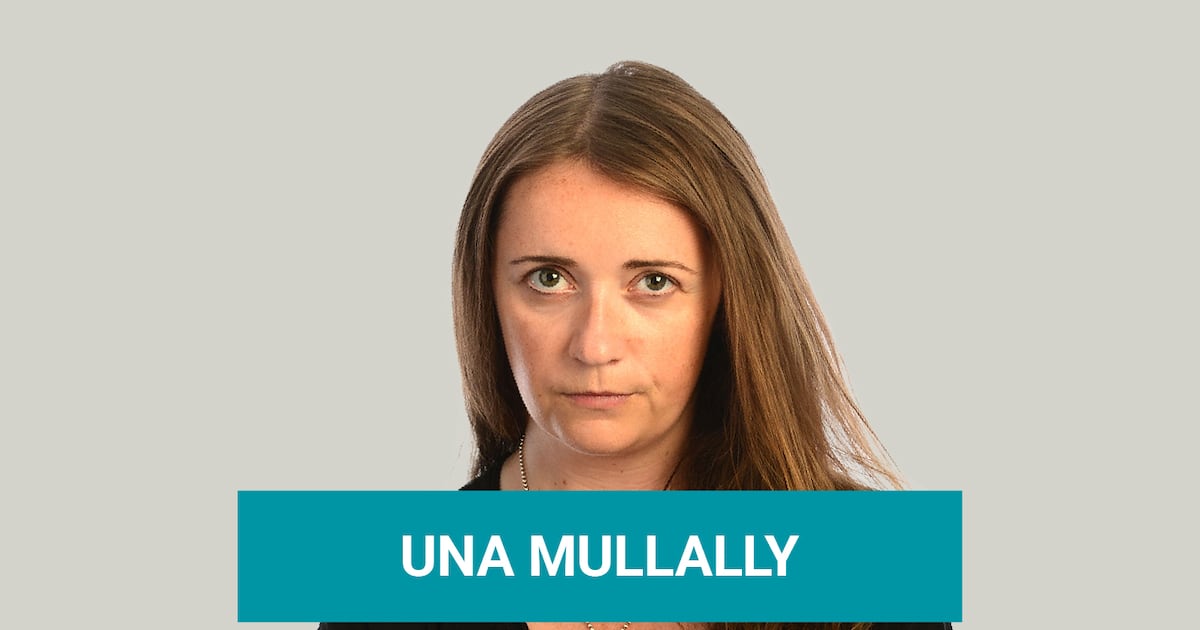
Una Mullally: A very touching thing happened on Capel Street last Thursday evening
Full Article
Original Source
Read the full article at Irishtimes →KhanList aggregates and links to publicly available news content. We do not host full articles from third-party sources. Always verify important information with original sources.