
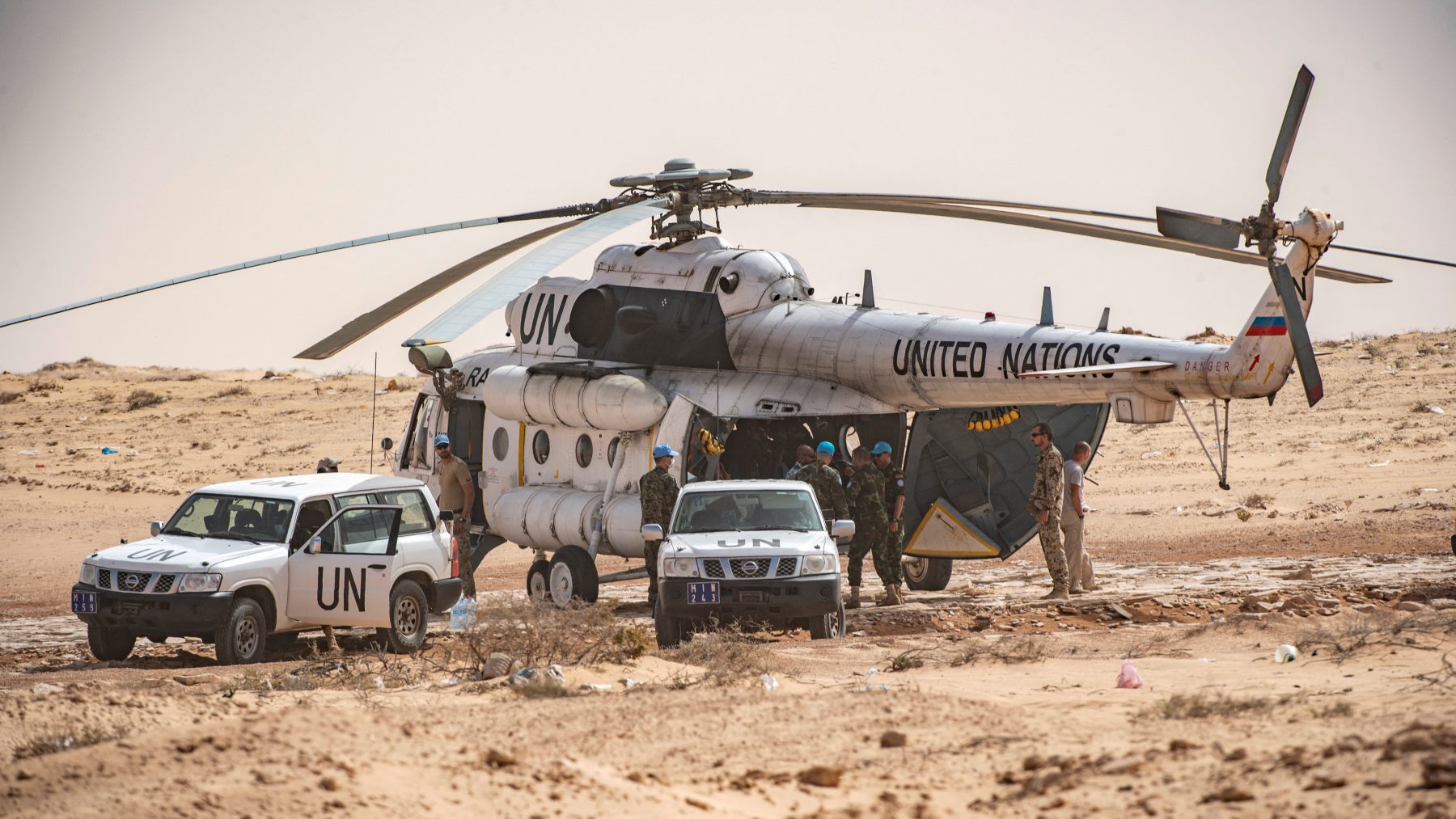
The double veto blocked the Security Council's annual renewal of the mission, which it had routinely extended in previous years United Nations Minurso personnel disembark from a helicopter at the Guerguerat border crossing between Morocco and Mauritania in Western Sahara, 25 November 2020 (Fadel Senna/AFP) Published date: 31 October 2026 11:51 GMT | Last update: 9 sec ago The UN peacekeeping mission in the Western Sahara remains without a mandate after Russia and the United States both vetoed each other's resolution on the matter at the UN Security Council. The dispute centred on Morocco's autonomy plan for the disputed territory, with Washington seeking to strengthen the plan's position as the basis for negotiations. The double veto blocked the council's annual renewal of the mission, which it has routinely extended in previous years. The US-drafted resolution would have established Morocco's autonomy plan as the sole basis for negotiations and reduced the military component of the UN peacekeeping mission. It would also have extended the mission's mandate for another year. The confrontation marked an unusual showdown between major powers over what has traditionally been a routine Security Council decision. New MEE newsletter: Jerusalem Dispatch Sign up to get the latest insights and analysis on Israel-Palestine, alongside Turkey Unpacked and other MEE newsletters The Polisario Front, an independence movement based in neighbouring Algeria, has sought an independent state in Western Sahara since Spain, the territory's former colonial power, withdrew in 1976. Morocco claims historical rights to the territory, which it calls its “southern provinces”, and has invested heavily in its infrastructure and public services. Last year, the Security Council dealt a blow to the Polisario’s ambitions by endorsing Morocco’s autonomy proposal as a basis for resolving the conflict. The council also asked UN Secretary-General Antonio Guterres to review the peacekeeping mission. The failed US resolution would have removed the word “referendum” from the mission’s name, changing it from the United Nations Mission for the Referendum in Western Sahara (Minurso) to the United Nations Mission in Western Sahara. Following the vote, US Ambassador Michael Waltz said longstanding disagreements over voter eligibility had prevented the UN from holding a referendum. “UN officials have been telling us this reality for 30 years,” Waltz said. “Unfortunately, some members of this Council have used their veto to preserve the letter ‘R’ for referendum in the mission’s name, even though the United Nations has not been preparing to hold such a vote for decades.” Inside the secret US-led talks to solve the Western Sahara conflict Read More » France and the United Kingdom, the council’s two other permanent European members, backed the US resolution and Morocco’s autonomy plan. Russia opposed the proposal, arguing that the council should not prejudge the territory’s sovereignty. “The Security Council cannot automatically pre-determine matters relating to sovereignty,” Russia’s UN ambassador Vassily Nebenzia said. “The Security Council must not give a blessing to such a one-sided approach. Therefore, we were compelled to block the adoption of the draft.” The US then vetoed a Russian-drafted resolution that would have extended Minurso’s mandate for another year without changing its terms. Eleven members voted against the Russian draft. Nebenzia condemned Washington’s decision, describing it as “the political murder of the mission”. Minurso has 155 military personnel and was established to organise a referendum under a UN-brokered ceasefire. A report by the UN secretary-general estimated that the mission would cost $62m in the financial year that began in June. Oxfam warned that losing the mission could put civilians at risk and undermine efforts to resolve the decades-long conflict peacefully. “The loss of MINURSO’s monitoring and de-escalation functions risks undermining security and stability, with serious consequences to civilians and prospects of a peaceful resolution,” Oxfam said after the vote. Most Sahrawis live in the part of Western Sahara under Moroccan control, while tens of thousands are believed to live in refugee camps run by the Polisario in Algeria. The rejected US resolution would also have called on the UN refugee agency to conduct a census of refugees living in the camps. Middle East Eye delivers independent and unrivalled coverage and analysis of the Middle East, North Africa and beyond. To learn more about republishing this content and the associated fees, please fill out this form. More about MEE can be found here.
UN Western Sahara peacekeeping mission left in limbo after US-Russia veto standoff
Full Article
Original Source
Read the full article at Middleeasteye →KhanList aggregates and links to publicly available news content. We do not host full articles from third-party sources. Always verify important information with original sources.