
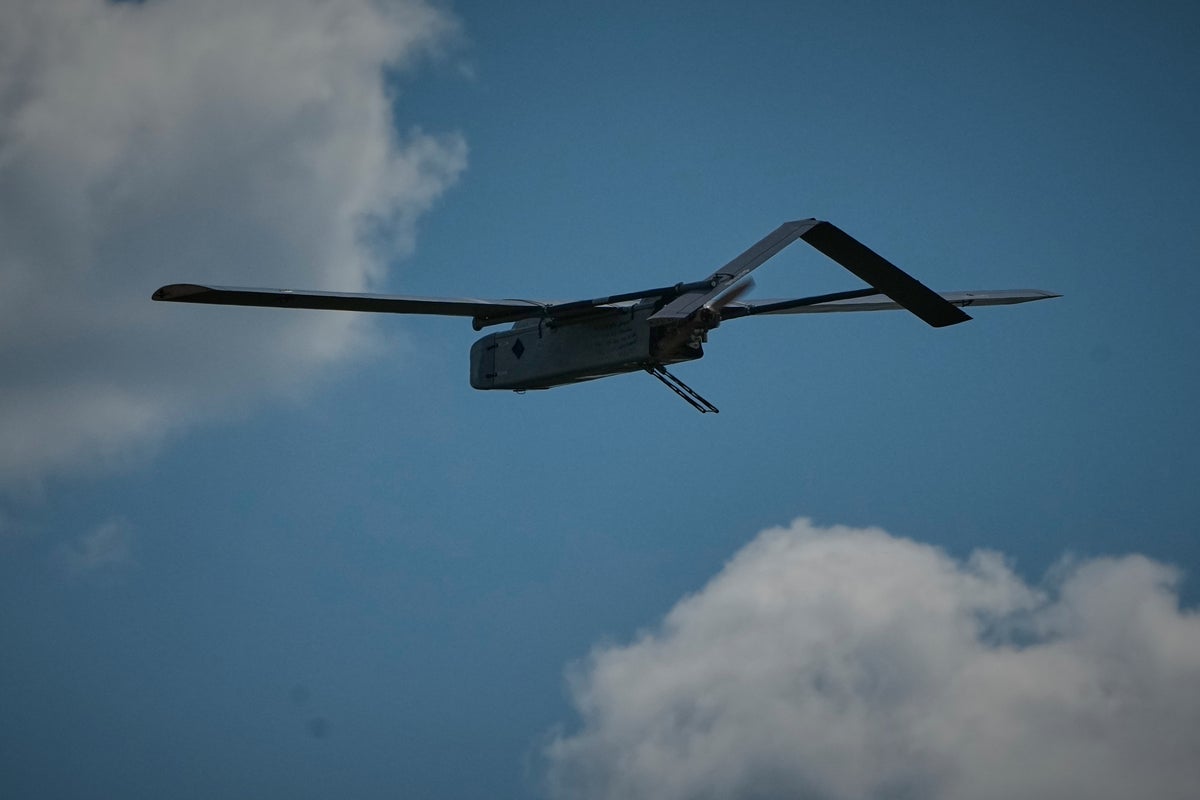
The United Nations and the International Committee of the Red Cross intensified a joint appeal on Tuesday for countries to enact bans and restrictions on autonomous weapons systems — often called killer robots — warning that "the risks have intensified."Building on a proposal first issued three years ago and years of multilateral discussions, the stance stops short of requesting a complete ban. It highlights that such systems are currently under development, though neither the U.N. nor the Red Cross has confirmed their deployment on the battlefield. Still, protections for civilians are urgently required for when that moment comes.The United Nations and the International Red Cross are urging countries to adopt bans and restrictions on autonomous weapons systems, often called killer robots (Copyright 2026 The Associated Press. All rights reserved.)"We are now dangerously close to crossing a moral red line: The autonomous targeting of humans by machines," said U.N. Geneva spokesperson Alessandra Vellucci, reading a joint statement by U.N. Secretary-General António Guterres and ICRC President Mirjana Spoljaric."Today, we renew this call with even greater urgency," the statement declared, noting that while fundamental concerns remain the same, the underlying dangers have grown.The two international bodies warned that military technology is evolving at "record speed," pressuring international legal frameworks and widening the gap between technical capabilities and regulation.A satellite image shows smoke rising from an Ozon warehouse as Ukraine widens a campaign of drone strikes on Russian e-commerce companies, in Enem, Adygeya (Vantor)"Autonomous weapons systems are not part of a distant future — a race toward greater autonomy in weapons systems is already well underway," the joint statement said.The appeal comes as negotiators prepare to convene in Geneva this November to strengthen the Convention on Conventional Weapons, a conference the U.N. and Red Cross said offers "the clearest path available" toward legally binding rules.A yearslong campaign to limit lethal autonomous weapons systems has struggled to establish clear boundaries. The renewed push comes amid growing reliance on drones and related technologies in ongoing conflicts in Ukraine, the Middle East, Sudan, and elsewhere."Scientists and engineers developing these systems have themselves raised the alarm," the organizations stated. "When the architects of this technology are calling for limits, states cannot afford to remain passive.""This year must mark a turning point," the statement added.
UN warns humanity is ‘dangerously close’ to handing kill decisions to machines
Full Article
Original Source
Read the full article at Independent →KhanList aggregates and links to publicly available news content. We do not host full articles from third-party sources. Always verify important information with original sources.