
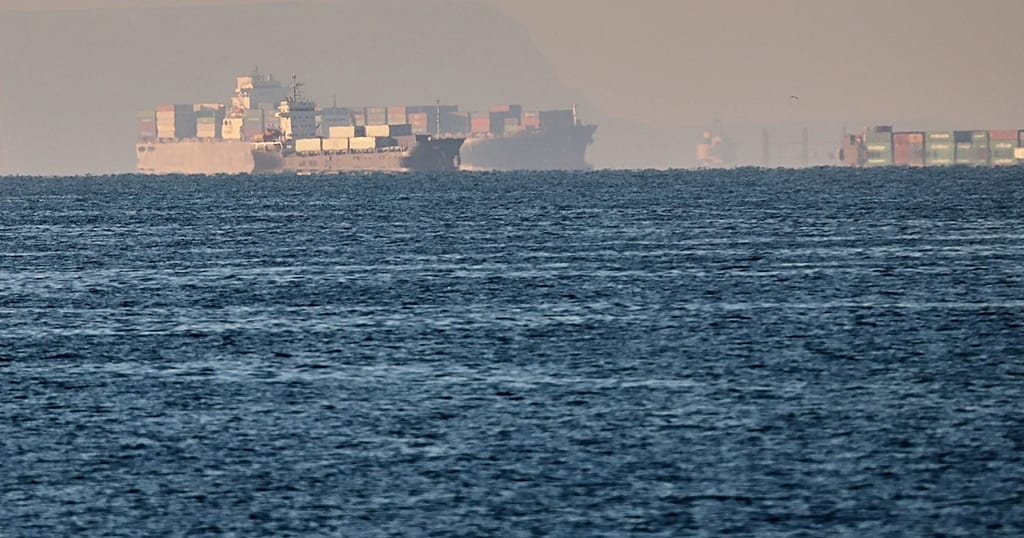
Container ships are seen through haze in the Strait of Hormuz off Bandar Abbas, Iran, November 14, 2026. - Copyright © africanews Amirhosein Khorgooi/ISNA via AP Last updated: 26 minutes ago International trade The United Nations Trade and Development agency, UNCTAD, says global maritime trade volumes are projected to record zero growth this year. Seaborne trade reached 12.3 billion tonnes in 2025, up 1.9%, compared with 3.9% in 2024. In its Review of Maritime Transport 2026 released on Thursday, UNCTAD said geopolitical uncertainty was stalling seaborne trade. Disruptions across major shipping routes and chokepoints have forced vessels to undertake longer journeys. Since the start of the year, four key maritime bottlenecks — the Strait of Hormuz, the Red Sea, the Black Sea, and the Panama Canal — have all come under pressure. This has extended transit times, increased fuel costs, and driven congestion at ports, adding to uncertainty. UNCTAD says alternative ports, inland transport networks, and logistics arrangements have helped keep trade moving, but at a higher cost. Freight rates more than doubled in the period to August, while crude oil tanker rates reached record highs on some routes, impacting vulnerable economies the most. It says if high marine fuel prices persist, higher shipping costs alone could push consumer price inflation in the least developed countries to nearly twice the global average. More than 80% of goods traded globally are transported by sea, including vital food and fuel supplies. UNCTAD has urged governments and industry to collaborate and strengthen resilience and sustainability across shipping and port planning, operations, and investment while protecting navigation and seafarers. Related articles
UN says global maritime trade projected to record zero growth in 2026
Full Article
Original Source
Read the full article at Africanews →KhanList aggregates and links to publicly available news content. We do not host full articles from third-party sources. Always verify important information with original sources.