
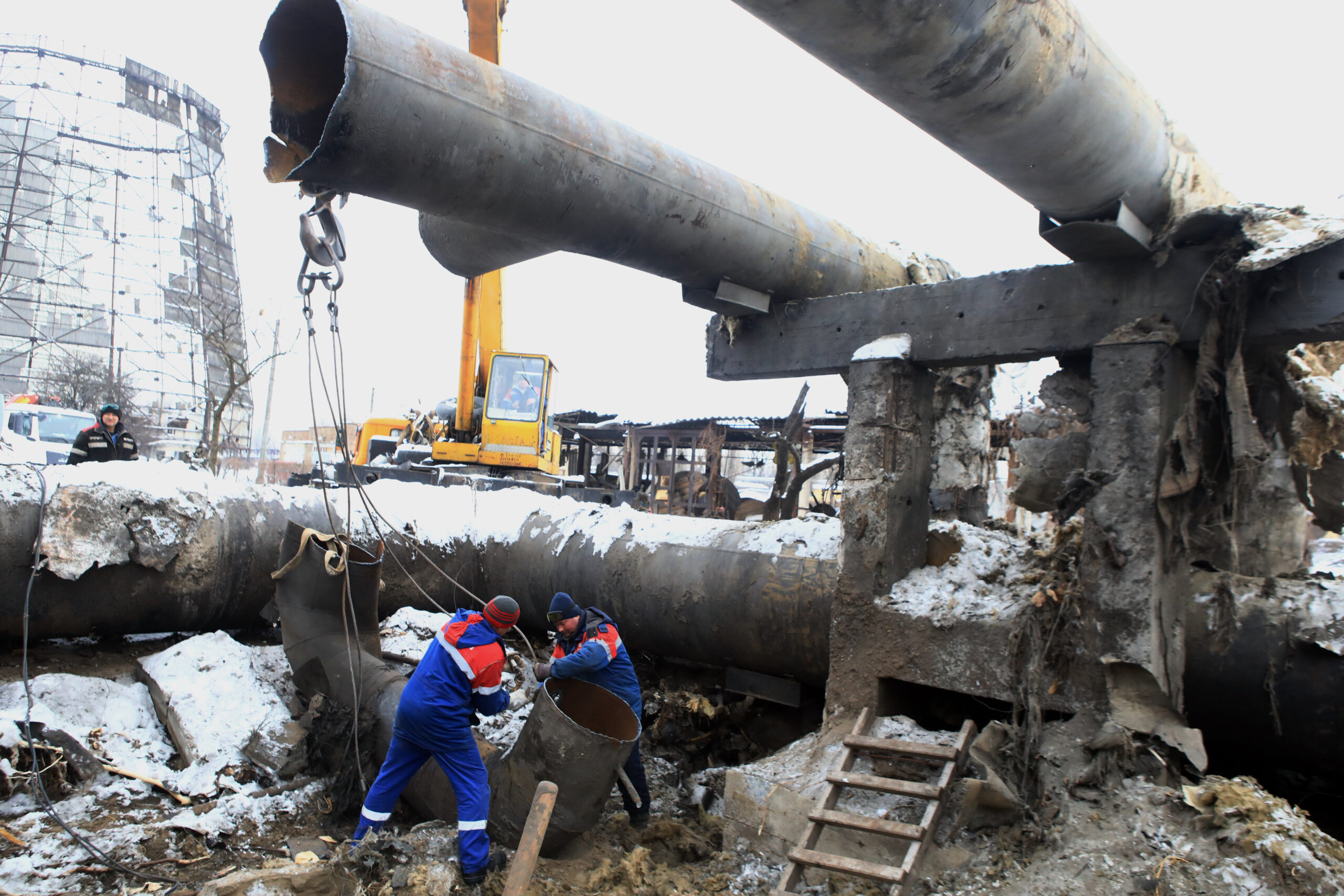
Russia’s bombardment of Ukraine’s civilian power grid qualifies as a crime against humanity, according to United Nations human rights experts. The findings were detailed in a new report issued on October 26 by the UN’s Independent International Commission of Inquiry on Ukraine that investigated Russian attacks on Ukrainian energy infrastructure since 2022. The UN probe accused Russia of committing war crimes by intentionally targeting Ukrainian civilians. “The evidence collected demonstrates that the attacks against Ukraine’s energy infrastructure were carried out with intent and pursuant to a state policy to deprive the civilian population of electricity and other essential energy-dependent services and cause suffering,” investigators noted. United Nations commission officials highlighted statements made by Russian President Vladimir Putin calling for the Russian military to “prepare and carry out massive strikes” on Ukraine’s energy system. They also drew attention to recent social media posts by Russia’s Ministry of Defense that appeared to directly endorse the targeting Ukraine’s civilian population with the message: “In winter you will freeze.” These latest findings by the UN Commission come as Ukrainians brace for what many fear will be the toughest winter of the war. Russia has steadily pounded Ukraine’s civilian infrastructure throughout the full-scale invasion, but attacks have typically intensified each year as the cold season approaches in order to freeze the population into submission. As the fifth wartime winter draws closer, Moscow’s air offensive is already escalating. With Russian troops currently struggling to advance on the battlefield while suffering heavy losses, the coming winter bombing campaign is seen by many in Moscow as the best chance to finally break Ukrainian resistance and force Kyiv to capitulate. According to alleged Russian plans intercepted by Ukraine and shared with the international media, the Kremlin is currently preparing what is expected to be the largest nationwide bombardment of the entire invasion. Russia’s goal is to spark a humanitarian crisis and make Ukraine’s major cities unlivable. Stay updated As the world watches the Russian invasion of Ukraine unfold, UkraineAlert delivers the best Atlantic Council expert insight and analysis on Ukraine twice a week directly to your inbox. As Ukrainians look to make it through another grim cold season of extended blackouts amid subzero temperatures, they will be relying heavily on experience gained since 2022. Cities across Ukraine have expanded backup power, installed decentralized heating systems, reinforced the protection of critical infrastructure, and developed plans to maintain basic municipal services during prolonged periods of disruption. While the lessons learned during the past four winters will prove invaluable for Ukraine, this may not be enough. Russia has adapted its strategy in response to earlier bombing campaigns as the Kremlin seeks to inflict maximum damage on Ukraine’s critical civilian infrastructure. Moscow is also thought to have stockpiled vast quantities ballistic missiles and jet drones for use once temperatures begin to plummet. For the Ukrainian authorities, maintaining individual services is only part of the challenge. The key question will be whether they are able to prevent Russian attacks on critical systems from triggering wider breakdowns across electricity, heating, water, sewage, transport, healthcare, and communications. This distinction matters as Russia seeks to test Ukraine’s municipal resilience to the limit. In the coming months, local authorities and national service providers must keep a range of interconnected services online if they to avoid collapse. Eurasia Center events Ahead of the coming winter season, one of the main focuses has been the move toward a more decentralized model for heating and power generation. With support from Ukraine’s local authorities, residential communities across the country have installed modular boiler houses, power generators, renewable energy units, and other measures to enhance self-sufficiency. This is particularly important as millions of Ukrainians still rely on Soviet-era centralized heating, making the country highly vulnerable to targeted Russian attacks on major plants. At the individual level, families are now busily stocking up on essentials, charging power banks, and preparing to cope in the event of extended periods without electricity, heating, and water. Some are planning to move away from Ukraine’s major cities during the winter months and relocate to rural destinations or abroad. For many, however, this is not an option. Low-income families, older residents, and people with disabilities are among those who will likely be worst hit by harsh winter conditions. Ukraine’s air defenses are currently insufficient to protect the country against the coming onslaught. In recent weeks, Ukrainian President Volodymyr Zelenskyy has raised the alarm over a critical shortage of Patriot interceptor missiles that are desperately needed to defend against Russian ballistic missiles. The Ukrainian leader has called on the United States to “unblock” the delivery of Patriot interceptors, while also pressing other allies to boost Kyiv’s threadbare stockpiles. Over the next few months, much will depend on Ukraine’s ability to defend against Russian drones and missiles, while limiting the impact of strikes and repairing damage in a timely fashion. This will require herculean efforts from the country’s air defense units, emergency services, and municipal workers. Nobody is under any illusions regarding the scale of the threat facing the country, but with sufficient Ukrainian resolve and international support, it may prove possible to prevent a humanitarian disaster. However, the fact remains that while UN investigators are able to recognize Russia’s bombing campaign as a crime against humanity, they are powerless to stop it. Kateryna Odarchenko is a partner at SIC Group Ukraine. Further reading The views expressed in UkraineAlert are solely those of the authors and do not necessarily reflect the views of the Atlantic Council, its staff, or its supporters. The Eurasia Center’s mission is to enhance transatlantic cooperation in promoting stability, democratic values, and prosperity in Eurasia, from Eastern Europe and Turkey in the West to the Caucasus, Russia, and Central Asia in the East. Follow us on social media and support our work Image: Workers prepare to lift a section of a pipe at Kyiv CHPP-4, which is severely damaged in a massive Russian missile attack in Kyiv, Ukraine, on February 6, 2026. On the night of February 2-3, Russian forces strike the heating system of Kyiv CHPP-4 (Darnytska CHPP) with five ballistic missiles, causing critical damage and forcing its shutdown. As a result, 1,129 residential buildings in Dniprovskyi and part of Darnytskyi districts, along with 46 schools, 72 kindergartens, 18 medical institutions, and other social and urban infrastructure facilities, are left without heating and hot water amid temperatures of -25?C. (Photo by Volodymyr Tarasov/Ukrinform/NurPhoto)
UN report: Russian attacks on Ukraine’s power grid are a ‘crime against humanity’
Full Article
Original Source
Read the full article at Atlanticcouncil →KhanList aggregates and links to publicly available news content. We do not host full articles from third-party sources. Always verify important information with original sources.