
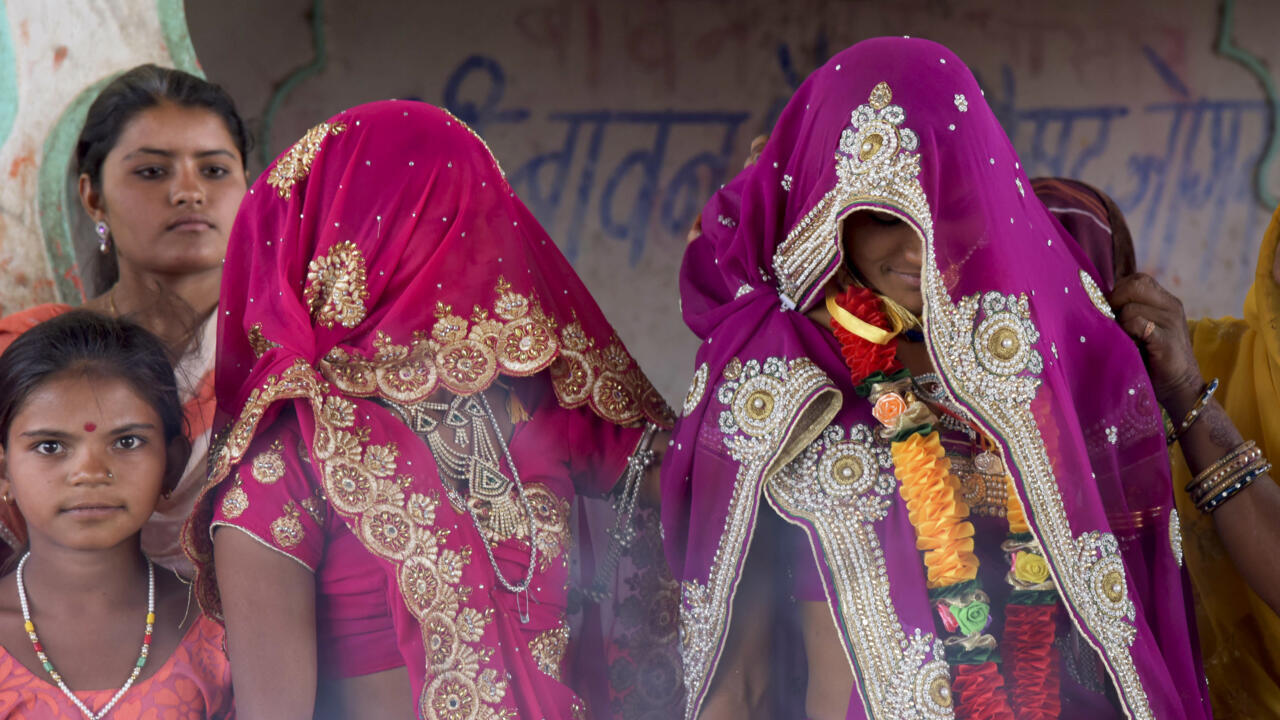
Friday marks the first International Day for the Elimination of Child, Early and Forced Marriage, created by the United Nations to spotlight a practice that affects hundreds of millions of women and girls across the globe. Issued on: 27/11/2026 - 13:44 2 min Reading time The UN General Assembly proclaimed 27 November the annual International Day for the Elimination of Child, Early and Forced Marriage on 4 September, adopting the resolution without a vote following a draft put forward by Cape Verde, Costa Rica, Morocco and Sierra Leone. According to UN figures, some 650 million women and girls alive today were married while still children. South Asia is the worst affected region, accounting for 44 percent of all children married globally, followed by sub-Saharan Africa with 18 percent of cases. Every year, 12 million girls are married before their 18th birthday – roughly one every three seconds according to Plan International, a United Kingdom-based NGO that fights for children's rights. This figure does not include forced marriages, which affect a further 22 million people, the vast majority of them women and girls. Morocco moves to reform laws on underage marriage, polygamy and child custody The effect of war Eliminating these practices was one of the targets of the "Transforming Our World" agenda, the 2030 Sustainable Development plan adopted by UN member states in 2015. Eleven years on, the proportion of women married as children has fallen by 15 per cent – from nearly one in four to one in five over the past 25 years, according to Plan International. But the UN warns that at the current pace, it will take 300 years to end the practice worldwide. One place where forced marriage is rising is the Gaza Strip, where young girls are the first victims of deteriorating living conditions, poverty and insecurity, according to Palestinian lawyer Rula Mousa, legal officer at the Palestinian Centre for Human Rights, Independence and Equality. Speaking to RFI's correspondent in the territory, Rami Al Meghari, she said that while the practice already existed locally, the war has amplified it. "These young girls often suffer from anxiety, fear and isolation, which makes them extremely vulnerable to psychological, social and physical violence," Mousa said. Climate change driving child marriages and teen pregnancies, study finds No say The UN is calling for stricter policies and coordinated action, and urging governments to end child marriage globally by 2030. Plan International's chief executive Reena Ghelani said that awareness alone was not enough. "Governments must use this moment to turn recognition into action. That means enforcing laws that protect girls, investing in their education and tackling the root causes of child marriage," she said in a statement marking the day. The organisation's research found that one in four girls and young women surveyed had no say in the decision to marry, with 46 per cent citing economic hardship or social and family pressure as the most common reasons for entering into a marriage or union. (with newswires)
UN marks first global day against child marriage as millions remain at risk
Full Article
Original Source
Read the full article at Rfi →KhanList aggregates and links to publicly available news content. We do not host full articles from third-party sources. Always verify important information with original sources.