
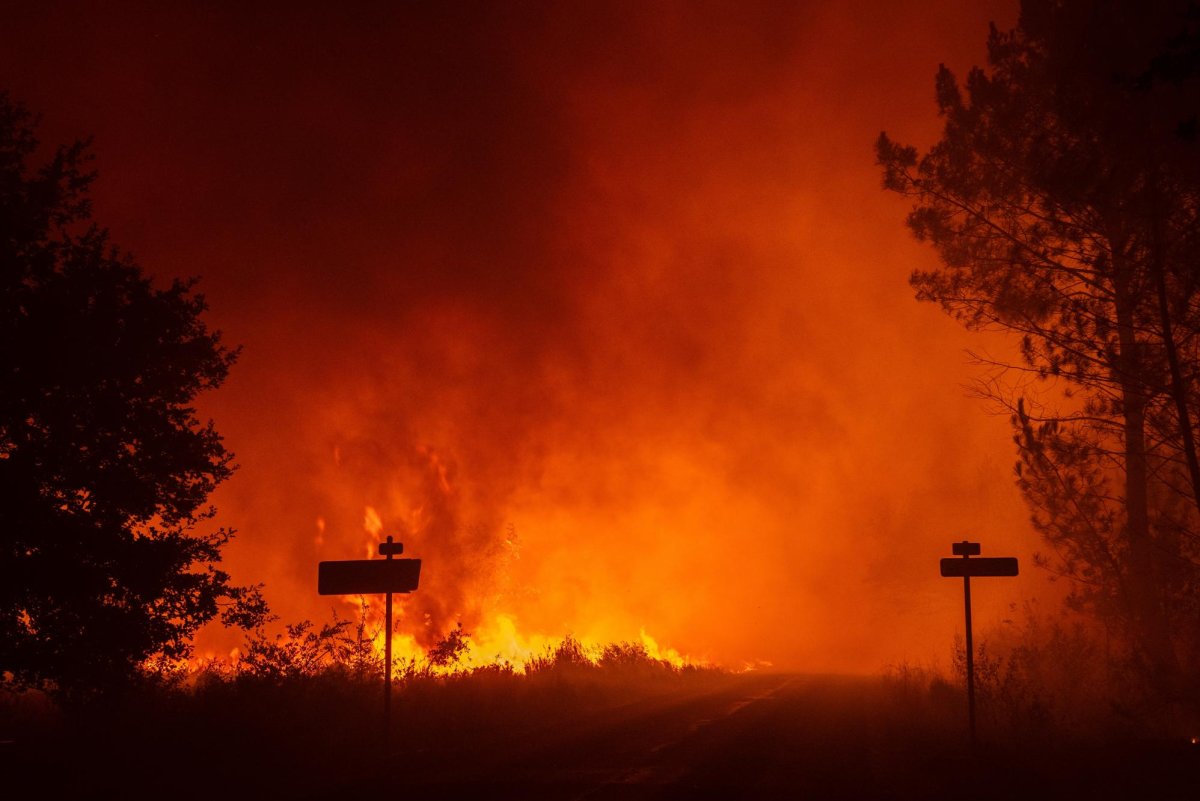
Flames engulf a road as a wildfire spreads in Lege-Cap-Ferret, southwestern France, in late July. File Photo by Damien Rembert/EPA Sept. 2 (UPI) -- Global temperature rise is set to push past 1.5 degrees Celcius, or 34.7 degrees Fahrenheit, over pre-industrial temperatures within the next few years, according to a new United Nations report. The temperatures will increase risk and impacts worldwide, but it's still possible to bring temperatures down to meet the goals of the Paris Agreement, the report from the United Nations Environment Programme said. The report, Limiting Overshoot: Navigating Exceedance of 1.5°C and Pathways Towards Return, gives an "overshoot, peak and decline" path as the best option to reduce the overshoot and return to below the 34.7 degree target. "This summer's scorching heat, raging wildfires and deadly floods are a warning of what lies ahead," said U.N. Secretary-General Antőnio Guterres in a statement. "We must make the overshoot above 1.5 degrees [34.7 F] as small and short as possible. That demands an overshoot of ambition." Following the U.N. path would include immediate, sustained cuts to greenhouse gas emissions, including methane, and bringing down temperatures through long-term net-negative emissions with fully governed Carbon Dioxide Removal. CDR is removing carbon dioxide from the atmosphere by various methods, including direct air capture coupled to durable storage, soil carbon sequestration, biomass carbon removal and storage, enhanced mineralization, ocean-based CDR, and afforestation/reforestation, according to the U.S. Department of Energy's website. The U.N. report stresses this pathway would reduce risks and impacts, make adaptation less difficult and expensive, and increase the chances of lowering temperatures. "There are no good outcomes if we remain above 1.5 degrees Celsius. Across the globe, extreme heatwaves are already proving that climate impacts will strike faster, hit harder and last longer -- costing more lives and causing deeper disruption," said Inger Andersen, executive director of UNEP, in a statement. "Now is the time we must double down on climate action. We can -- and must -- get on the right path." "The recent energy crisis has reminded the world of the need to reduce our dependence on fossil fuels, accelerate the transition to renewable energy and bolster climate cooperation," said Chris Bowen, Australian minister for climate change and energy, and president of negotiations for COP31, the climate summit happening in November in Antalya, Turkey. Retired Deputy Police Chief Sam Pulia places American flags at the 9/11 memorial south pool before the start of the 9/11 Commemoration Ceremony at the National September 11th Memorial and Museum in New York City on September 11, 2025. Nearly 3,000 died in the September 11 attacks. Photo by Peter Foley/UPI | License Photo Read More More than 3,000 baby sea turtles released in Mexico Nepal: 1,066 dead, 4,400 missing in flash floods Opposition to oil deal with U.S. grows in Venezuela
U.N. climate report shows global temperatures rising too fast
Full Article
Original Source
Read the full article at Upi →KhanList aggregates and links to publicly available news content. We do not host full articles from third-party sources. Always verify important information with original sources.