
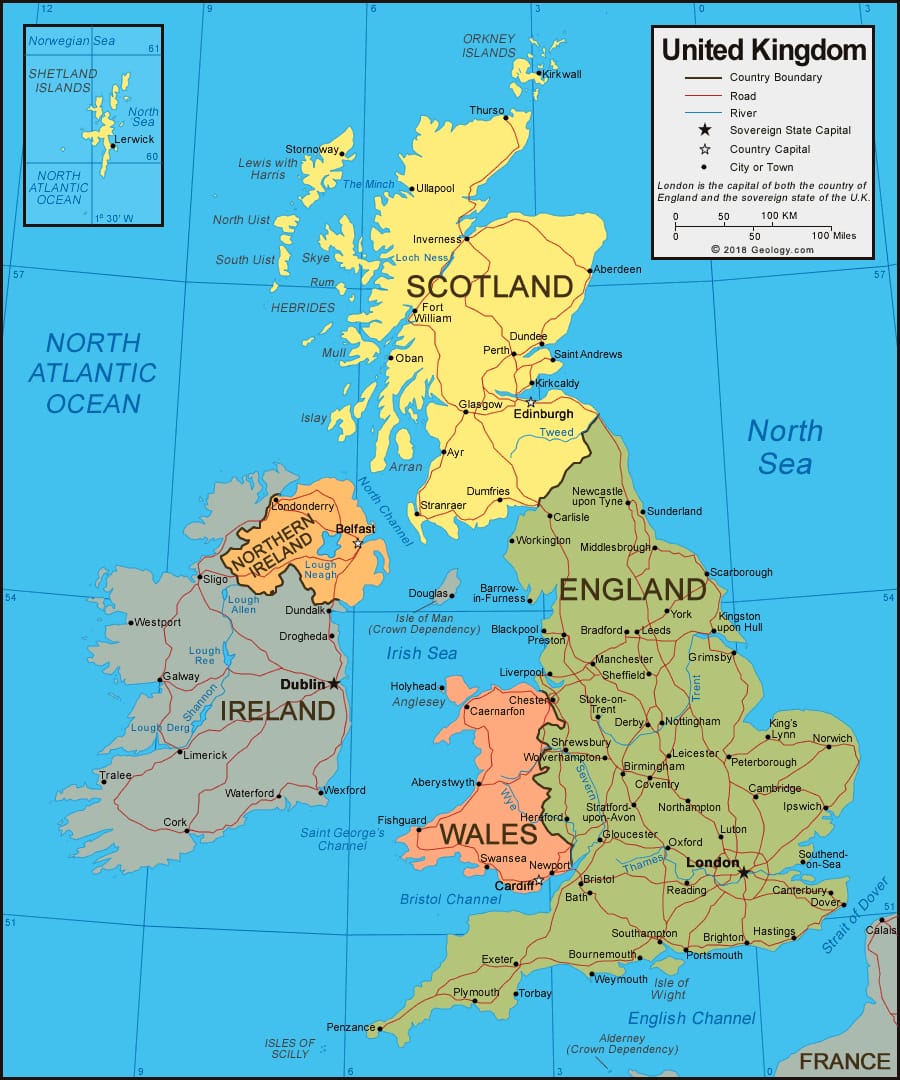
By Mobolaji Sanusi “Empires always have the hubris to think they are indestructible, when in fact they are always unsustainable.”—Marianne Williamson(1952 till date). Nothing in life lasts forever. Not even human life is interminable. Through contractual arrangements, humans and nations have devised legal frameworks that outlive generations. However enduring such arrangements may seem, a day comes when they outlive their usefulness, either by operation of law or through force majeure. The world have seen this happen with colonial rule in colonies around the world. No matter how long colonial rule lasted, the affected colonies eventually secured their liberation at one point or another. Even the most powerful country in contemporary times, the United States of America, was once colonised by Britain. Historically, it is interesting to note that England founded Jamestown in Virginia, known as the first permanent English settlement in what is today the United States in 1607. This feat was achieved through the London Company and the Plymouth Company, acting under King James I authority. In 1620, Plymouth Colony in Massachusetts was also founded by English migrants who arrived on the Mayflower. In essence, the United States was not immune from colonisation. Interestingly by 1732, when the Province of Georgia was founded, the original thirteen English colonies were complete. But the struggle for recognition was trenchant, and by 1776, the country gained its independence and became known as the United States of America. To this day, both countries still maintain sound diplomatic relations based on mutual respect. The expiration of colonial ties between these two countries reflects the impermanence of relationships anywhere in the world. The world, in subsequent decades, also witnessed the breakup of unified blocs and even the coming together of divided nations whose relationships were once considered historically impenetrable. The fragmentation of the Union of Soviet Socialist Republics (USSR) and the coming together of East and West Germany readily come to mind. The USSR, as a unified bloc, endured for sixty-nine years from its creation on December 30, 1922, until December 26, 1991, when it was formally dissolved. East and West Germany, in the aftermath of World War II, endured forty-five years of Cold War separation driven by the Allied powers and the Soviet-led communist bloc. West Germany came into existence on May 23, 1949, while East Germany was formed in October 1949. The Berlin Wall, built in 1961, separated the two Cold War-induced countries, which share a common ancestry and identity, until the Wall fell in November 1989 and the two countries reunified on October 3, 1990. Nothing, whether brought together by forceful, peaceful, or natural means, lasts forever. It is with this benefit of hindsight that the coordinated attempts by the leaders of Scotland, Wales, and Northern Ireland to seek self-determination from Westminster have become instructive. The three entities, perhaps inevitably, now perceive their current political arrangement under Westminster as unsustainable. John Swinney of Scotland and Michelle O’Neill of Northern Ireland called for an independence-seeking referendum and an Irish reunification poll, respectively. However, Wales’ Rhun ap Iorwerth gave approval for a declaration of self-determination but showed reticence in agreeing to a timeframe for a referendum on Welsh independence. One thing, however, is incontrovertible: the unwavering resolve of the three nations to stand alone as independent countries outside the United Kingdom framework. Their historic meeting of September 14, 2026, in Cardiff, Wales, created a solid platform affirming their commitment to this independence plan. The fact that the leaders of the governments of these nations are from nationalist parties has only catalysed the process of seeking a break away from the United Kingdom. British Prime Minister Andy Burnham is insisting that independence referendums cannot occur for now, which is albeit a temporary foreclosure of any imminent breakup. But for how long can Westminster stand in the way of the independence desires of these nations? This is in view of the fact that they have the democratic right to decide their own constitutional future through a referendum on independence or unification. Westminster needs to realise that whatever has a beginning must have an end, and the demands for independence by these three nations should not be an exception. Retrospectively, Westminster should be a good student of history and not be unduly recalcitrant. For example, Wales was historically annexed and became part of the Kingdom of England under the Laws in Wales Acts of 1535 and 1542. Scotland, in the same vein, joined the political union through the Acts of Union 1707. The passage of the Acts ended the period of shared monarchy that had existed since 1603 and created a single Kingdom of Great Britain. The Kingdom of Ireland was merged with the Kingdom of Great Britain through the Acts of Union 1800 to form the United Kingdom of Great Britain and Ireland in 1801. By 1922, when most of Ireland seceded to become the Irish Free State (now the Republic of Ireland), six counties in Ulster remained with the United Kingdom as Northern Ireland. As it happened in the United States, the old USSR, and even Germany, the United Kingdom, under Westminster’s political control in London, must be willing and ready to accede to the requests of these three nations to leave the United Kingdom union.What is happening in the United Kingdom should serve as a clear admonition to federations across the globe that no arrangement can outlive its expiry date. All federations anywhere in the world should be responsive to contemporary realities. The United Kingdom and other countries in similar situations have no option but to accede to the demands of the component units of their political system once clear desires for independence are expressed. Lest we forget that Edward Gibbon once observed in The History of the Decline and Fall of the Roman Empire that “All that is human must retrograde.” Who knows whether, like other human-contrived kingdoms that have hitherto existed, the grave of the monolithic United Kingdom might inevitably be awaiting its corpse, even though this might take a little while to happen? This gate also applies to other epileptic federations across the world. I rest my case for this week. Prof. Shaffdeen Amuwo at 80 “Aging is not lost youth but a new stage of opportunity and strength.” —Betty Friedan (1921-2006) Professor Shaffdeen Amuwo, CON, an elder statesman of repute and one of Nigeria’s remarkable exports to the outside world, specifically the United States of America, celebrated his eightieth birthday on Tuesday, September 15, 2026, with a family prayer at his Ikoyi residence. In Chicago and the entire United States, this respectable man of character has become renowned, first for his exploits in his chosen field of medicine, where he attained its apogee by becoming a professor, and second for his steadfast commitment to the cause of humanity and his unimpeachable character/integrity. His life so far is replete with examples worth emulating by true patriots. He is highly self-effacing despite his undeniable accomplishments and influence. This revered addition to the octogenarian group of elders in this great country hardly flaunts his importance and influence. Apart from the late Dr. Nurudeen Olowopopo, it is doubtful whether there is any living Nigerian who commands the childhood respect, trust and confidence of President Bola Tinubu, GCFR, like Professor Amuwo. Yet, he remains easy-going and devoid of any scandal that usually trails such men with vast connections in the corridors of power. No wonder his close knit 80th birthday prayer was well attended by the high and mighty in Lagos power circles and beyond. Governor Babajide Sanwo-Olu led the pack. His deputy and incoming Governor of Lagos State, insha Allah, Dr. Kadri Obafemi Hamzat, Bode Agoro, the Head of Service of Lagos State, among other notables, attended the ceremony. The president might have possibly attended if not for his currently being on vacation. Yours sincerely received the invitation directly from the octogenarian, but for reasons beyond my control that took me out of the state, I could not attend, although I was there in spirit. My apologies, sir, for my excusable absence. Kindly note sir that you remain our pride, a worthy model and a patriot of inestimable value. Happy birthday and long may you live for several more years in good health sir. •Sanusi, former MD/CEO of Lagos State Signage and Advertisement Agency, is currently Managing Partner at AMS RELIABLE SOLICITORS. (WhatsApp only: 07011117777
UK’s Disintegration As Prognosis For Federations
Full Article
Original Source
Read the full article at Thisdaylive →KhanList aggregates and links to publicly available news content. We do not host full articles from third-party sources. Always verify important information with original sources.