
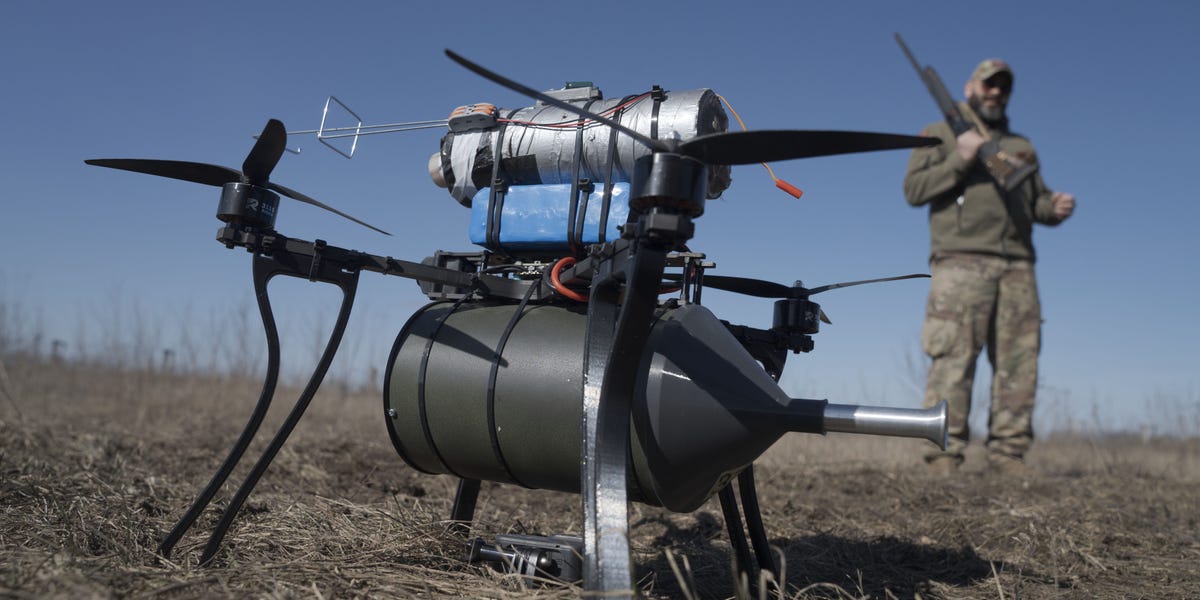
Ukrainian soldiers are finding deceptive uses for their unjammable fiber-optic drones as ambush tactics spread Ukraine can let its fiber-optic drones lie in wait and draw Russian soldiers out. Jose Colon/Anadolu via Getty Images Ukraine is using fiber-optic drones in increasingly deceptive ways, relying on their resistance to electronic warfare and close-range video feeds to scout Russian positions, study bunkers and dugouts, and create unusual openings for attacks, a soldier said.These jamming-resistant drones have been on the battlefield for over two years, and they have become an important tool for both sides, allowing troops to surveil and attack without their drones being brought down by electronic warfare.Dmytro "Liber" Zhluktenko, a former drone operator who is now an analyst in Ukraine's 413th Unmanned Systems Regiment "RAID," told Business Insider that Ukrainian operators are increasingly using fiber-optic drones in atypical ways — such as deception and ambush — to "create tons of chaos."He said that some operators have their drones play dead or purposefully lie in wait on the battlefield, exploding at just the right time to kill an approaching soldier or expose a protected enemy position rather than simply flying directly into a target and detonating on impact.He said fiber-optic drones are also helpful for studying Russian bunkers and dugouts because they can capture high-quality video of "all of the entrances, because you get the perfect footage, you could literally figure out what type of cover that they have on their entry to their dugout, and what you should do to open it."Close-range reconnaissance is one of the drone's best uses, Zhluktenko said. Before hitting Russian dugouts and bunkers, drone operators can gather "very good intel" and "very precise intelligence at very, very close range."While they can be used to chase and attack, he said, there are limitations that make them less than ideal for those missions. These drones, which are connected to the operator by a thin data cable, are slower than the untethered FPV drones, and the fiber-optic cables can "break quite easily when you just give it a full throttle."For fiber-optic drones, pilot commands and video feeds are transmitted through a physical cable instead of over radio frequency connections, which can be jammed by electronic warfare. The cable is delicate and can snap if caught on trees or obstacles. Some soldiers carry scissors to cut through any cables they come across. Fiber-optic drones are relatively new to the battlefield but have changed tactics. Maxym Marusenko/NurPhoto via Getty Images A US veteran who has fought for Ukraine told Business Insider on the condition of anonymity that there are "very simple ways to bring them down," including by cutting their wires. "In the wintertime," he said, "the cold will break them half the time." Still, these systems are considered necessary given the prolific electronic warfare threat.Zhluktenko said the cable was becoming more expensive, which has limited how often the drones are used. He said Ukraine was finding other ways to try to get the same stable connection, including by using masses of signal repeaters to keep radio connections online, but fiber-optic drones remain in play.The deception and ambush tactics Zhluktenko described are part of a growing trend on both sides of this war.A British medic working in Ukraine who spoke to Business Insider on the condition of anonymity said that Russia places drones in positions for ambushes.Russian drones, she said, will "actually sit within the grass or the verges, and a group of soldiers will either go past or drive past, and these things will literally activate and just almost jump out of nowhere and hit. ""We have this image of drones flying, making a great noise and making a great presence, but that is not the case," she said. "They can be quiet, insidious, and the one minute you'll be, shall I say, walking along a tree line, the next thing, you hear the noise, and then we see an explosion, and it's just so incredibly rapid. And because they're so fast, it's often way beyond your reflexes to actually react."Another US veteran who fought in Ukraine told Business Insider that Russian soldiers will use "land mine tactics," where they put the drone next to a road and leave it there, waiting for a vehicle or another target to approach.Ukrainians have called attention to these tactics as well. Serhii "Flash" Beskrestnov, then serving as a drone warfare advisor to Ukraine's defense ministry, said last year that Russia was using fiber-optic drones for "ambush" tactics, including lying in wait for targets along roadways."This is one of the tactics involving fiber-optic drones," he said. "It's effective and causes us a lot of problems." Russia is also using solar-powered drones that can lie dormant for this tactic."The drones hide on roads and at intersections," Beskrestnov said. "They're often placed on forest trails, waiting for a target. When they spot a vehicle, they take off and strike quickly, leaving little time to react." Read next Sinéad Baker is a Military and Defense Correspondent based in Business Insider's London bureau, writing about Russia's invasion of Ukraine and NATO actions.Sinéad most often covers soldiers' experiences, military strategy, battlefield developments, weapons systems, the defense industry's response, and the impact on NATO and European security, and geopolitical decisions that surround the Ukraine war. She has reported from NATO’s frontlines and around Europe, has interviewed multiple prime ministers and defense ministers, has appeared on BBC News and The Guardian's politics podcast, and has been cited by Congressional hearings.Sinéad has also extensively covered US politics and previously led Business Insider's breaking news coverage from London.Sinéad previously completed a master's degree in investigative journalism at City, University of London, and has written for The Guardian, The Observer, and TheJournal.ie. Sinéad is the former editor of the multi-award-winning The University Times in Dublin.ExpertiseExperiences of soldiers in Ukraine, including battlefield developments and tacticsWestern military responses to the war, and lessons they should learnNew weaponry built for and in response to the war Email Sinéad at sbaker@businessinsider.com or find her on X. Ukraine Drone Russia More Drones
Ukrainian soldiers are finding deceptive uses for their unjammable fiber-optic drones as ambush tactics spread
Full Article
Original Source
Read the full article at Businessinsider →KhanList aggregates and links to publicly available news content. We do not host full articles from third-party sources. Always verify important information with original sources.