
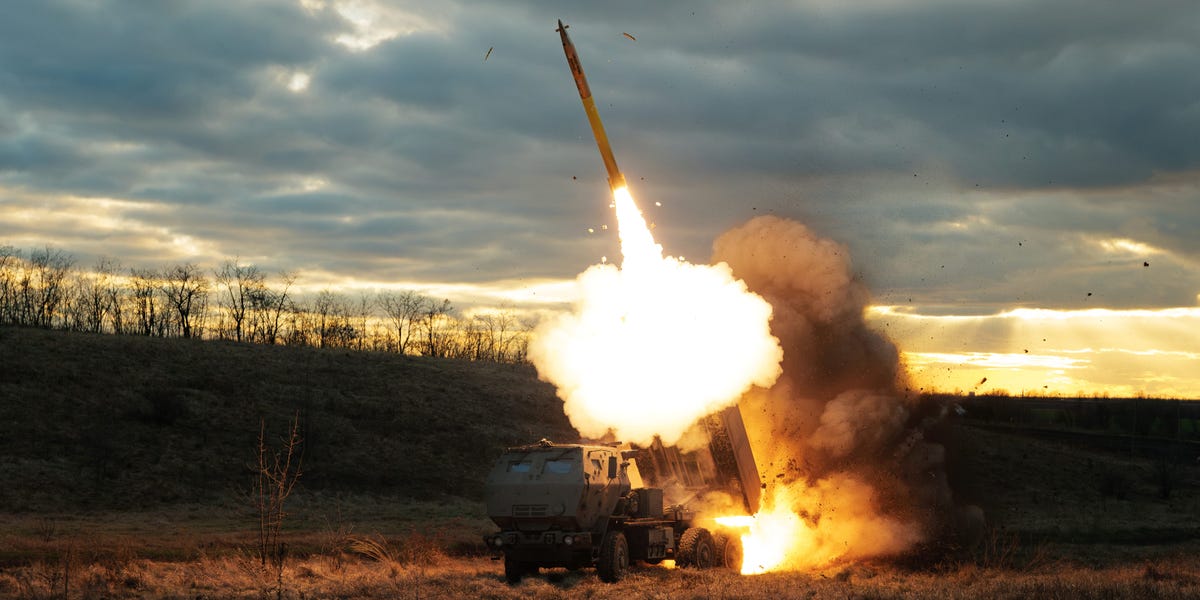
Ukraine is using artillery systems like the US-made HIMARS in key roles to take back territory from Russia in a major new operation. Serhii Mykhalchuk/Global Images Ukraine via Getty Images Ukraine's Operation Vivaldi, a major counteroffensive push to retake territory in the east, is showing that even as drones transform the battlefield, artillery remains an important tool for holding gains and keeping the enemy off balance.Unfolding near the city of Lyman, Operation Vivaldi has relied on drones and robotic systems, as well as some new battlefield tactics, to achieve key wins, but artillery has also been important to the operation's success. Ukrainian forces had recaptured 176 square kilometers of territory by the end of September, according to the Third Army Corps, the lead unit.The Institute for the Study of War, a US think tank, wrote on Friday that reports indicate that Ukrainian forces "heavily relied on artillery strikes in order to prevent Russian forces from regaining lost positions during Operation Vivaldi."It said those efforts demonstrated "how artillery remains relevant even in modern, drone-dominated battlefield conditions. "The ISW assessment cited an update from the Third Army Corps that said it had, for the purpose of executing this operation, "assembled one of the largest artillery formations of any corps — deploying so many systems per kilometer of the front that fire could be maintained continuously, even if individual guns were knocked out."The unit said its "artillery turned 'Vivaldi' into a kill zone for the enemy!"Drones worked with artillery to find targets that the artillery then destroyed, the unit said. "The artillery deprived the enemy of the ability to maneuver or return fire, allowing the Third Corps' assault troops to keep pushing forward."It said that the 52nd Separate Artillery Brigade and the rocket artillery units of multiple brigades were able to keep multiple settlements under fire. "Russian forces could not bring up reserves, equipment, or ammunition to try to restore their lost positions." The Third Army Corps said strikes by Ukrainian HIMARS, the US-made High Mobility Artillery Rocket System, destroyed more than 20 artillery guns, two Buk air defense systems, and two transport-loading vehicles, and also struck Russian command posts that were at the battalion level or higher.The beginning of Russia's full-scale invasion of Ukraine was a war of artillery, but drones quickly became a key weapon, with both militaries using them to launch attacks, gather intelligence, and help direct other weaponry. The Third Army Corps shared footage of what it said were strikes that prevented Russia from bringing in reserves, equipment, and ammunition to retake the positions it was losing. Third Army Corps In July, Mykhailo Fedorov, then-Ukraine's defense minister, said that drones accounted for around 95% of Russia's front-line losses.Drones are taking on new roles, as are other robotics systems, and that's been clear throughout Operation Vivaldi. The Third Army Corps said last month that it was using aerial drones to drop explosive-laden robots behind Russian lines, saying it "was the first in the world to begin air-deploying ground robotic systems."The success of drones has sparked debate in the West over what drones mean for more traditional weaponry like tanks and artillery. The latter appears to still have a part to play.Ukraine is developing multiple new artillery systems, and in June, its commander-in-chief announced plans to modernize the artillery forces, describing artillery as one of the main tools on the modern battlefield.Western analysts say artillery remains vital, especially when employed alongside a growing drone arsenal.Analysis published by RAND last month said that while strike drones "offer unprecedented operational agility, they cannot independently solve every tactical problem." Heavy artillery has remained indispensable against hardened, protected infrastructure, they wrote.Ben Jarvis, the UK's minister of state for security, said in June that "there are some who hold the view that we should trade everything in the locker for drones. I understand the temptation, but there are important distinctions to make.""Even in Ukraine, amid extraordinary advances in technology, it is still a war fought in the trenches where ground is held street by street, and where the reach of artillery and deep precision strike has proven invaluable." Read next Sinéad Baker is a Military and Defense Correspondent based in Business Insider's London bureau, writing about Russia's invasion of Ukraine and NATO actions.Sinéad most often covers soldiers' experiences, military strategy, battlefield developments, weapons systems, the defense industry's response, and the impact on NATO and European security, and geopolitical decisions that surround the Ukraine war. She has reported from NATO’s frontlines and around Europe, has interviewed multiple prime ministers and defense ministers, has appeared on BBC News and The Guardian's politics podcast, and has been cited by Congressional hearings.Sinéad has also extensively covered US politics and previously led Business Insider's breaking news coverage from London.Sinéad previously completed a master's degree in investigative journalism at City, University of London, and has written for The Guardian, The Observer, and TheJournal.ie. Sinéad is the former editor of the multi-award-winning The University Times in Dublin.ExpertiseExperiences of soldiers in Ukraine, including battlefield developments and tacticsWestern military responses to the war, and lessons they should learnNew weaponry built for and in response to the war Email Sinéad at sbaker@businessinsider.com or find her on X. Ukraine Russia Drones More Drone
Ukraine's Operation Vivaldi shows why artillery still matters in a drone fight
Full Article
Original Source
Read the full article at Businessinsider →KhanList aggregates and links to publicly available news content. We do not host full articles from third-party sources. Always verify important information with original sources.