
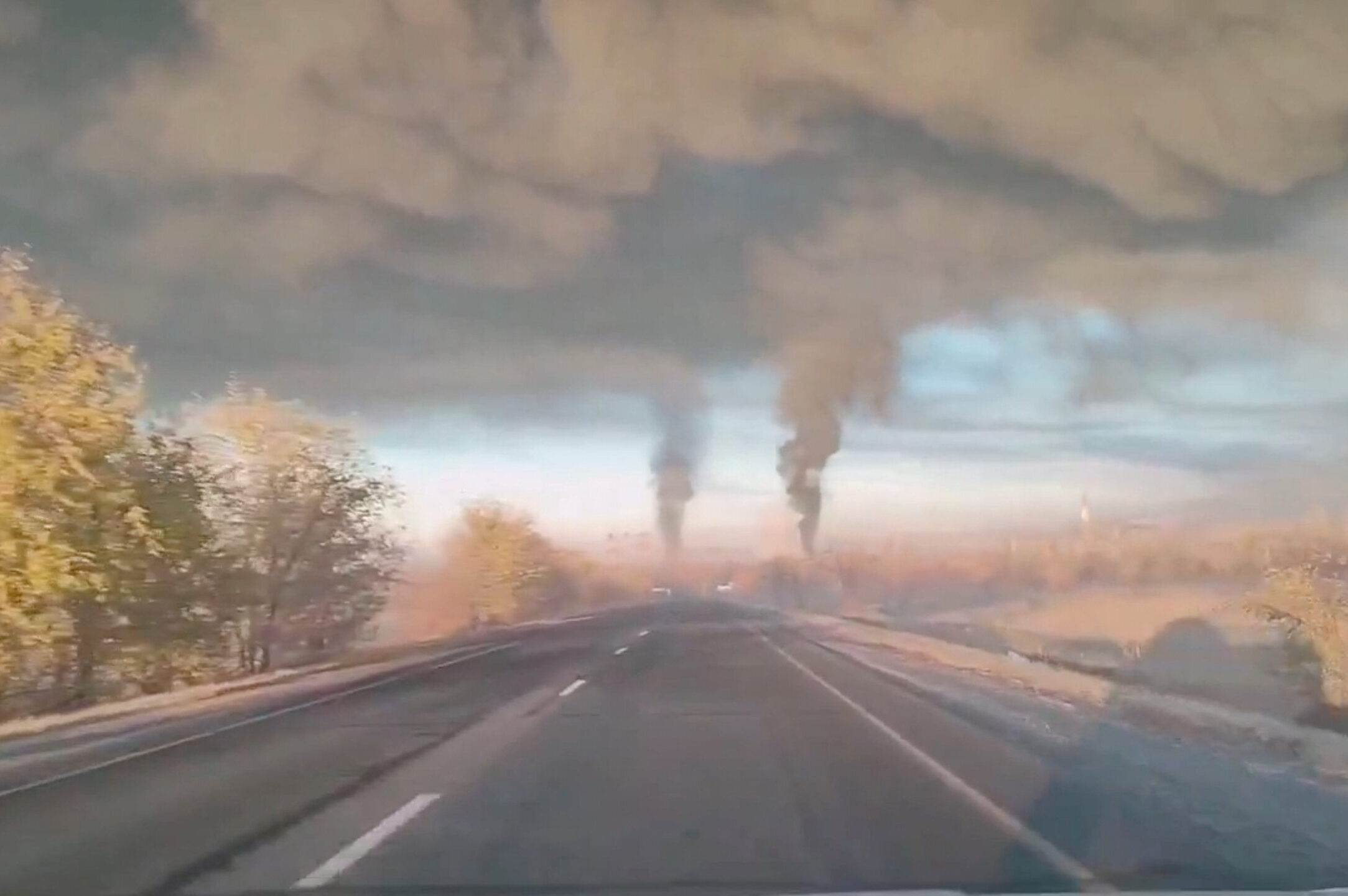
Ukraine has renewed attacks on Russian refineries in recent days, conducting a series of powerful strikes in quick succession that have inflicted significant damage on Vladimir Putin’s war economy and sparked fresh fuel shortages across Russia. Ukrainian airstrikes on the Russian energy industry have been escalating in scope and intensity throughout 2026, but were put on pause in October following US pressure amid concerns over spiraling global fuel prices. With America’s midterm elections looming, US President Donald Trump publicly called on Ukraine to stop the attacks, leading to rising tensions between Kyiv and Washington. Ukrainian President Volodymyr Zelenskyy initially backed Trump’s proposal for an energy ceasefire, while insisting that any truce must be bilateral. Once it became clear that Russia intended to continue bombing Ukraine’s civilian power grid, Ukrainian attacks resumed, with a new wave of strikes beginning on October 30. This latest phase in Ukraine’s strategic bombing campaign appears to have been highly effective, with nine of Russia’s thirty-five major refineries hit over a ten-day period, including large facilities in Ryazan, Yaroslavl, and the Volga region. These long-range attacks have reduced Russia’s oil refining capacity by around 30 percent, according to Reuters. Stay updated As the world watches the Russian invasion of Ukraine unfold, UkraineAlert delivers the best Atlantic Council expert insight and analysis on Ukraine twice a week directly to your inbox. Speaking last week, Zelenskyy made clear that Russia’s ongoing attacks on his country’s critical civilian infrastructure meant that Ukraine no longer felt bound by any commitments to pause strikes on energy sector targets. Moscow had “refused the de-escalation steps that our partners talked about,” the Ukrainian leader underlined. The impact of Ukraine’s renewed bombing campaign is already being felt far beyond the refineries themselves. A number of Russian regions have begun reporting fuel shortages since the beginning of November, leading to the introduction of petrol rationing. These restrictions mirror similar steps taken during summer 2026, when an earlier stage of Ukraine’s aerial offensive was credited with causing the biggest Russian fuel crisis since the collapse of the Soviet Union. Eurasia Center events The intensity of Ukraine’s recent attacks reflects Kyiv’s growing long-range offensive capabilities. When Putin first launched the full-scale invasion in 2022, Ukraine had only very basic long-range weapons systems and was unable to conduct meaningful strikes deep inside Russia. Almost five years on, Ukrainian long-range drones are now able to hit high value targets at distances of up to three thousand kilometers. This long-range strike potential is widely viewed in Kyiv as critical to the current war effort. Ukrainian policymakers believe that by bringing Putin’s invasion home to Russia, they can increase the pressure on the Kremlin dictator and force him to the negotiating table. Ukraine’s expanding long-range arsenal is also seen as a key deterrent against future invasions. Few Ukrainians place much faith in written security guarantees provided by Kyiv’s Western partners. Instead, many argue that the most effective guarantee against further Russian aggression is Ukraine’s own proven ability to strike back. Russia is certainly vulnerable. Since 2022, Ukraine’s escalating air war has highlighted the difficulty of defending the world’s biggest country against large-scale aerial assault. With limited air defense systems at its disposal, the Kremlin has struggled to neutralize the threat posed by Ukrainian drones. This has transformed Russia’s vastness from a military asset into a strategic liability. Ukrainian officials insist that they remain open to an energy ceasefire if Russia also agrees to stop attacks on Ukraine’s civilian infrastructure. For now, that looks unlikely. On the contrary, Russia is dramatically scaling up its own airstrike campaign as Moscow looks to weaponize the coming winter season by plunging Ukraine’s cities into freezing darkness. With the Russian army struggling to advance on the battlefield, Putin’s plan is to break Ukrainian resistance by targeting the civilian population and rendering much of the country uninhabitable. Ukraine’s response to these terror tactics will include further strikes on Russian refineries. It is not yet clear whether Kyiv can maintain the momentum of recent days, but the damage caused by these latest Ukrainian attacks will have set off alarm bells in Moscow. When Putin launched the invasion of Ukraine, he was expecting a victorious little war. He now finds himself confronted by an innovative and determined adversary capable of disabling almost one-third of Russia’s oil refining capacity in a matter of days. Peter Dickinson is editor of the Atlantic Council’s UkraineAlert service. Further reading The views expressed in UkraineAlert are solely those of the authors and do not necessarily reflect the views of the Atlantic Council, its staff, or its supporters. The Eurasia Center’s mission is to enhance transatlantic cooperation in promoting stability, democratic values, and prosperity in Eurasia, from Eastern Europe and Turkey in the West to the Caucasus, Russia, and Central Asia in the East. Follow us on social media and support our work Image: Smoke rises over the Novokuybyshevsk oil refinery, as the Samara region governor reports a Ukrainian massive drone attack on the region, amid the Russia-Ukraine conflict, in Novokuybyshevsk, Samara region, Russia, October 30, 2026, in this screengrab taken from a social media video. (SOCIAL MEDIA/via REUTERS)
Ukraine’s new drone blitz cuts Russian oil refining capacity by 30 percent
Full Article
Original Source
Read the full article at Atlanticcouncil →KhanList aggregates and links to publicly available news content. We do not host full articles from third-party sources. Always verify important information with original sources.