
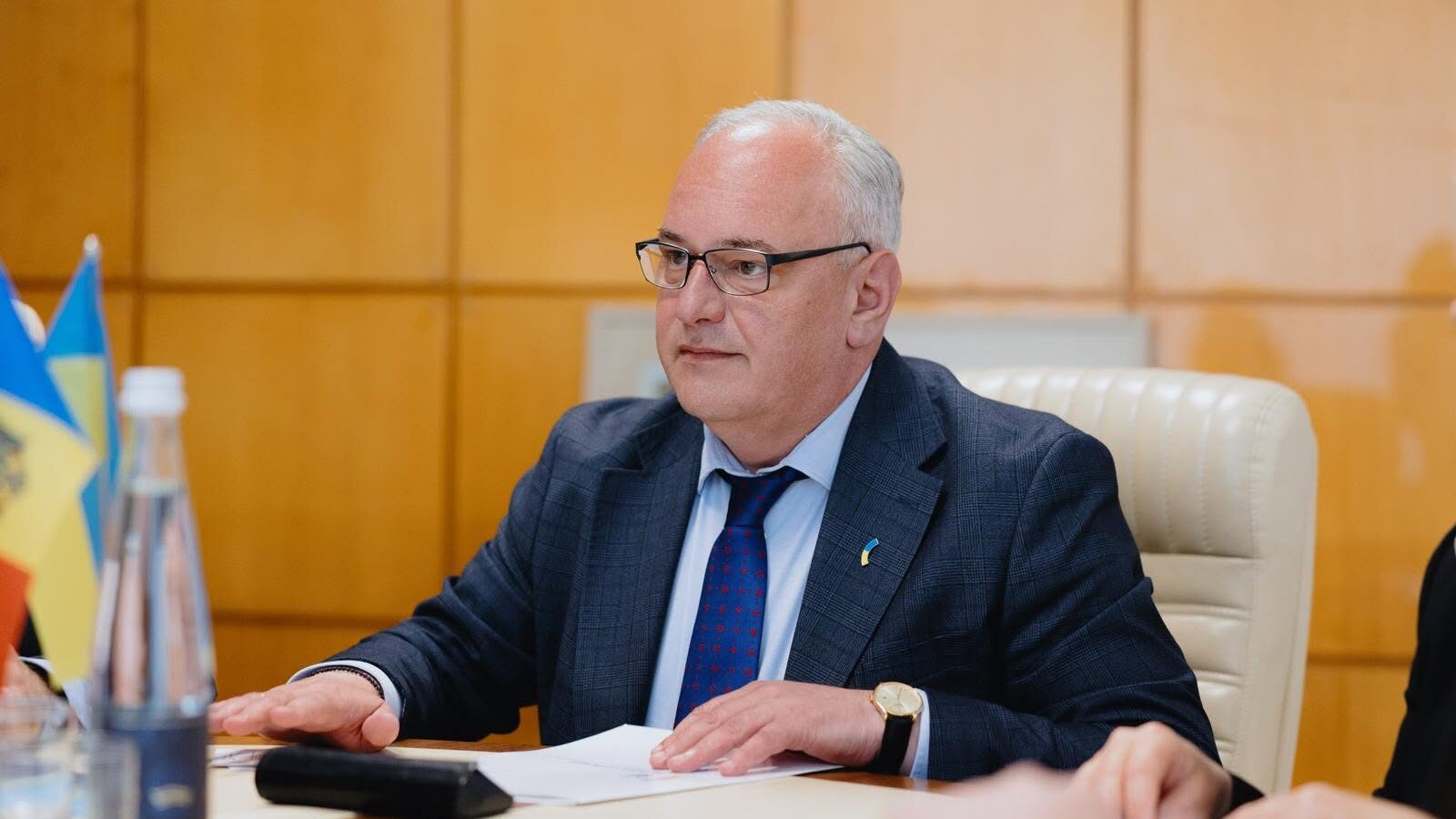
As Ukraine readies itself for another winter of Russian missile and drone attacks, Kyiv faces two big challenges at once: keeping its damaged energy system running and making progress on the reforms needed to join the European Union. The impact goes beyond the fighting. Russian attacks have repeatedly damaged power stations, substations and heating facilities, leaving millions of Ukrainians facing another winter with power cuts, heating problems and nights in underground shelters. "We will have another difficult winter – but this is not our first difficult winter," Ukraine's ambassador to Moldova, Paun Rohovei, told BIRN in an interview in Chisinau, Moldova’s capital. Russia’s ongoing attacks on Ukraine’s energy system have made electricity generation and distribution key parts of the country’s national defence. Rohovei admitted that the destruction is massive. However, Ukrainian officials say the country is better prepared than before. They have found new energy sources, learned how to repair infrastructure during attacks, and are connected to Europe’s main electricity grid. Both Ukraine and Moldova linked their electricity systems to the European network in March 2022, soon after Russia’s full-scale invasion. This ended their reliance on Russian and Belarusian systems. This lets Ukraine import emergency electricity to offset damage to power plants at home. “It allows us to compensate for part of our electricity losses with supplies from our European partners,” Rohovei explained. But technical fixes alone cannot fully protect civilians from the effects of ongoing attacks. “We have become accustomed to these realities,” Rohovei said. “But it is not good to become too accustomed.” President of Ukraine Volodymyr Zelensky (L) is greeted by Hungarian PM Peter Magyar (R) on the second day of a European Council summit in Brussels, Belgium, 16 October 2026. EPA/OLIVIER HOSLET EU accession breakthrough after Hungary drops objections As Ukraine works to protect its infrastructure, it also achieved a key diplomatic win last week in its long effort to join the EU. On October 13, EU governments agreed to open two additional negotiating clusters with Ukraine, covering the internal market and competitiveness and inclusive growth. The decision followed Hungary’s withdrawal of its objections after the Ukrainian parliament the day before adopted legislation strengthening educational rights for national minorities. This breakthrough means four of six negotiating clusters are now open – a big step for a country trying to join the EU while fighting a major war. Under Viktor Orban’s pro-Russian government, ousted in the April general election, Hungary had used concerns over the rights of Ukraine’s ethnic Hungarian minority, particularly language and education, to obstruct progress. Romania has raised similar concerns about the future of Romanian-language education in Ukrainian regions with substantial ethnic Romanian populations. Rohovei dismissed claims that Kyiv gave in to foreign pressure: “Ukraine did not make compromises. Ukraine did what happens in a democratic state. There are demands, there is an analysis and assessment of the situation, and then decisions are taken. I consider this evidence of the maturity of a democratic society.” He promised that Ukraine would protect minority-language education, while arguing that citizens must also be able to participate fully in Ukrainian-speaking public life. “We will preserve and certainly work to diversify the education system for national minorities,” he said. The agreement with Hungary shows that disputes between countries can slow down EU enlargement, but legislative reforms and political talks can help solve these problems. However, opening more negotiating clusters does not mean Ukraine will join the EU anytime soon. Kyiv still needs to prove it is carrying out reforms, especially in the courts, public administration and anti-corruption bodies. Four years ago, Ukraine, Moldova and Romania launched the Odesa Triangle – a trilateral format for cooperation. Pictured are (L-R) Moldovan Foreign Minister Mihai Popșoi, Ukrainian Foreign Minister Andrii Sybiha and Romanian Foreign Minister Oana-Silvia Țoiu, on 15 September 2026. Photo: Facebook / Ministry of Foreign Affairs of Ukraine Joint drone production and a regional security triangle The impact on the ongoing war has led Ukraine and neighbouring Moldova to work together more closely on security. Russian drones have repeatedly entered Moldovan airspace, exposing the country’s weak air defenses and leading to talks about building local drone and anti-drone technology. Rohovei believes these repeated violations cannot simply be dismissed as accidents: “When the same thing happens several days in a row, it is no longer simply a coincidence.” Asked whether Moscow was deliberately testing Moldova’s airspace, he replied: “Absolutely. It is a test of the airspace.” Ukraine, whose rapidly expanding drone industry has become central to its military resistance, could become an important technological partner for Moldova. “We have examples of cooperation with the United States, and we have established cooperation with Romania,” Rohovei said. “We are open to discussing such cooperation with Moldova as well.” However, he did not confirm a joint manufacturing agreement or a concrete technology-transfer project. This possible partnership would be part of the larger Odesa Triangle, which connects Ukraine, Moldova and Romania. This three-country initiative now focuses more on cybersecurity, sharing information, better transport links and regional energy security. Rohovei said cooperation between specialised security institutions had become systematic rather than occasional. “There is a permanent exchange of information with our Moldovan colleagues, whom I would call our allies,” he said. He also highlighted the development of trilateral cybersecurity cooperation: “We have created a cybersecurity alliance with Moldova and Romania. Information exchange is no longer spontaneous. A system has been established, and it is working very well.” For Moldova, this arrangement helps the country become more resilient to Russian hybrid threats while staying neutral as required by its constitution. For Ukraine, working with Moldova and NATO-member Romania is creating a more important regional security network along the western Black Sea. Rohovei also stated Ukraine’s willingness to explore commercial gas exports to Moldova, arguing that regional energy cooperation could reduce dependence on Russia. “The gas surplus exists, and official statements have been made. We have unblocked exports,” he told BIRN. However, no specific supply contract with Moldova was confirmed in the interview. The Dniester Pumped Storage Hydroelectric Power Plant, one of the most strategic projects of Ukraine. Photo: Ilie Gulca Dniester River water crisis exposes new tensions with Moldova As well as encouraging cooperation, the war has also complicated Ukraine’s relationship with Moldova, especially over the Dniester River, a key source of drinking water for both countries. Severe drought has dramatically reduced river flows, pressuring Ukraine’s Novodnistrovsk reservoir and raising concerns about supplies to downstream Moldovan communities, including Chisinau. According to Ukrainian government figures, water inflows into the reservoir fell to just 24 cubic metres per second on September 17 and 20, about 11 per cent of normal levels and the lowest daily averages recorded since the reservoir began operating. Moldova’s government reported in late September that the reservoir had fallen below 111 metres, compared with a normal level of about 121 metres. Arguments over plans to reduce water releases have led to accusations that Ukraine is holding back water. Rohovei strongly rejected those allegations. “There has been a great deal of speculation recently, including claims that Ukraine is deliberately stopping the water,” he told BIRN. “We could end up blaming Ukraine for the lack of water in the Dniester. By that logic, if there were a solar eclipse, Ukraine would also be blamed.” The ambassador attributed the crisis primarily to prolonged drought and insufficient rainfall in the Carpathian mountains, where the Dniester originates. “I consider this a natural disaster. The lack of rain and the drought have led to this situation,” he said. Rohovei warned that releasing excessive volumes from Ukraine’s reservoirs could create additional risks for the functioning of hydropower infrastructure and future water supplies. “If we take the wrong steps, we could cause an even greater catastrophe,” he said. “Suppose, theoretically, we release the water from the reservoirs, we would have water for two or three weeks. But what would we do afterward?” Reservoir operators must balance the needs of people downstream, environmental requirements, electricity production and safe water levels. Releasing water faster than it is replaced can help downstream for a short time but worsen shortages in the long run. Ukraine itself was suffering from severe water shortages. “In Ukraine, we have been forced to ration it,” he said, referring to communities supplied according to restricted schedules. “Ukraine has never deliberately cut off water supplies to the population and will never do so.” But this crisis shows there is an urgent need for better cross-border water management, clear information about water levels and alternative water sources. “Relying on just one river is very dangerous,” Rohovei warned. Ukrainian President Volodymyr Zelensky (R) and European Commission President Ursula Von der Leyen (L) react after a joint press conference in Kyiv, Ukraine, 15 July 2026. EPA/SERGEY DOLZHENKO Corruption remains a test of Ukraine’s European ambitions Few issues are as important to Ukraine’s EU ambitions as the independence of its justice system and its ability to investigate high-level corruption. Since the 2014 Maidan revolution, Kyiv has built a specialised anti-corruption architecture, including the National Anti-Corruption Bureau of Ukraine, NABU, and the Specialised Anti-Corruption Prosecutor’s Office, SAPO. The institutions were established to investigate and prosecute corruption involving senior officials, including politically influential individuals. However, maintaining these institutions’ independence remains a sensitive political issue. Legislation restricting their autonomy triggered public protests and criticism from Western partners. Following intense pressure, President Volodymyr Zelensky signed legislation restoring their independence. The controversy highlighted the ongoing tension between Ukraine’s reform promises and political efforts to influence the institutions that investigate powerful people. Asked whether corruption scandals involving senior officials undermined international confidence in Ukraine, Rohovei argued that such investigations also demonstrated the effectiveness of the country’s anti-corruption institutions. “The very fact that people of such a high rank, if they have violated the law, have been held accountable is evidence that we have achieved certain results in this field,” he told BIRN. “NABU and SAPO, the institutions we have created, are very independent, and reality shows that there are no people who are exempt, even if they belong to the highest levels of state leadership.” The ambassador admitted that more reforms are needed and said Western support has been key in building Ukraine’s anti-corruption system. “We have a lot of work ahead of us, and we rely very much on cooperation with our partners, both in Europe and across the Atlantic,” he said. “We received enormous assistance from the United States in creating our anti-corruption system. We also received major assistance and extensive advice from the European Union.” Ukraine has also put significant effort into digital public services, which help reduce direct contact between citizens and officials and lower the risk of bribery. For Brussels, having independent institutions is a basic requirement for joining the EU. Investigating senior officials is important, but fair court cases, enforceable decisions, and protection from political interference are just as necessary. Rohovei believes closer integration with EU legal and institutional systems will strengthen Ukraine’s capacity to fight corruption. He argues that the country’s European ambitions are inseparable from its struggle for survival. “Ukraine is paying the highest price today to achieve the primary foreign policy objective of European and Euro-Atlantic integration,” he said.
Ukraine’s EU Accession Push Is Gaining Momentum, Says Ambassador to Moldova
Full Article
Original Source
Read the full article at Balkaninsight →KhanList aggregates and links to publicly available news content. We do not host full articles from third-party sources. Always verify important information with original sources.