
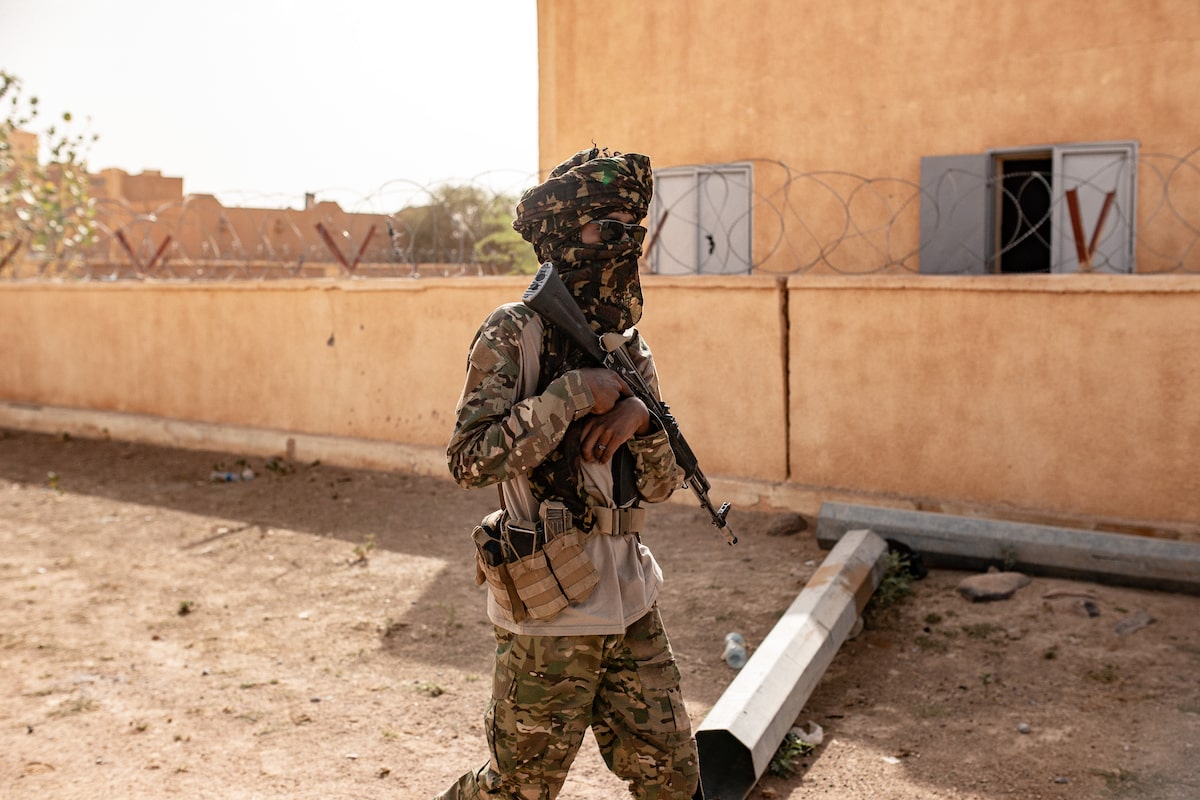
Open this photo in gallery:A fighter of the Azawad Liberation Front (FLA) stands guard outside a secured building in Kidal, northern Mali, in May.Samir Maouche/ReutersIn the latest escalation of the shadow war between Russia and Ukraine in African battle zones, Kyiv is releasing photos of its security forces in Africa for the first time, sparking debate over the diplomatic risks posed by its military operations on the continent.The Ukrainian operatives are helping insurgent militias attack Russian troops in West Africa, a tactic that aligns with Kyiv’s global goals. But analysts warn that Ukraine could anger and alienate African governments by confirming its support for rebel groups.After years of strategic ambiguity, Kyiv has twice posted photos this month of its military intelligence agents in Africa, lifting the mask off its covert operations. The photos show Ukrainian personnel in combat camouflage assisting African fighters in desert locations.Russia’s ruling pro-Putin party on track for election win after Ukrainian attacks on MoscowThe photos are widely reported to be from northern Mali or adjoining territory, where the Ukrainians are assisting a Tuareg separatist group that is fighting the Malian army and its Russian allies, according to a CNN report and independent analysts.Russia has deployed about 1,500 to 2,000 troops in Mali, backed by warplanes, drones and armoured vehicles, to protect the military regime, which expelled French and United Nations forces in the country after seizing power in coups in 2020 and 2021. The Russian troops are mainly engaged in fighting Islamist insurgents and Tuareg separatists. Open this photo in gallery:Russian President Vladimir Putin shakes hands with Interim President of the Republic of Mali Assimi Goita during a signing ceremony following their talks at the Grand Kremlin Palace in Moscow last year.Pavel Bednyakov/ReutersOne of the photos of Ukrainian forces was released Saturday by Kyrylo Budanov, the former Ukrainian spy chief who now heads the office of President Volodymyr Zelensky.Mr. Budanov said he was celebrating the birthday of a “combat general of Ukrainian intelligence” when he posted a photo of a Ukrainian officer holding an assault rifle and speaking to about 15 masked African rebels with rifles and machine guns. Based on the desert background and the distinctive attire of the insurgents, the photo appeared to have been taken in northern Mali.In an earlier post this month, Mr. Budanov said Ukrainian intelligence forces were operating “from Russia to Africa, from suits to camouflage.” In a collage of photos, he included one of Ukrainian soldiers at another desert site that has been identified as northern Mali.In 2024, after rebels killed dozens of Russian soldiers in a battle in northern Mali, Ukrainian military intelligence spokesperson Andriy Yusov said the insurgents had received “the necessary information” to launch their attack on the Russians. He did not specify exactly who provided the information, but the comment prompted the government of Mali to announce it was severing relations with Kyiv.Ukraine’s involvement in Africa “offers Kyiv a relatively inexpensive way to impose comparatively high military and financial costs on Russia,” according to Tobias Rüttershoff, a West Africa expert at the Konrad Adenauer Foundation, a German institute.But its military presence could contradict Kyiv’s diplomatic goals in Africa, he told The Globe and Mail. “Helping Russia’s opponents may yield tactical gains,” he said, but “association with armed groups can undermine the trust Ukraine is trying to build with African states.”In a bid to catch up to Moscow’s strong diplomatic and military influence in Africa, Kyiv has been ramping up its diplomatic visits and opening new embassies on the continent. It has opened eight new diplomatic missions in Africa since 2023.The Ukrainian operatives in Mali are reportedly providing drone expertise to the Tuareg separatist militia, known as the Front for the Liberation of Azawad (FLA), and helping the group detect and attack Russian troop convoys.Lured into the Russian army, Africans face heavy casualties in UkraineIn a large-scale offensive against Malian and Russian troops in April, the FLA formed an alliance with the main Islamist militia, an al-Qaeda affiliate known as JNIM. This could create a reputational risk for Ukraine, since it could be seen as indirectly helping the Islamist militants, Dr. Rüttershoff said.“The FLA and JNIM remain distinct organizations, but their current military co-operation is substantial enough to make indirect benefits a serious concern,” he said. “In my assessment, strengthening the FLA could help JNIM through co-ordinated operations even without any direct transfer of Ukrainian equipment or training.”Bruno Charbonneau, a professor of international relations at Royal Military College Saint-Jean in Quebec, said the Ukrainian deployment in Mali is a low-cost operation with potentially substantial benefits for Kyiv.The Ukrainians can use their drone expertise to increase the pressure on Russia and stretch Moscow’s resources, he said. But their presence is unlikely to resolve Mali’s internal conflicts and could make the situation more “deadly and chaotic,” he told The Globe.Russia, for its part, has a growing military presence in several African countries, including thousands of troops in countries such as Mali, Niger and the Central African Republic, along with an extensive intelligence operation that includes disinformation campaigns, paid influencers, surveillance operations and front groups.Earlier this month, Moscow announced the opening of eight new cultural centres, known as “Russian Houses,” across the continent. Ukraine accuses Moscow of using the centres to promote Russian propaganda. Independent studies have found the centres are often linked to pro-Moscow influence operations.
Ukraine discloses evidence of its military operations against Russia in Africa
Full Article
Original Source
Read the full article at Theglobeandmail →KhanList aggregates and links to publicly available news content. We do not host full articles from third-party sources. Always verify important information with original sources.