
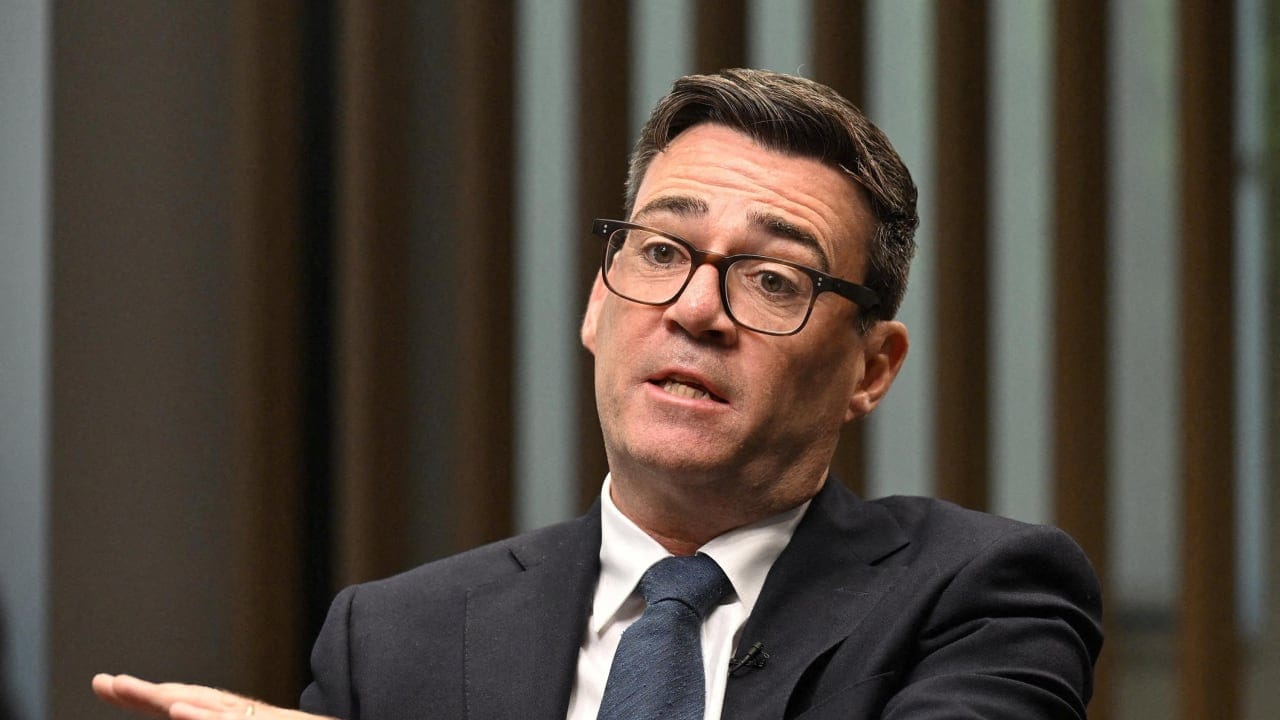
Burnham acknowledged the role of hostile states "peddling lies and conspiracy theories about minority communities," and the "poison spreading online."Follow us on GoogleBritain's Prime Minister Andy Burnham speaks during an interview with BBC journalist Laura Kuenssberg at No 10 North at Heron House, in Manchester, Britain, July 24, 2026. (photo credit: JEFF OVERS/BBC/HANDOUT VIA REUTERS)OCTOBER 7, 2026 20:16Prime Minister Andy Burnham's two op-eds marking the third anniversary of October 7 show support for Jews facing antisemitism, but a lack of understanding on where that antisemitism comes from and the way in which his own government has contributed to it.Writing in both the Jewish Chronicle and Jewish News on Wednesday, Burnham acknowledges the pain of the Jewish and Israeli communities.His language is empathetic: Burnham speaks of those "senselessly killed by Hamas terrorists" and speaks of October 7 as the "deadliest day for the Jewish people since the Holocaust." Both pieces speak of the "disturbing" rise in antisemitic behaviour in the UK, and incidents such as the Heaton Park terror attack last year.Burnham reassures the Jewish community that the government stands with them and that "abuse is not tolerated in our streets."He then sets out measures being taken by his government to combat Jew hatred, such as increased protection for synagogues, schools and community buildings.British Prime Minister Andy Burnham meets with Jewish community leaders in London (credit: REUTERS/JACK TAYLOR/POOL)Burnham does also acknowledge the role of hostile states "peddling lies and conspiracy theories about minority communities" and the "poison spreading online and teaching young people to recognise attempts to radicalise and divide them."Lack of acknowledgement of links between anti-Zionism, antisemitismOn the surface, the op-eds tick all the boxes.But beneath the rhetoric is a lack of clarity and specificity. The hate, although acknowledged, is not named.Neither article meaningfully addresses the relationship between antisemitism and contemporary anti-Israel or anti-Zionist activism, despite Burnham's observation that overseas conflicts can rapidly become domestic sources of hostility. Nor do they examine the political movements, demonstrations or slogans that have generated some of the biggest debates over antisemitism since the Hamas attack.This in turn allows Burnham to frame the issue primarily through the language of security and cohesion while avoiding the more politically divisive debate over Israel and Gaza.The distinction is also apparent in his treatment of Britain's Jewish community. In the JC, Burnham addresses Jewish readers directly, offering reassurance that the government will "protect" them. In Jewish News, the Jewish community becomes part of a much broader argument about the status of British society.Burnham, the political saviour of JewsThe rhetoric correspondingly becomes more sweeping. Burnham argues that “division is a threat to our security” and that allowing antisemitism to take root makes Britain weaker. The article ultimately moves from a promise to protect Jewish communities to a promise to transform the country itself: “We will do more than just remember. We will change this country.”This progression places Burnham himself increasingly at the centre of the narrative, and The repeated emphasis on “we” will do and “I will act” reinforces his role as the political saviour.Taken together, the two articles serve two overlapping purposes.The first is to reassure British Jews that their security is being treated as a government responsibility. The second is to establish antisemitism as part of a broader political argument about national resilience, foreign interference and social cohesion.Burnham's central proposition is that protecting Jewish institutions cannot be separated from protecting Britain as a whole. But what is less developed is how that broader diagnosis translates into confronting the specific political and ideological sources of antisemitism in contemporary Britain.UK sanctions on Israeli settlements in the West BankThe contrast is striking given Burnham’s recent approach to Israel.In September, his government imposed measures targeting Israeli settlements in historical Judea and Samaria, with Burnham defending the decision by arguing that continued settlement expansion could make a two-state solution unviable.The measures came despite repeated and forceful warnings from Jewish communal leaders that sanctions could have “unintended consequences” for British Jews.Burnham has maintained that there is no contradiction between confronting antisemitism and putting pressure on the Israeli government, but that juxtaposition raises a political tension at the heart of his October 7 message: while presenting himself as a defender of British Jews against hatred linked to the conflict in the Middle East, his government is simultaneously adopting increasingly punitive measures against Israel, measures that Jewish communal representatives have warned could feed into the very climate of anti-Israel hostility and antisemitism he says he wants to combat.Follow us on Google
UK Prime Minister Burnham's October 7 op-eds show a gap between rhetoric and reality - analysis
Full Article
Original Source
Read the full article at Jpost →KhanList aggregates and links to publicly available news content. We do not host full articles from third-party sources. Always verify important information with original sources.