
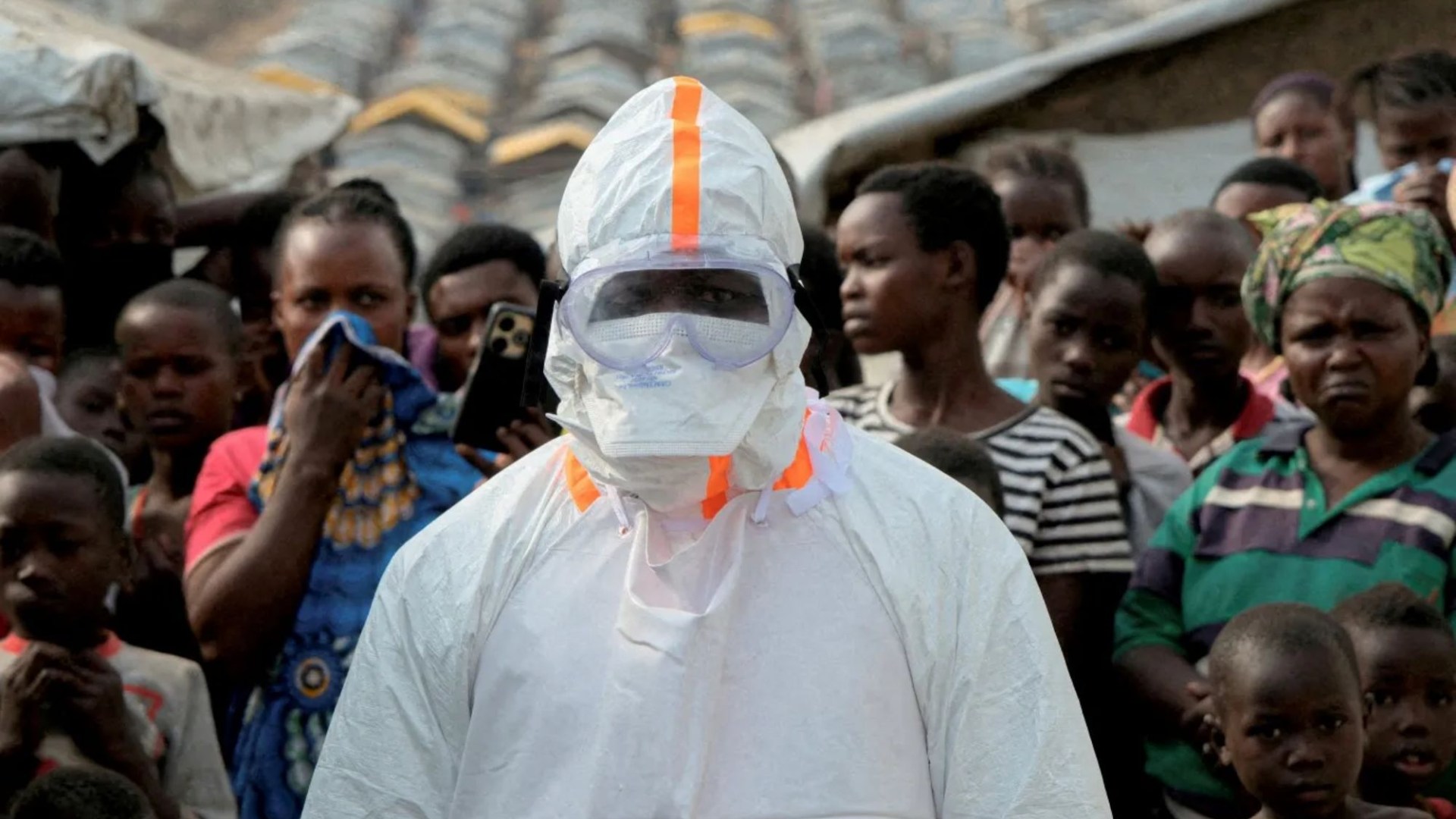
HealthHealth News A BRITISH humanitarian worker has been evacuated back home after being exposed to the Ebola virus while in the Democratic Republic of Congo (DRC). The unidentified person has been taken to a London hospital where they are being assessed and monitored in isolation. A British humanitarian worker has been flown back to the UK after being exposed to the Ebola virus Credit: REUTERS More than 930 people have died since the virus broke out in the Democratic Republic of Congo since May Credit: AP Photo/Prosper Heri Ngorora The worker was treating patients in the DRC when they had a “potential healthcare-related exposure”. The highly infectious disease first broke out in the DRC on May 15, with international organisations working alongside governments to stop its spread. Sign up for the Health newsletter Thank you! It has since killed more than 930 people among the 2,344 confirmed infected in the African country. It is reported that the evacuated person did not display any symptoms, but was flown out of the DRC to a London hospital. Director general of Africa Centres for Disease Control and Prevention Jean Kaseya said the US had ‘no reason’ to impose travel bans on the region Credit: Reuters They have been quarantined, with an incubation period for Ebola ranging from two to 21 days. The UK Health Security Agency has said that there are currently no confirmed cases of Ebola in the UK. Richard Pebody, from UKHSA, said: “The risk to the general public remains low. “This individual has been transferred out of an abundance of caution, and we’re pleased they remain well.” Most read in Health Africa’s top public health agency said on Tuesday that it did not support the travel bans imposed in response to the continent’s worsening Ebola outbreak. It has urged the United States to lift the restrictions which it says make medical supply and personal transport more difficult. Director general of Africa Centres for Disease Control and Prevention Jean Kaseya said that there was “no reason” for the US to continue with its travel restrictions. In a written note to US health secretary Robert F. Kennedy, Kaseya requested the travel restrictions to be lifted on Uganda. He added that African countries should be “punished” for being transparent about disease outbreaks. The Africa CDC estimates it needs $1.4 billion to contain the outbreak, almost three times the $518 million initially projected last month. With the travel ban in place, Kaseya has said limited flights would disrupt trade, adding “if we don’t have this money, we will not stop this outbreak”. “If we don’t stop this outbreak today, it will be the worst one that the world will be documenting,” he said. How does Ebola spread and what are the symptoms ? The virus is transmitted through direct contact with blood and body fluids and objects that have been contaminated by someone with Ebola. It also spreads through contact with sick or dead wild animals. It can take symptoms two to 21 days to appear following infection – this is known as an incubation period. Ebola first appears as a high fever, intense muscle and joint pain, headaches and a sore throat. Initial symptoms are often followed by vomiting and diarrhoea, rashes on the skin, kidney and liver failure, and sometimes internal and external bleeding. People who survive the virus can suffer from arthritis as well as vision and hearing problems. Some types of Ebola can be prevented with vaccines and treated with medicines. Source: World Health Organization
UK humanitarian worker evacuated to London hospital after being exposed to Ebola virus in DR Congo outbreak
Full Article
Original Source
Read the full article at Thesun →KhanList aggregates and links to publicly available news content. We do not host full articles from third-party sources. Always verify important information with original sources.