
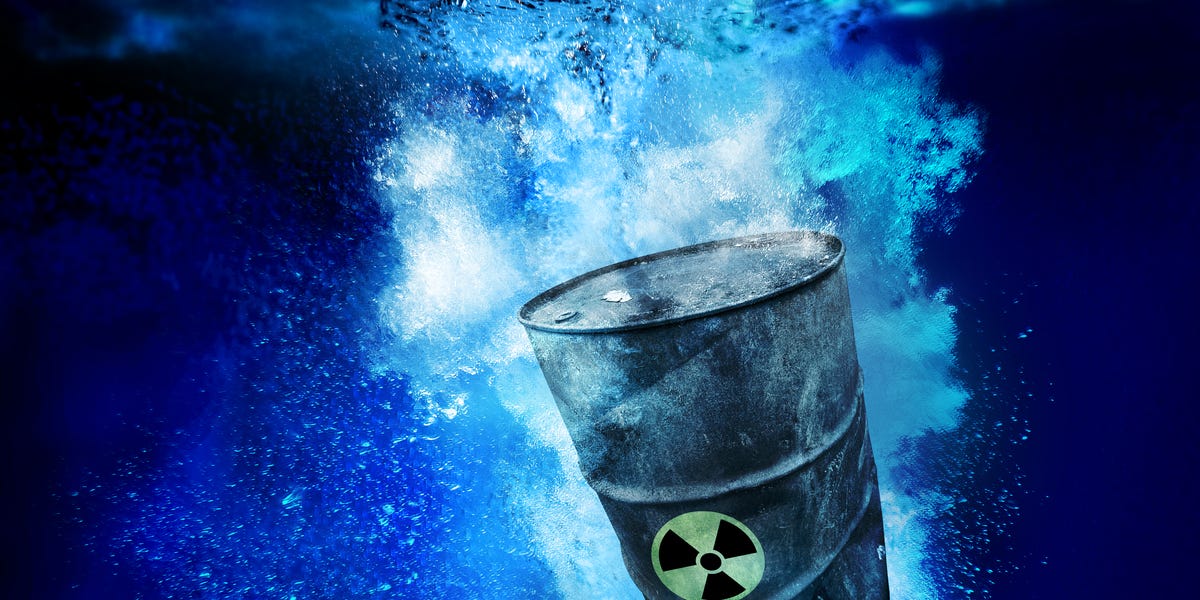
3 min readHere’s what you’ll learn when reading this story:From 1971 until 1982, several European nations regularly dumped radioactive waste in the North Atlantic, eventually totaling 200,000 barrels. A new deep-sea survey located 3,500 of these barrels by mapping only two percent of the entire dumping area and collected extensive specimens of surrounding animal and microbial life, as well as soil and water samples. Now, a months-long analysis is underway to determine the extent of the pollution’s impact, providing one of the most comprehensive deep-sea radioecological studies in history.Few things are more dangerous to living beings than radioactive material. The ionizing radiation emitted by radionuclides can damage tissue and alter human DNA, so in a way, it’s remarkable just how cavalier Western countries have often been in their choice of methods to dispose of this extremely dangerous waste.In the U.S., for example, the government put the majority of its radioactive waste from plutonium production during the Cold War into single-shell waste tanks near the banks of the Columbia River in Washington state. Dozens of those tanks have leaked or are currently leaking into the surrounding soil. Europe, unfortunately, didn’t have a much better plan and, from 1971 to 1982, it decided to just dump more than 200,000 barrels of radioactive waste into the Atlantic Ocean (the U.S. used a similar strategy with poisons such as DDT and other forms of caustic waste).For the past two years, scientists from the French National Center for Scientific Research (CNRS) have used resources from the French Oceanographic Fleet to survey the North Atlantic nuclear waste disposal site. They’ve discovered thousands of barrels lying on the seafloor covered in sea sponges, anemones, and crabs. In 2025, the CNRS canvassed the 14,500-square-kilometer spill site with an autonomous robot capable of diving to a depth of 6,000 meters (20,000 feet) and used a multibeam echosounder and synthetic antenna imaging sonar to map huge areas of the seabed. Although the robot mapped only 2 percent of the spill area, it successfully found 3,500 barrels of radioactive waste.Once targets were identified, researchers inside the submersible Nautile, which has performed more than 2,000 dives since its launch in 1984, collected samples from 50 or so barrels in five areas and also gathered specimens of surrounding sediment, water, and microbial communities. The hope is to both understand how these barrels have impacted their oceanic resting place and to develop broad knowledge about how radioactive materials behave after 50 years in a marine environment.“The barrels alter the environment by providing a hard substrate that becomes colonized, potentially facilitating the transfer of radionuclides to living organisms,” two researchers involved in the project, Javier Escartin and Patrick Chardon, wrote in The Conversation. “This is one of the first radioecological studies in the deep sea, requiring the implementation and development of new procedures and methodologies ranging from the definition of the sampling strategy to onboard radiation protection.”With the samples now in hand, scientists from France, Norway, Germany, and Spain will embark on a months-long analysis to identify radionuclides, confirm their number, and explore how the radiation has spread in the environment. Once completed, the study will likely be one of the most comprehensive studies of its kind, according to the authors.While it’s too late to undo the damage inflicted on the environment by previous generations, having a deeper understanding of how these systematic episodes of pollution impacted the world will help future generations avoid making the same mistakes.Darren lives in Portland, has a cat, and writes/edits about sci-fi and how our world works. You can find his previous stuff at Gizmodo and Paste if you look hard enough.
Uh... There Are 200,000 Barrels Leaking Radioactive Waste at the Bottom of the Atlantic
Full Article
Original Source
Read the full article at Popularmechanics →KhanList aggregates and links to publicly available news content. We do not host full articles from third-party sources. Always verify important information with original sources.