
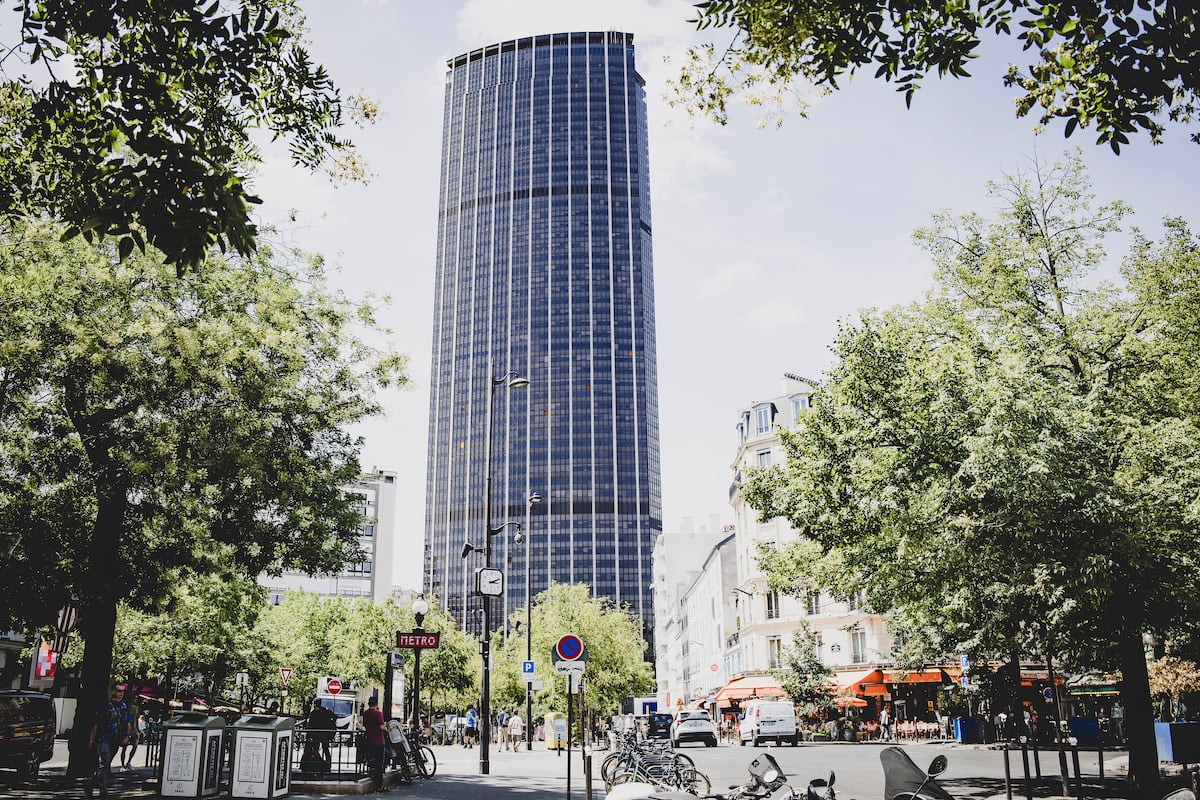
They call it the unloved tower. It has the best views in Paris because, at 209 meters (686 feet), it is the city’s tallest skyscraper, but also, as Parisians like to joke, because from the top you cannot see its own ugliness on the horizon. The Montparnasse Tower, which remains one of Paris’s most distinctive buildings despite its unpopularity, has been stuck in a real estate limbo for months. An ambitious renovation project, first conceived a decade ago and whose initial works were due to begin this autumn, was rejected by a majority of the building’s owners because of its steep cost: €800 million (about $910 million)Construction of the Montparnasse Tower began in 1969, and the building was inaugurated in 1973. It was part of a broader urban redevelopment project that also included a shopping center and two other office buildings. Until then, there were no skyscrapers in the French capital, and it became the second-highest point on the Paris skyline after the Eiffel Tower (276 meters, or 906 feet, and classified as a monument). Public opposition to the modern building was so intense that, years later, the Paris City Council passed legislation banning the construction of buildings taller than 37 meters (121 feet) within the city limits.Located next to Montparnasse Station, the fourth-busiest railway station in Paris, handling 61 million passengers a year, the skyscraper had not been renovated in half a century. In 2005, asbestos was discovered in the building, and the idea gradually gained traction of using the asbestos-removal works as an opportunity to give the tower a new look.Plans for the renovation began to take shape in 2017 under the direction of the architects of the Nouvelle AOM collective. The aim was to reshape the Paris skyline by transforming the concrete-and-dark-glass tower into a brighter, more energy-efficient building with glass façades. In addition to office space, the project included a hotel with hundreds of rooms spread across several floors, retail outlets and a landscaped rooftop area so that visitors could continue to enjoy the tower’s exceptional views. The Montparnasse Tower was also set to gain around 10 meters (33 feet) in height.The tower’s 59 floors and 120,000 square meters (1.29 million square feet) were vacated in March so that the first phase of asbestos removal and the partial dismantling of the façade could begin this autumn. The works were scheduled to finish in 2030. This summer, however, some of the co-owners voiced opposition to the project because of its high cost and made it conditional on finding financing. In late September, 76% of the co-owners voted against the plan at a general assembly, which was seen as the last opportunity to break the deadlock and launch the works after months of disagreement. The future of the tower has now been thrown into limbo, as the building permit expires at the end of November.300 ownersProperty management has always been complex. A kind of vertical monopoly where entrepreneurs and investors buy space floor by floor. At one point, the building had 300 owners, although the largest stakeholders gradually began buying out smaller ones. The largest shareholder, with a 30% stake, is LFPI (La Française Real Estate Partners International), which had already expressed its opposition to the project in July. Other major stakeholders include businessmen Xavier Niel and Frédéric Lemos, as well as insurers Axa and MGEN, each holding around 10%.The mayor of Paris, Emmanuel Grégoire, has been forced to intervene, arguing that although the tower’s renovation is a private project, the revitalization of the surrounding urban area is a matter of public interest. The ambitious renovation plan, which over the past decade involved four renowned architectural firms, now appears to have been shelved: no luminous new façade, no hotel and no rooftop garden.The tower remains empty of tenants, and talk has shifted from transformation to “rehabilitation.” A more modest and less costly solution now seems likely, one limited to removing the asbestos and restoring a sense of purpose to a building that, despite its enduring unpopularity, has carved out its own place in the Paris skyline.Sign up for our weekly newsletter to get more English-language news coverage from EL PAÍS USA Edition
Ugly, unloved and controversial: The real estate fiasco of Paris’s tallest skyscraper
Full Article
Original Source
Read the full article at English →KhanList aggregates and links to publicly available news content. We do not host full articles from third-party sources. Always verify important information with original sources.