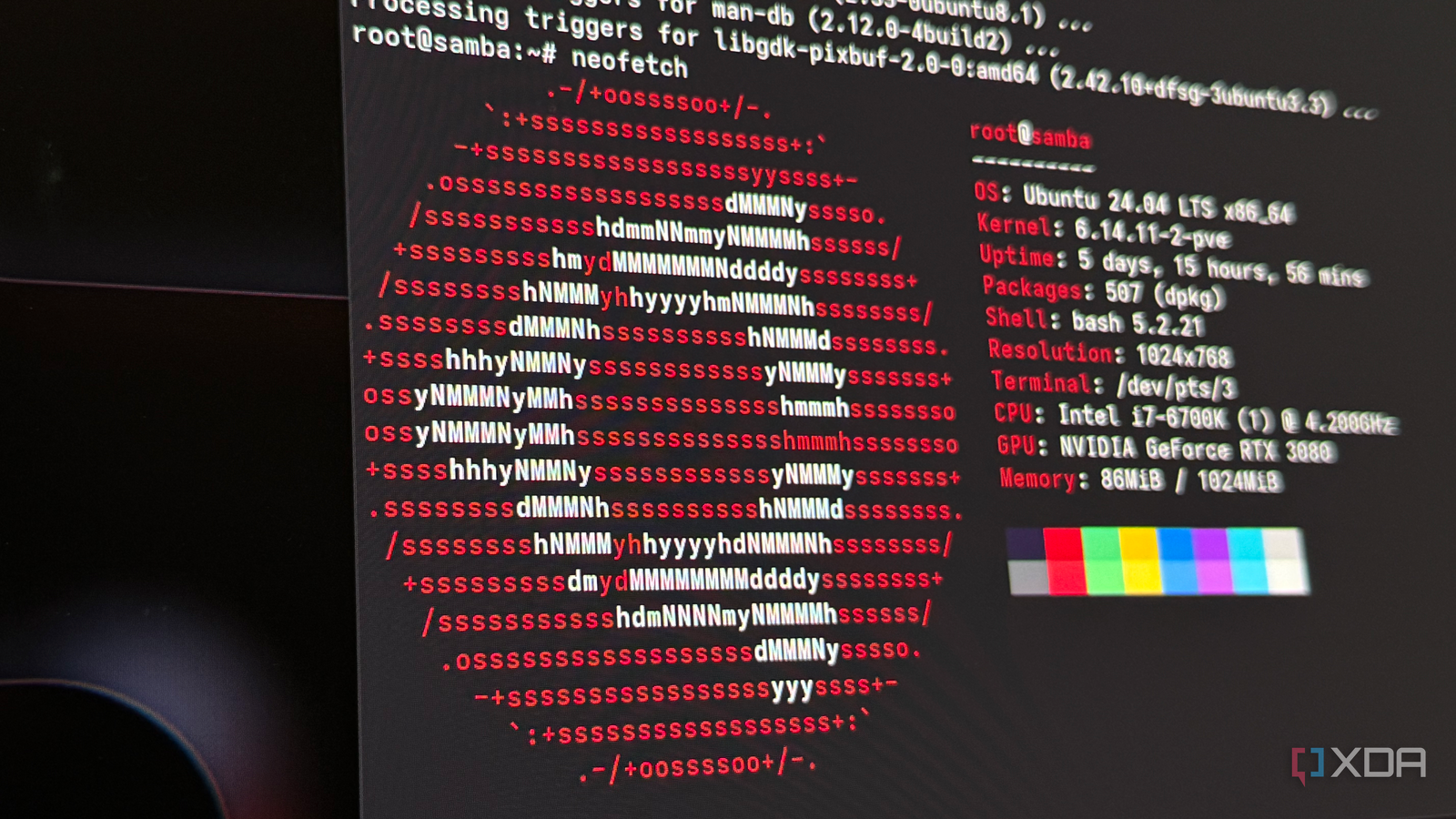
Published Jul 23, 2026, 8:00 PM EDT His love of PCs and their components was born out of trying to squeeze every ounce of performance out of the family computer. Tinkering with his own build at age 10 turned into building PCs for friends and family, fostering a passion that would ultimately take shape as a career path. Besides being the first call for tech support for those close to him, Ty is a computer science student, with his focus being cloud computing and networking. He also competed in semi-pro Counter-Strike for 8 years, making him intimately familiar with everything to do with peripherals. If you spin up a container in Proxmox and go looking for the "right" base distro, there's many a home lab enthusiast that will point you straight towards Debian, and it's a reasonable answer. It's what Proxmox VE is built on, so it'd be reasonable to expect it to be the best option for running your LXCs, and while Debian containers can absolutely get the job done with their own set of pros, Ubuntu LTS is continually what I reach for when spinning up new LXCs. For services pulled from repos or one-line install scripts that are becoming increasingly common, Ubuntu is the base that argues with you the least, and that's exactly what you want out of your Linux containers. The software meets you where you are on Ubuntu LXCs You don't want an exotic LXC base The best thing about choosing something like Ubuntu for your LXCs is that almost everything assumes it. Ubuntu LTS sits at the center of a lot of Linux gravity, and that spares you the small time and effort taxes that add up across a home lab. It shares some of this quality with Debian for sure, but the extras pile up on Ubuntu's side. PPAs are an Ubuntu thing, and they're often the quickest place to grab niche or newer software without hunting down a third-party repo. Also, Ubuntu's Universe repository is absolutely massive, and its userland tends to run ahead of Debian stable through the middle of a cycle, so more things install straight from the base repos without a third-party source bolted on. This dodges repo juggling when you're just trying to get something to install from a single apt command. You can copy, paste, and move on, which is appreciated. LTS benefits can't be overstated You get lengthy security update support with Ubuntu LTS Having a solid base for an LXC is crucial, because many of the services you run in them are set-and-forget. Ubuntu LTS is a perfect candidate for such containers because of its long-term security maintenance commitment on the main repo. For a container you spin up once and expect to still be quietly running in a few years, a long, predictable support window is exactly the temperament you want. I think one thing worth clearing up about distro choice for LXCs is the fact that no matter which you choose, they'll always share the host kernel. Choosing Ubuntu for an LXC doesn't give you a different kernel version to work off of, it's more about the userspace freshness and how long you'll be fed consistent patches and updates that are stable and "known-good." Debian is another strong contender It's native to the Proxmox environment Debian might seem like the even more boring option, given that it's exactly what Proxmox VE runs on, so it'll feel 1:1 in terms of userspace with the host. It's the most common recommendation you'll see in forums and home lab circles because it's a bit leaner and dodges some of the Ubuntu "ick" some people get. If every one of your containers runs a single service off packages that already exist in Debian's repos, it's worth ditching Ubuntu just for simplicity’s sake. For example, if you want to run Samba for your file shares or Postgres behind some app, it's the same apt install command on either base. Those packages sit in Debian's repos exactly as they do in Ubuntu's, so the native choice costs you nothing in these cases. I pick and choose when to use Debian, but default to Ubuntu Some things are just quicker to deploy The reputation that Ubuntu has gained is largely due to its handling of the desktop operating system and full server install, not the LXC, which is super minimal with no snaps running, no desktop, and little more than a base init. Want snapd in an Ubuntu container? You install it yourself; it isn't sitting there by default, and the templates for both Debian and Ubuntu land within a few megabytes of each other, which is a worthwhile trade for a wider net of repos, PPAs, and the way that documentation assumes you're on Ubuntu. PPAs specifically are worth noting for LXCs, because they are specifically an Ubuntu mechanism, and they turn a lot of "get the current version" chores into a single command. Ansible is the best example I've experienced: the copy in a distro's base repo is frozen to whatever shipped with the release and only sees security fixes after, so on Ubuntu you add ppa:ansible/ansible and track upstream with one add-apt-repository. Debian can point at that same source, but you're wiring up the keyring and the sources line by hand to get there. Ubuntu's bad reputation as a desktop doesn't have anything to do with its effectiveness as an LXC The base distro of an LXC is the layer you want to think about least, and "boring" is about the highest compliment I can give any of them. Ubuntu LTS earns it in a way that its desktop OS simply can't. The ecosystem assumes it, the support window outlasts my patience for maintenance, and inside a container the old bloat gripe rounds to basically nothing. Debian and other distros can make for a great, lean alternative, but when they show up first in documentation, it's usually the exception rather than the rule, and that's one of the biggest reasons why I don't reach for them.
Ubuntu LTS is the best Proxmox LXC base, even though Debian seems like the obvious choice
Full Article
Original Source
Read the full article at Xda-developers →KhanList aggregates and links to publicly available news content. We do not host full articles from third-party sources. Always verify important information with original sources.