
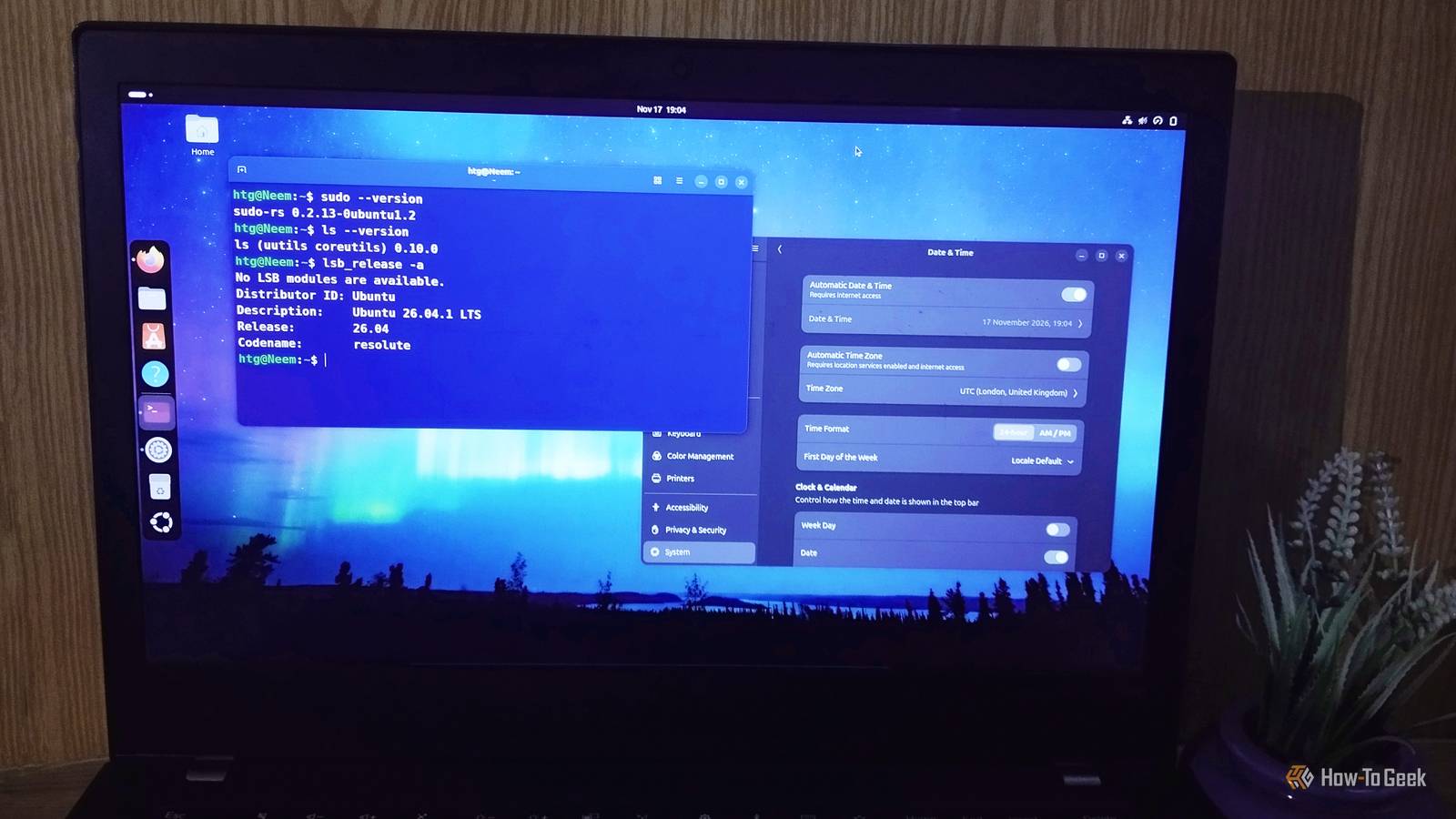
Published Nov 19, 2026, 12:30 PM EST Nimrah has spent the last five-plus years writing about technology, with Linux being one of her favorite subjects to explore. Her work covers everything from Linux and open-source software to databases, cybersecurity, and everyday software. She has contributed to Baeldung, Make Tech Easier, and LinuxHint. She particularly enjoys turning a concept that initially seems complicated into something anyone can understand. Away from tech, she loves to read, cook new recipes, and try new restaurants and cuisines. You may have heard that Ubuntu is going through something Canonical calls oxidation (greater oxidation) or Rustification, and wondered what it actually means for you. The idea is simple: gradually replace old C-based system utilities with Rust alternatives so that the tools Ubuntu depends on are more secure and more reliable. It started with Ubuntu 25.10, which made the Rust-based uutils coreutils and sudo-rs the defaults. Ubuntu 26.04 LTS carried the rollout forward, and 26.10 finished the coreutils migration. Not everyone is cheering, though. Some users welcome the move toward memory safety, while others are frustrated by compatibility problems and wonder why Canonical is replacing decades-old tools at all. Then there’s the licensing debate. If you’re on a recent Ubuntu release and haven’t run into any problems, that’s good news. The commands you type are mostly the same. What’s changing is the code doing the work behind them. Your everyday Linux commands are getting a Rust makeover Coreutils is getting a new engine, not a new set of commands If you use Ubuntu regularly, you've probably encountered GNU Coreutils without thinking about it. This collection provides familiar commands such as ls, cat, head, chmod, cp, and rm. They're so deeply embedded in Linux workflows that scripts, applications, and system services depend on their behavior. Canonical is replacing GNU Coreutils with uutils, a Rust-based reimplementation. The goal isn't to change how these commands work or introduce a completely new terminal experience. It's to preserve their familiar behavior while reducing the memory-safety risks associated with C. Ubuntu 25.10 introduced uutils as the default provider, but Canonical initially kept several commands on their GNU implementations. Ubuntu 26.04 retained cp, df, mv, rm, and true because of compatibility and security concerns. The Rust versions of cp, mv, and rm also needed additional security work after audits (performed by Zellic) identified time-of-check-to-time-of-use vulnerabilities. Ubuntu 26.10 finally completed the migration, making uutils the default for the entire Coreutils collection. GNU Coreutils hasn't disappeared, though. Ubuntu continues to provide it as an alternative. sudo is getting a security-focused replacement, too sudo is the most well-known Linux command (even non-Linux users have heard of it, if only in hacker movies or tech memes like “sudo hack NASA”). It’s also one of the more sensitive tools in a Linux installation. A vulnerability here can have serious consequences, so improving its security is a worthwhile goal. However, unlike uutils, sudo-rs doesn’t try to be a perfect copy of the original. Its approach is to ask what sudo should look like if it were designed today, with decades of security lessons applied. But don’t assume that a replacement written in a safer language automatically supports every old workflow. sudo-rs doesn’t provide every feature of the traditional implementation, and some advanced configurations can behave differently. For example, FreeIPA and SSSD users have reported problems with centrally managed sudo permissions in Ubuntu 26.04. If you use sudo to install an application or edit a configuration file, you might barely notice the change. If you manage a fleet of Linux machines with carefully configured authentication and privilege rules, it’s a different story (probably the horror one). Luckily, the original sudo is still available as a fallback. Before upgrading a machine you can’t afford to break, test any scripts or setups that depend on older sudo behavior. What you'll notice For most people, the honest answer is nothing. Your commands still work the way they always have, and you’ll likely never know which implementation is running behind. That’s exactly what Canonical is aiming for. The exceptions are edge cases, like the date -r bug in Ubuntu 25.10 that quietly stopped some systems from checking for updates automatically. Though it was fixed quickly. sudo-rs is easier to spot. The first thing you’ll see is that your password now appears as asterisks as you type, instead of the blank prompt you’re used to. Beyond that, you’ll only run into differences if your setup leans on older or more advanced sudo features, which is why admins should check Ubuntu’s documentation before rolling it out widely. Rustification is moving beyond the terminal ntpd-rs replaces chrony Canonical’s plans don’t stop at the utilities you run yourself. It’s also working toward replacing chrony, Ubuntu’s existing network time synchronization service, with ntpd-rs, and is funding the Trifecta Tech Foundation to make that happen. The idea is one program and one config file that handles Network Time Protocol (NTP), Network Time Security (NTS), and Precision Time Protocol (PTP), instead of juggling chrony and linuxptp. Ubuntu 26.10 makes ntpd-rs available for testing, with Canonical targeting Ubuntu 27.04 for default adoption. Chrony will stay available, so existing setups won’t be forced over. UPKI wants to make certificate checks less of a browser-only feature UPKI (Universal Public Key Infrastructure) may be the most interesting of the bunch. Browsers check whether a website’s certificate has been revoked, but command-line tools like curl and wget generally don’t. UPKI is a new project that aims to bring browser-grade revocation checking to the whole system using CRLite. This is already becoming practical in Ubuntu 26.10, which introduced UPKI integration for curl. In other words, certificate security is becoming part of Canonical’s wider Rustification effort, rather than something users only associate with their browsers. How users reacted to this Rust makeover Compatibility and licensing debate is bigger than Rust versus C Reaction has been mixed, and early on it leaned negative. Compatibility problems, like the date -r bug in Ubuntu 25.10, made some users question whether core system tools should be replaced at all, especially on servers. Licensing is the other sore point. GNU coreutils is GPL-licensed, while uutils uses the permissive MIT license, and critics worry vendors could ship closed-source modified versions. Others argue a locked-down device stays locked down regardless of license. Supporters point to memory safety, which rules out whole classes of bugs, and to a modern codebase that’s easier for new contributors. Canonical calls the move a calculated risk. Personally, I think every big step toward a better future draws criticism and a few inconveniences at first, because it pushes people out of their comfort zone. I expect that, in time, the move will prove worthwhile. Growing pains now, a stronger Ubuntu later Rustification won’t make Ubuntu look any different, and that’s the point. The real change is underneath, in the tools every script, service, and admin relies on. The most successful replacements are often the ones users barely notice, and that’s the bar Ubuntu’s Rust makeover has to clear. Early bugs and licensing arguments show that replacing decades-old software is never painless, so test before you upgrade. But as these tools mature, the payoff is fewer memory-safety flaws and a healthier base for new contributors.
Ubuntu is rewriting Linux foundations in Rust, and you'll feel it
Full Article
Original Source
Read the full article at Howtogeek →KhanList aggregates and links to publicly available news content. We do not host full articles from third-party sources. Always verify important information with original sources.