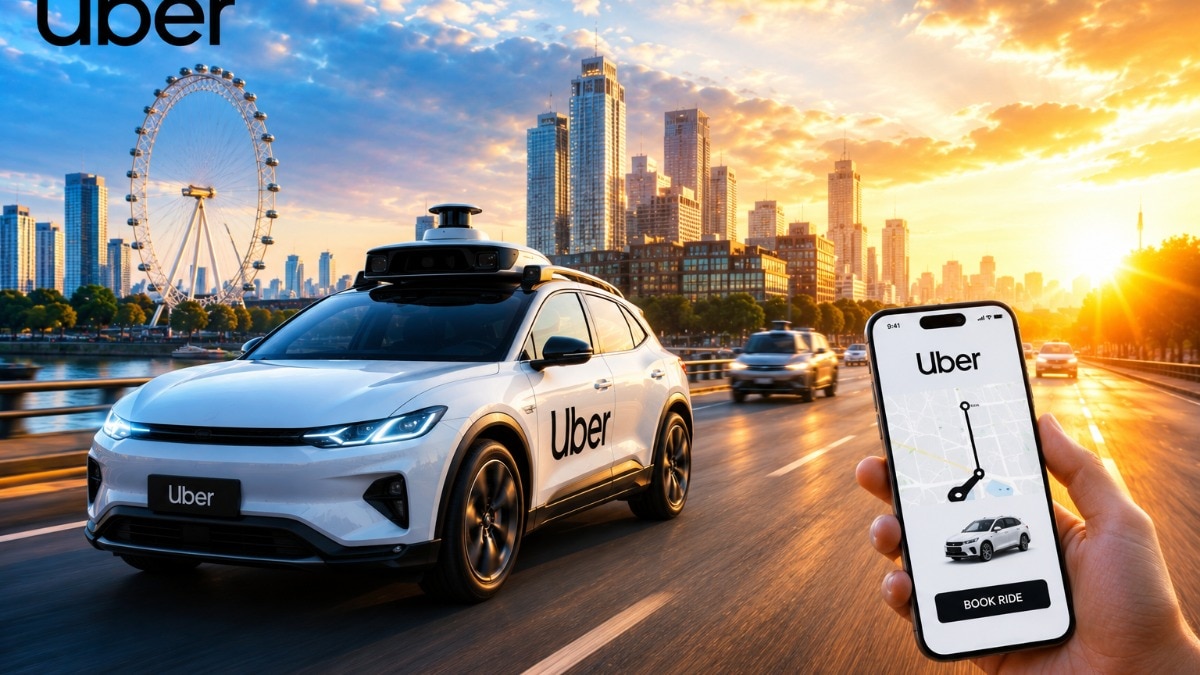
Uber is investing over $10 billion (around Rs 95,000 crore) to deploy 1,20,000 driverless cabs, suggesting its biggest push into autonomous mobility. While the move could change urban transport, it also raises fresh questions about the future of millions of human drivers.Uber is planning to invest over $10 billion to deploy 1,20,000 driverless cabs.Uber is making its biggest bet yet on self-driving technology. According to the Financial Times, the ride-hailing giant has announced plans to invest more than $10 billion (around Rs 95,000 crore) over the coming years to "deploy 1,20,000 driverless" vehicles, suggesting that autonomous cabs are moving from futuristic experiments to large-scale commercial operations. The announcement comes as Uber races against rivals such as Waymo and Tesla to build the world's biggest robotaxi network. The company says it wants to operate autonomous ride services in at least 15 cities in 2026, with the long-term goal of becoming the leading platform for driverless mobility. Uber CEO Dara Khosrowshahi said the company is making the investment from a position of financial strength."We're investing from a position of strength, as we accelerate our cross-platform strategy at a global scale and build the world's largest platform for autonomous vehicles," he said. "Our ambition is clear: to become the world's leading commercialisation platform for autonomous mobility."The company reported a strong second quarter, generating a record $2.8 billion in free cash flow, taking its total free cash flow over the past 12 months to about $10.1 billion. Gross bookings climbed 24 percent year-on-year to $58 billion, while revenue reached $14.2 billion. Uber believes this financial strength gives it an advantage in the expensive race to commercialise self-driving technology. Instead of building autonomous vehicles entirely on its own, the company has been partnering with several AV firms while also investing in companies such as Zoox, Rivian and Lucid. It was recently reported by Uber that more than 1 lakh people in London have already registered their interest to be among the first passengers when the service launches later this summer, according to The Verge.What happens to human drivers?The biggest question surrounding Uber's announcement is what it means for the millions of drivers who currently earn through the platform. In the short term, human drivers are unlikely to disappear. Robotaxis will initially operate only in selected cities and under tightly controlled conditions. Many vehicles will continue to have safety supervisors during the early rollout, and autonomous technology still faces regulatory approvals, weather challenges and limitations in complex traffic situations.However, over the longer term, the picture could change. As driverless vehicles become more reliable and cheaper to operate, they may gradually take over routes where autonomous driving works best, such as airport transfers, city centres or fixed urban corridors. That could reduce demand for human drivers on certain trips.At the same time, new roles may emerge around autonomous fleets, including remote vehicle monitoring, maintenance, cleaning, charging, fleet management and customer support. Uber has not announced any plans to phase out human drivers, and for many years the platform is expected to operate a mix of traditional ride-hailing services and robotaxis.- EndsPublished By: Ankita GargPublished On: Aug 5, 2026 18:52 IST
Uber to launch 1,20,000 driverless cabs, what happens to human drivers?
Full Article
Original Source
Read the full article at Indiatoday →KhanList aggregates and links to publicly available news content. We do not host full articles from third-party sources. Always verify important information with original sources.