
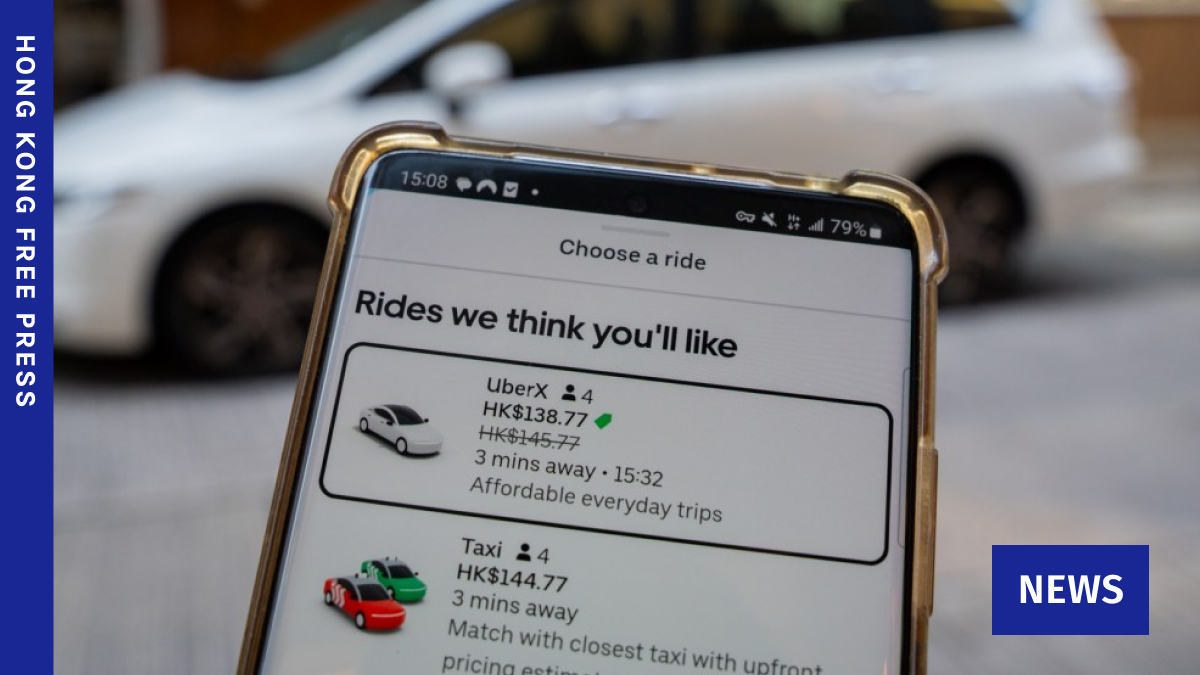
Ride-hailing services Uber and Didi have said they are preparing to apply for licences under a new scheme opened by the government on Friday, an effort to regulate the fast-growing industry. The Uber app. Photo: Kyle Lam/HKFP. In response to HKPF, Uber said on Friday: “We are preparing our application for a ride-hailing platform license with a firm commitment to delivering a safe, high-quality experience for passengers and strong support for driver-partners and the Hong Kong Government.” Uber’s reply came as the government opened applications for ride-hailing licences on Friday morning. This follows the passage of a bill last October that introduced laws intended to regulate the sector under a licencing regime. Under the new regime, all ride-hailing platforms must hold a licence to operate in Hong Kong. Ride-hailing drivers must must also hold a specific licence, which is due to be issued from November. Applications to sit the written test for this licence opened earlier this month. Operators applying for a platform licence must have a permanent office in Hong Kong and experience offering services in a city with a comparably large population, and must also provide evidence the company’s financial capacity. Ride-hailing app Didi. Photo: Rhoda Kwan/HKFP. In addition to US-based Uber, mainland China’s Didi has also indicated it will apply. Didi told local media that it welcomed the authorities’ announcement of the application details, and added that the clear criteria introduced by the government is imperative for the regulatory framework’s success. The company said it would submit its application “as soon as possible.” HKFP has reached out to Didi for comment. New legislation Ride-hailing platforms have grown rapidly in recent years by offering convenient services amid mounting public frustration directed at Hong Kong’s conventional taxi fleet. Uber first entered the local market in 2014, followed by Didi in 2018. But ride-hailing vehicles have since operated in a legal grey area with no dedicated legislation. The city’s taxi industry has long accused ride-hailing platforms of impacting cab drivers’ livelihoods. For years, they have pushed the government to introduce a mechanism regulating ride-hailing operators. Vehicles in Hong Kong. File photo: Kyle Lam/HKFP. The ride-hailing licence applications opened on Friday are a core part of the government’s long-awaited regulatory efforts. From next August, when the regulatory regime comes into full force, operators of ride-hailing platforms that do not have a licence will face a maximum fine of HK$1 million and up to a year in prison. Drivers convicted of carrying passengers for hire or reward without a permit will be disqualified from driving for between one and three years. They will also face a fine of up to HK$10,000 for a first offence. Before the new laws, the offence carried a maximum penalty of a HK$5,000 fine for a first offence and no driving disqualification. Safeguard press freedom; keep HKFP free for all readers by supporting our team Support HKFP | Policies & Ethics | Error/typo? | Contact | Newsletter | Transparency & Annual Report | Apps Make a one-off donation. Hillary Leung is a journalist at Hong Kong Free Press, where she reports on local politics and social issues, and assists with editing. Since joining in late 2021, she has covered the Covid-19 pandemic, political court cases including the 47 democrats national security trial, and challenges faced by minority communities. Born and raised in Hong Kong, Hillary completed her undergraduate degree in journalism and sociology at the University of Hong Kong. She worked at TIME Magazine in 2019, where she wrote about Asia and overnight US news before turning her focus to the protests that began that summer. At Coconuts Hong Kong, she covered general news and wrote features, including about a Black Lives Matter march that drew controversy amid the local pro-democracy movement and two sisters who were born to a domestic worker and lived undocumented for 30 years in Hong Kong. More by Hillary Leung
Uber, Didi say preparing to apply for ride-hailing service licence as gov’t invites submissions
Full Article
Original Source
Read the full article at Hongkongfp →KhanList aggregates and links to publicly available news content. We do not host full articles from third-party sources. Always verify important information with original sources.