
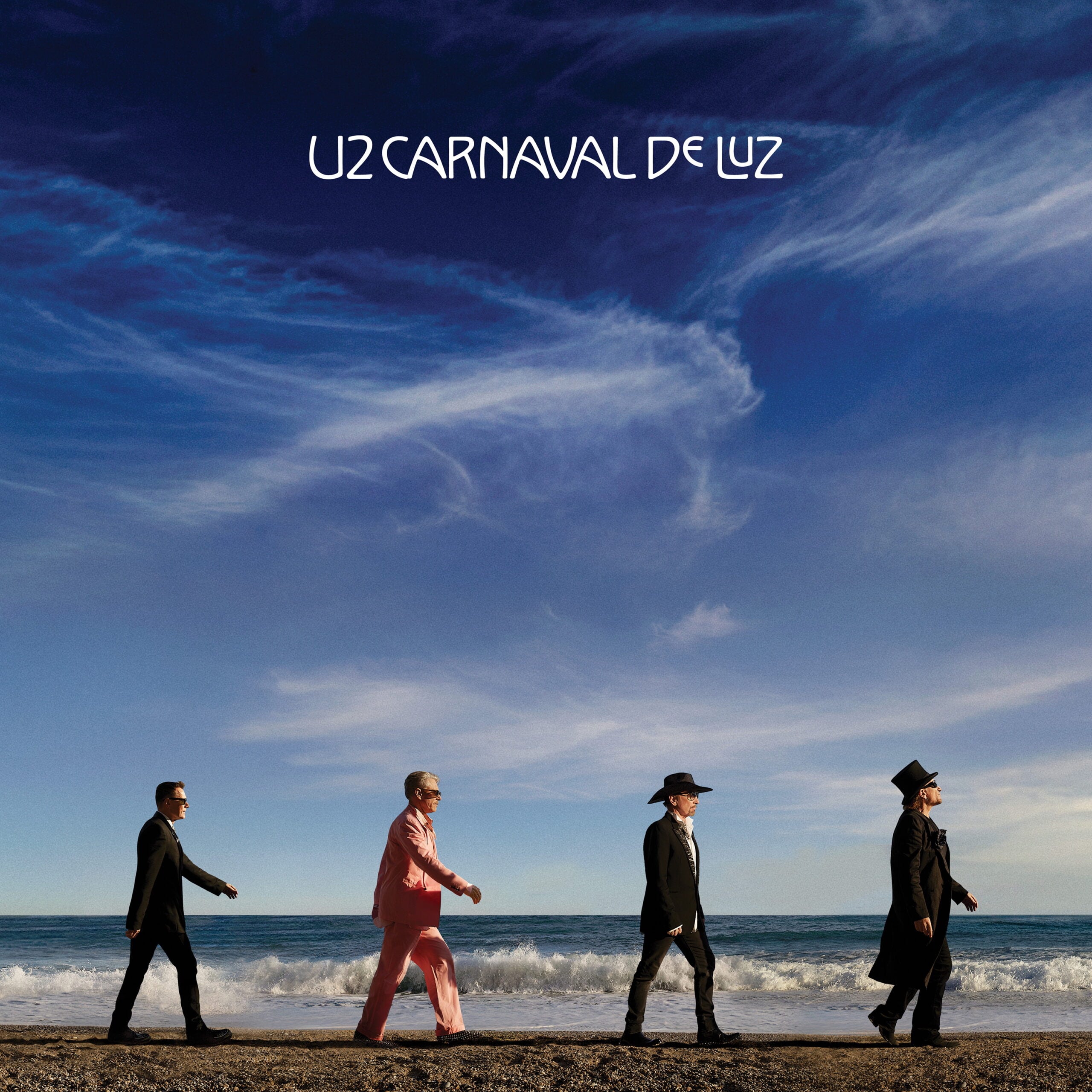
U2 celebrates 50 years with 'Carnival De Luz'. It's powerful rock, political commentary, raw emotion, and an unexpected celebration of joy. U2’s latest album is like a good Scotch. The first sip might leave you wondering what all the fuss is about. But give it another go, and suddenly everything starts making sense. Carnival De Luz is an acquired taste, and by the second listen, it’s difficult not to want another. It’s the band’s first studio album in almost a decade, following two moody, themed EPs of older material earlier this year. And after fifty years of U2, Bono and the boys are still finding ways to surprise, provoke, and occasionally confound their audience. Few bands have managed that kind of longevity. The Rolling Stones come to mind, but the list is very short. U2 has consistently reinvented itself without entirely abandoning what made it special: larger-than-life music, unapologetic social commentary, and an almost stubborn refusal to become boring. In 1983, U2 released Live at Red Rocks, arguably one of the greatest raw concert films ever made. It was low-budget, candid, and filmed on a rain-soaked stage. Bono’s passionate delivery was the kind of stuff that could rip your heart out. The performance brought together material from Boy, October and the generation-defining War. It was and remains a pacifist middle finger attached to a philosophy of doing something about the status quo. Bono’s pacifist middle finger And U2 delivered against that self-imposed social and political mandate a hundred times over. Bono helped campaign for African debt relief through Jubilee 2000 and subsequently championed ONE and (RED), confronting poverty and HIV. The band also challenged apartheid from the stage, while Silver and Gold became another musical indictment of oppression. U2 has never been interested in separating its music from the world around it. Carnival De Luz feels like the culmination of that five-decade journey. But there’s something different this time. Beneath the familiar political commentary, anger and occasional lyrical eccentricity is an almost defiant celebration of joy. It’s happy, in a rock and roll but un-nursery rhyme kind of way. And nowhere is that more apparent than on Street of Dreams. It’s arguably the album’s most joyful track, an inspiring anthem for a world that seems determined to punish ordinary people. Often for circumstances entirely beyond their control. Life has a habit of beating the dreams out of us, and Bono’s message is simple: Don’t surrender them. U2 celebrates 50 years of rock music with Bono, The Edge, Adam Clayton and Larry Mullen Jr. Picture Supplied The album opens with Go, a driving, atmospheric rock piece with an almost hillbilly swagger. The Edge’s familiar, haunting guitar work is largely absent. Instead, kooky riffs collide with a harder sound, while Bono’s delivery moves between a whisper and something more forceful. ‘ZOO TV’s theatrical excess reimagined as hard rock Imagine the theatrical excess of Zoo TV, following Achtung Baby, reimagined as hard rock. It’s classic U2 experimentation, but without sounding like a recycled orange peel. La Reina follows in much the same vein. It’s harder, faster and more aggressive. Nineties rock transported into the twenty-first century, without nostalgia becoming an excuse for creative laziness. Mirror Maker brings back that unmistakable Edge guitar sound before growing into a razor-sharp rock piece. It’s anthemic without necessarily being a singalong, powerful without becoming overproduced. Superficiality offers another fascinating musical detour. There’s something of Boy and October lurking beneath its opening moments, before the song develops into something entirely different. Early U2 meets a touch of the storytelling ambition of No Line on the Horizon. Bono, meanwhile, sounds better than he has in years. Close your eyes, and you can almost see MacPhisto, the Pop era boxer and the political activist in oversized sunglasses. Different incarnations of the same performer, all somehow present in the vocal delivery. There’s theatricality, vulnerability and plenty of attitude. At times, his voice carries more emotional weight than the words themselves. The pen remains mightier than the sword, but Bono occasionally wanders into streams of consciousness that border on the irrational. Some lines are inspired, others downright whack, while a few seem to exist simply because they sound interesting. It’s both a criticism and a compliment, recalling the lyrical eccentricity of Daddy’s Gonna Pay for Your Crashed Car. It’s Zooropa, but harder. Not every experiment lands, and sometimes the music communicates more than the words. But since when did emotion have to make perfect sense? Not every experiment lands One of the album’s highlights is Torn, a duet with Dolly Parton that brings country and rock into an unexpectedly moving embrace. In the tradition of U2’s great closing album statements, it’s an ambitious piece of music. The contrast between Parton’s country sensibility and Bono’s dramatic delivery gives the song an almost uncomfortable vulnerability. It’s breathtaking precisely because it doesn’t try to make every feeling neat and tidy. Carnival De Luz rewards repeated listening. Like a good Scotch. One play can take you somewhere close to heartbreak, another towards infatuation or outright bliss. There are moments of anger, political frustration and occasional bewilderment. The interpretation changes with your mood, your circumstances and whatever the world has thrown at you that day. And that’s what separates music you merely enjoy from music that stays with you. Carnival De Luz isn’t necessarily an easy album. Nor should it be. Fifty years into their career, U2 still expects something from its audience.
U2’s still loud, still angry and still dreaming
Full Article
Original Source
Read the full article at Citizen →KhanList aggregates and links to publicly available news content. We do not host full articles from third-party sources. Always verify important information with original sources.