
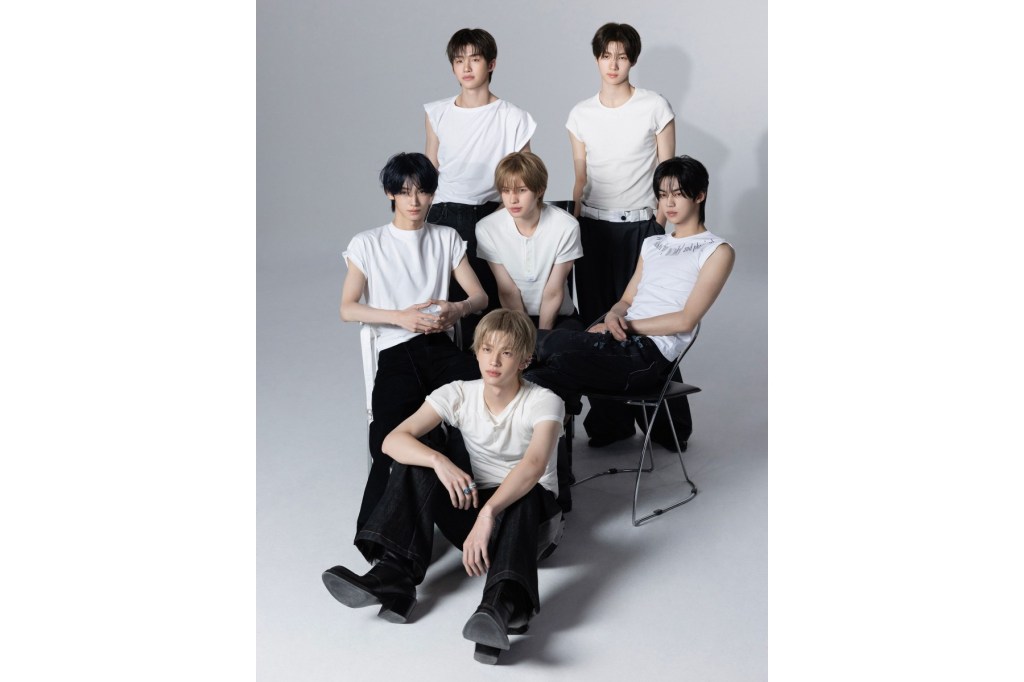
With their second single album TO US, SHINYU, DOHOON, YOUNGJAE, HANJIN, JIHOON & KYUNGMIN open up about growing up & embracing imperfections. 11/2/2026 TWS PLEDIS Entertainment (HYBE) Since their debut in 2024, TWS have captured the spirit of youth through their signature sound: “Boyhood Pop.” From the excitement of first encounters to the joy of moving forward together, their music has always carried a celebratory energy. But after more than two years in the spotlight, SHINYU, DOHOON, YOUNGJAE, HANJIN, JIHOON and KYUNGMIN are beginning to see the stories of growing up they’ve long told through their music in a different light. Their second single album, TO US, which arrived Monday (Nov. 2), turns its attention to the less polished moments along the way. Rather than focusing solely on the highs of youth, TWS now speak more openly about mistakes, regrets, and self-doubt, adding a new layer of complexity through their own experiences. It’s not a rejection of the optimism that has defined their sound, but an expansion of what growing up means to them: recognizing that the moments that didn’t go according to plan have become just as much a part of their story. In conversation with Billboard Korea, the six members reflect on how they’ve changed since debut, what they’ve learned about themselves and one another, and how they hope to expand their musical identity. When asked what they’d tell their past selves and the group they’ve become, they didn’t talk about setting bigger goals. Instead, they speak of keeping going, taking care of themselves, and growing at their own pace. For a group that has always found reasons to celebrate through music, TO US offers another: the beauty of embracing who they are, imperfections and all. The Other Side of Growing Up What stands out about TO US is how it embraces the mistakes and regrets that come with growing up, rather than treating them as things to hide. Looking back since your debut, is there a moment that felt disappointing at the time, but that you now recognize as something that helped you grow? JIHOON: When we first debuted, there were so many things I wasn’t as good at as I am now — whether it was my stamina, how I communicated with fans onstage, or my singing and dancing. With each comeback, I’d set small goals for myself, thinking, “I want to do better at this next time.” But I failed a lot. It hurt when I couldn’t achieve the goals I’d set for myself. Looking back, though, I see those moments as some of the brightest and most precious. They became the motivation to keep working hard, and I think that connects closely with the message of this album. YOUNGJAE: Like JIHOON, I remember being nervous about every single performance when we first debuted. I wasn’t nearly as comfortable onstage as I am now, and with everything still so unfamiliar, there are things I wish I’d done better. But I think the freshness and innocence of those early days came through in our performances, too. Our fans appreciated that side of us, and now I look back on those moments as really good memories. The final chorus of “Call My Name” carries a celebratory feeling that also runs through earlier TWS songs like “hey! hey!” and “Last Festival.” Even with the regrets and uncertainties of youth, there’s a sense of celebrating who you are in the moment. For TWS today, what kinds of moments feel worth celebrating? DOHOON: The first thing that comes to mind is simply enjoying music without any worries. That’s what a celebration feels like to me. SHINYU: For me, it’s being onstage, making eye contact with the members and connecting with them while we perform. Those moments really feel like a celebration.. KYUNGMIN: We recently went on tour, and performing the stages we’d prepared in different countries felt like a celebration in itself. Does that feeling ever extend beyond the stage into your everyday lives? SHINYU: Definitely! Like when I finish work and get to eat something delicious that I love. That’s one of my favorite ways to relieve stress, so even a moment like that can feel like a celebration. Beyond the Sound of Boyhood Pop Since your debut, TWS has built a distinct musical identity, with a bright, refreshing sound that listeners have come to associate with the group. Having such a recognizable identity is a strength, but have you ever felt that expectations of what “sounds like TWS” could also become a boundary when you want to try something new? JIHOON: I’m happy that people associate us with a particular sound. It means we’ve successfully communicated the musical identity we wanted to establish when we debuted. But I also believe we have so many more cards we haven’t played yet. Rather than feeling pressured by those expectations, I’m excited to show what else we can do. We’ve already explored different genres through our concert performances, and it’s been really rewarding to reveal those sides of ourselves. I see our existing identity as something to build on, not something that limits us. Looking ahead, how would you like to expand TWS’ musical identity? YOUNGJAE: I want us to keep telling different kinds of stories through Boyhood Pop, just as we have with TO US. What matters to me is finding messages that feel true to who we are as TWS and expressing them through our music, in our own way. You mentioned wanting to tell more diverse stories through Boyhood Pop. With TO US, what message do you most want to share with 42s? YOUNGJAE: I think our title track, “Call My Name” (“내 이름을 불러줘”), captures that message. We wanted to express the idea that our performance begins the moment 42s call our names. Our fans are always calling out to us and coming to see us, and this song is our way of responding to them. I think there’s something really beautiful about that. Words to Us TO US reveals a more honest, less polished side of youth. More than two years since your debut, you’ve also come to know yourselves and one another better, including the parts that aren’t always perfect. To close with the album’s title, if you could say something to yourselves and to the “us” that has come this far together, what would it be? JIHOON: There’s something I’ve been saying a lot lately: “Keep going.” We’re always giving each other feedback and looking for ways to improve, even during practice. Of course, there are difficult moments when we wonder, “Can we really do this?” There are still so many mountains left for us to climb. But I want to tell us to keep going, just as we have been. YOUNGJAE: Mine would be “Take care.” (Laughs.) We’re all still in our early twenties, so we have plenty of energy to keep working hard. But with our busy schedules and sometimes not getting enough sleep, it can take a toll on our bodies. I believe we need to be healthy, both physically and mentally, to accomplish everything we want to do. So I’d tell myself and the members, “Take care.” SHINYU: Mine is similar to JIHOON’s. I’d say, “Just keep doing what you’ve been doing.” We’re always finding things to improve and giving each other feedback, like JIHOON said. But I also want to remind us, “You’re already doing well. Just keep doing what you’ve been doing.” HANJIN: “At our own pace, in our own TWS way.” Since debut, we’ve been meeting 42s and performing so often that everything can feel a little rushed at times. I want to remind us that we don’t have to hurry. We can keep moving forward at our own pace, in our own TWS way. DOHOON: I’d say, “Let’s focus on the good things.” Once you start having negative thoughts, it’s easy to get caught up in them. Lately, as we’ve entered our third year, I’ve been trying to find more happiness in everyday life and appreciate the little things that bring me joy. KYUNGMIN: I don’t think anyone is perfect. What matters is recognizing where you can improve and continuing to work on those things. And I think it’s just as important to find joy in the process. SHINYU Image Credit: PLEDIS Entertainment (HYBE) You’ve been TWS’ leader since debut. More than two years into that role, how has your understanding of what makes a good leader changed from when you first started? SHINYU: When we first debuted, I thought being a good leader meant standing at the front and leading the members. But over time, I’ve come to realize just how much each member means to me. Now, I believe a good leader is someone who brings everyone together and supports them from behind. You once mentioned that loving yourself was difficult. With TO US exploring the idea of accepting even the imperfect parts of ourselves, does that feeling still resonate with you today? How has your relationship with yourself changed? SHINYU: I still find it difficult to love myself. I tend to hold myself to very high standards. But seeing how much the members and 42s love me makes me want to learn to love myself, little by little. DOHOON Image Credit: PLEDIS Entertainment (HYBE) What does it take for you to genuinely tell yourself, “I did well this time”? Has the standard you hold yourself to changed over the past two years? DOHOON: I like to reflect on my day before going to sleep. If I feel I’ve made good use of my time, I can go to bed feeling happy. When we first debuted, I had a lot of worries and tended to blame myself for things. These days, I’m learning to be kinder to myself and accept the parts of me that aren’t perfect. Since your debut, have there been times when you’ve been particularly conscious of how others see or evaluate you? How do you distinguish between other people’s perceptions of you and the way you see yourself today? DOHOON: Of course, I care about how others see me. But even when people compliment me, I can’t feel completely satisfied unless I’ve met my own expectations. That’s just the kind of person I am. I’m always trying to meet my own standards and push beyond them. YOUNGJAE Image Credit: PLEDIS Entertainment (HYBE) You’ve talked about being drawn to emotionally resonant music. Beyond music itself, where do you find inspiration — in books, films or everyday life? Have you ever wanted to turn those feelings into something you’ve created yourself? YOUNGJAE: I find a lot of inspiration in films, dramas, and books. They let me experience emotions and situations I might never encounter in my own life. Sometimes I seek out certain works because I want to explore those feelings or find inspiration, while other times I come across something that moves me unexpectedly. Is there a particular work that’s stayed with you recently? YOUNGJAE: Actually, our own music video. I was genuinely happy throughout the filming process. You’ll understand when you see it, but it was a chance for both us and the director to try something new. Music video shoots can be demanding, and this one certainly wasn’t easy. Still, even during the difficult moments, I kept thinking about how much fun I was having and how precious the experience felt. I remember feeling incredibly happy just to be there. Would you ever want to express those kinds of emotions through music you’ve created yourself? YOUNGJAE: HANJIN and I performed a unit song at our concert, and I poured as much of who I am right now into it as I could. So in a way, if you’re wondering what those feelings would sound like in my own music, I think that song already has the answer. You often come across as someone who brings a sense of stability to those around you. But when you’re the one feeling uncertain or emotionally unsettled, what helps you find your balance again? YOUNGJAE: The members and people around me often tell me I’m emotionally stable, but I have plenty of moments when I feel shaken, too. Sometimes I feel really small. What helps me through those moments is believing in the people who believe in me. Knowing there are people who care about me and trust me makes me want to do better for them. It gives me a reason to work harder, find my footing again and keep moving forward. HANJIN Image Credit: PLEDIS Entertainment (HYBE) Since your debut, you’ve had to learn and grow in many ways while already performing and working as a member of TWS. Has that ever brought a sense of pressure or urgency to improve quickly? Looking back, how have those experiences shaped you? HANJIN: Rather than saying I’ve grown a lot, I’d say there are many things I’ve gotten better at. Korean is probably the biggest one. When I first came to Korea, I couldn’t speak the language at all, which made both communicating with others and learning new things really difficult. But with help from the members and my teachers, I’ve gradually become more comfortable with it. Is there a side of yourself that you feel people haven’t fully seen yet? What would you like to show more of in the future? HANJIN: There are two things. First, I want to keep showing better performances onstage with the members. The second is more personal. I think people usually see me as someone who’s cheerful, laughs a lot, and loves to talk. But lately, I’ve been wanting to show a calmer, more composed side of myself. I’ve always been the type to rush into things, and even when I try to slow down, it doesn’t always come naturally. With this comeback, I hope I can start showing that side of myself, little by little. JIHOON Image Credit: PLEDIS Entertainment (HYBE) You’ve devoted much of your life to dance and have spoken about wanting your performances to reflect your persistence and determination. When people watch you dance, what emotions or messages do you hope they take away? JIHOON: When I practice alone in the studio, it’s usually very quiet. I genuinely enjoy that time and try to make it part of my everyday routine, though sometimes I wonder where all that effort is leading. I think everyone is struggling with something in their own way. If someone who’s feeling exhausted by those struggles watches me dance, or even sees how I practice, I hope they can find a little strength in it. There are so many incredible dancers who can move people through their technique alone. But if there’s something I want to offer through my own dancing, it’s encouragement. Even when I’m doing my best to shine onstage, behind it all, I’m just someone who’s working hard toward something, like everyone else. If you could create a performance purely to express “Jihoon the artist,” what would it look like? What kind of movement or artistic direction would best represent who you are? JIHOON: Just imagining it makes me happy. I’d love to create a video that really captures who I am as an artist. I don’t think there’s one particular style that defines me, and I consider my versatility one of my strengths. I’d want to bring together the things I love most and create something that makes me think, “This is me. This is something only I can do.” More than convincing anyone else, I’d want to convince myself. On days when I lose confidence, I want to be able to watch that video and remind myself, “Right, I’m capable of this.” If I ever get the opportunity, that’s something I’d really love to accomplish. KYUNGMIN Image Credit: PLEDIS Entertainment (HYBE) You have a distinct artistic identity of your own. Within TWS, what aspect of “Kyungmin’s own color” are you most eager to develop and bring to the group’s music and performances? KYUNGMIN: First of all, thank you for seeing me that way. I think my voice is one of the things I can contribute to the team, and I want to keep developing it so I can bring even more to TWS. Through my own vocal style, I hope to express both the playful and sophisticated sides of our music. If you picture yourself five years from now, what kind of artist do you hope you’ll have become? KYUNGMIN: I want to be an artist who never loses his ambition or sincerity. As you gain experience, things naturally become more familiar, and I think it’s easy to lose some of that drive. Even five years from now, I hope I’ll still be eager to try new things and challenge myself. Sincerity matters just as much to me. As I grow older and gain more experience, I want to keep finding ways to move the fans who love us. Whatever form that takes, I hope I can continue giving them something that genuinely touches their hearts. Those are the two things I never want to lose. Get weekly rundowns straight to your inbox Sign Up
TWS: The Beauty of Growing Up Unscripted
Full Article
Original Source
Read the full article at Billboard →KhanList aggregates and links to publicly available news content. We do not host full articles from third-party sources. Always verify important information with original sources.