
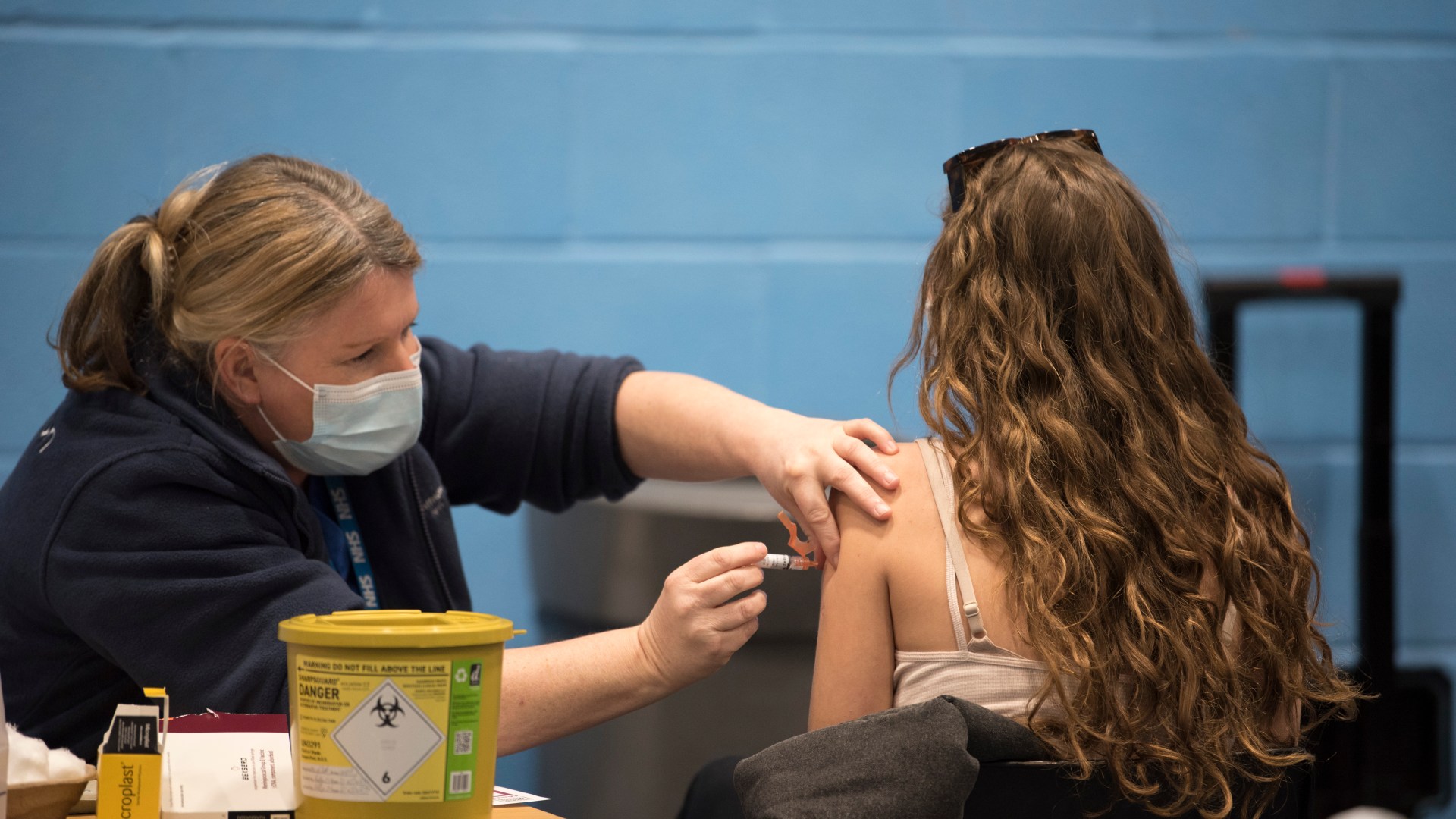
TWO teenagers are in hospital with meningitis while dozens have been offered antibiotics, officials confirmed today. The alarm was raised after it was discovered that one of the hospitalised teens had attended a major festival in Cornwall with friends last month. UK Health Security Agency officials said both patients, who are from Framlingham in Suffolk, are responding well to treatment Credit: Alamy UK Health Security Agency (UKHSA) officials said both patients, who are from Framlingham in Suffolk, are responding well to treatment. They also stressed that there was no evidence of a meningitis outbreak linked to the festival. Sign up for the Health newsletter Thank you! The two cases were confirmed as Meningitis B (MenB) and 49 close contacts of the cases have already been offered antibiotics as a precaution. Dr Smita Kapadia, a consultant in communicable disease control at the UKHSA said: “We continue to work closely with partners to identify close contacts of the cases and offer treatment and advice.” There are roughly 300 to 400 cases of meningitis diagnosed in England every year. Officials urged everyone to be alert to the signs and symptoms of meningitis. These can include a fever, headache, rapid breathing, drowsiness, shivering, vomiting and cold hands and feet. MenB infection can cause serious, life-threatening problems including inflammation of the lining of the brain and sepsis. Most read in Health This can lead to life-changing disabilities such as amputations, hearing loss and brain damage – and in some cases can prove fatal. Dr Kapadia, added: “It is really important to be aware of the signs and symptoms of this disease as prompt treatment is the key to prevent the infection getting worse and spreading to others. “It’s most common in babies, young children, teenagers, and young adults. “The best advice remains to be aware of meningitis symptoms and for young people to check that they are up-to-date with their vaccinations, including the MenACWY vaccine which is offered in school years 9 and 10 but remains free on the NHS until the age of 25.” It comes as the major outbreak earlier this year in March led to the death of a student at the university in Canterbury and Juliette Kenny, a year 13 pupil from Queen Elizabeth’s Grammar School in Faversham, Kent. A mutated new strain of bacteria was understood to be behind outbreak. A student receives an injection in the sports hall at the University of Kent campus in Canterbury Credit: Andrew Styczynski Why is meningitis B considered the most dangerous strain? There are five main strains that cause the disease in the UK. But MenB is widely considered the most dangerous. MenB is now the most common cause of bacterial meningitis in the UK, accounting for more than 80 per cent of invasive cases. It is caused by Neisseria meningitidis group B bacteria and infects the protective membranes surrounding the brain and spinal cord, which can trigger life-threatening blood poisoning and brain inflammation. The illness often develops suddenly, and early diagnosis is critical. Dr Eliza Gil, a clinical lecturer at the London School of Hygiene & Tropical Medicine, said Neisseria meningitidis “can cause very aggressive infections”. Professor Paul Hunter, an infectious diseases expert at the University of East Anglia, added: “The most important thing any friend or parent can do is realise the person may have this infection and seek medical help. “Early treatment is vital, but diagnosis in the early hours of the illness can be very difficult. “Early symptoms can be very mild but then deterioration can be extremely rapid leading to death within a few hours. “Some of the warning signs include high fever, neck pain and stiffness, the light hurts their eyes, confusion and drowsiness and a particular skin rash that doesn’t blanch if a glass is pressed onto the skin.” It reportedly started at the Club Chemistry nightclub. More than 13,000 young people linked to the Canterbury area were given antibiotics to try and stop the spread of the bacteria, with thousands also offered the MenB vaccine. Other outbreaks this year have included three schoolchildren testing positive for meningitis in Dorset in April and another in May in Reading, Berkshire, that led to the death of one person and hospitalised two others. Most people above primary school age are unprotected against MenB because routine jabs for babies were only introduced in 2015. It is given to babies at eight weeks, 12 weeks and a year old. Instead, the MenB jab has typically only been available privately at high street and supermarket pharmacies for roughly £150 per dose. Two doses are needed for full protection. The MenACWY vaccine, meanwhile, helps protect against the A, C, W and Y strains and is given on the NHS to 14-year-olds, or as a catch-up jab to people 25 and under who missed it. In June, however, it was announced that around a million teenagers heading to university and in their final year of sixth form will be offered a life-saving meningitis B vaccine via the NHS. Research suggests that students in their first year of university have a meningitis risk that is about seven times higher than that of young people of a similar age who do not go to university. Figures published today show that since the vaccination programme began on July 20, just over 246,000 doses of the MenB jab have been given to young people. Comment now
Two teens in hospital with meningitis and 50 contacts traced with links to major festival
Full Article
Original Source
Read the full article at Thesun →KhanList aggregates and links to publicly available news content. We do not host full articles from third-party sources. Always verify important information with original sources.