
5 min readThis Week in the Laboratories of Democracy(Permanent Musical Accompaniment to This Post)Being our semi-regular weekly survey of what's goin' down in the several states where, as we know, the real work of governmentin' gets done and where they must bust in early May, orders from the DA.We begin in Alaska, where one of the most hilarious bits of ballot mischief continues. From the Alaska Beacon:Republican U.S. Senate candidate Dan J. Sullivan is staying in the race for U.S. Senate, he said Monday, hours before the deadline to withdraw from November’s election. The Petersburg Republican finished third in August’s primary election, with just 2.5 percent of the vote statewide. He’s come under intense scrutiny because he shares a party affiliation and a first and last name with incumbent U.S. Sen. Dan S. Sullivan, who is seeking re-election. The state disqualified him from the ballot but the decision was overturned by the Alaska Supreme Court in June. The incumbent senator finished second in the August primary with 41.4 percent of the vote.Democratic candidate Mary Peltola finished first in the primary with 49.5 percent of the vote. Fourth-place finisher David Leslie, a Democratic candidate running to the left of Peltola, withdrew from the race late Monday, putting fifth-place finisher Gerald Heikes, a Republican running to the right of Dan S. Sullivan, on the ballot for November with just 1.1 percent of the vote.Bravo to you, David Leslie, for maintaining the fun in Alaska's elections.Dan J. Sullivan and Peltola have denied working together, but Dan S. Sullivan has repeatedly accused Dan J. Sullivan of running a “sham” campaign intended to confuse voters. But preliminary results indicated little confusion among Alaska voters—most of Dan J. Sullivan’s votes came from Democratic-leaning districts. In an emailed statement, Dan J. Sullivan said, “in the 3 months that I have been in this campaign, I have encountered obstacles that no other candidate in any of the other races has faced. Every time I took one step forward, roadblocks put me three steps back. It has been a time of extreme highs and lows. But with the support of family, friends and donors, I have persevered to this point. So, I am going to keep going and amplify the message that we need a different path forward.”Go, Dan J., go!Time was when this kind of thing was a run-of-the-mill campaign strategy here in the Commonwealth (God save it!). For example, in 1946, young John F. Kennedy was running for Congress in the West End of Boston. One of his opponents in the Democratic primary was a veteran Boston city councilor named Joe Russo, who was gaining some traction with charges that JFK was a wealthy playboy who spent most of his time in Palm Beach. Old Joe Kennedy, one of the least excusable human beings of the last century, sent out his minions to do some shopping and they found a janitor named ... Joe Russo. Turns out that they didn't need the straw Russo; JFK won by a fat margin anyway.We move along to North Carolina, where a local chapter of the Proud Boys—remember them?—crashed a DSA meeting in Winston-Salem. They did their intimidation thing, standing around, posing, filming the participants. But they found themselves distracted in their mission by ... donuts.The DSA members have tried to put a lighthearted spin on the encounter by noting that after the Proud Boys filmed them, some helped themselves to pumpkin spice donut holes at the snack table. “We’ve been joking that they like free food, so maybe they like socialism,” [local DSA communications director Khaet]Grindell said.(Incidentally, the donut-scarfers were led by a chapter about which you could have read more in the summer issue of this here magazine)We move along to Missouri, where the national bipartisan revulsion against data centers hit a kind of peak. From The New York Times:In the First District of Independence, 1,118 residents cast votes to recall John Perkins, while 525 people voted against the recall, according to the Jackson County Board of Elections website. Only a handful of ballots were still outstanding, according to the county board. Mr. Perkins, who was years away from re-election, did not immediately respond to a request for comment. He previously told The New York Times that the argument for the recall had “no merit” and that a “single vote” should not outweigh years of work for his constituents.Voters generally hate recalls. The general attitude toward them is either a) that they’re exercises in sour grapes, or b) that they are a waste of time and money. For a veteran office holder to get crushed like this in what obviously was a single-issue recall election is an indication of the power of the data-center backlash out in the world.In Independence, a city of 121,000 next to Kansas City, residents didn’t wait and instead forced Tuesday’s recall vote. The Dutch company Nebius bought land on the outskirts of the city last year and then asked for billions of dollars in tax breaks for the project. City officials said they believed it would be a boon for a place that had struggled financially, filling the city’s coffers with money for education and infrastructure. In March, Mr. Perkins joined four other members of the City Council to grant more than $6 billion in tax breaks to the $150 billion Nebius project. At the time of the vote, he said that the city had spent years trying to develop the land and that it had negotiated protections for residents against utility price spikes.But organizers of the recall said Mr. Perkins had failed to engage the public while the city negotiated with Nebius. They viewed it as part of a longer history of failed economic development projects in the city.The movement against these projects seems to be powered by quality-of-life issues plus a distrust of strange-seeming technology. NIMBY-plus-mystery is a powerful force in local politics.And we conclude, as is our custom in the great state of Oklahoma, whence Blog Official Transatlantic Heckler Friedman of the Algarve brings us a bit of Dickens creeping onto the manicured lawns. From Tulsa Flyer:Bixby doesn’t seem like a community experiencing a surge of food-insecure families. The suburb south of Tulsa is full of restaurants and grocery stores that aren’t on the menu in lower-income parts of the county. Its median household income is 60 percent higher than the state’s, and the poverty rate sits at 5.6 percent—compared to 14.9% for the state. But Oklahoma’s top ranking in childhood hunger doesn’t stop at a city’s limits. Affluent communities have always had pockets of low-income residents who work and live in its neighborhoods but don’t earn as much. “But then you have another population that’s still on the margins who don’t qualify for benefits, and their earning power is dropping dramatically,” said Chris Bernard, CEO of the Tulsa-based nonprofit Hunger Free Oklahoma. “So, those folks are leaning on the food pantries more. That’s why we have to leverage every dollar of federal benefits because there’s this new category of people who are relying more and more on charity.”“This has been the trend since coming out of COVID, as Oklahomans face increased costs of living and fewer available resources,” Marlow said. “Our partners consistently tell us they are seeing new faces, including many people visiting a food pantry for the first time. “Hunger exists in every community across the state, including communities considered more affluent.”Going around, coming around, and all that.This is your democracy, America. Cherish it.
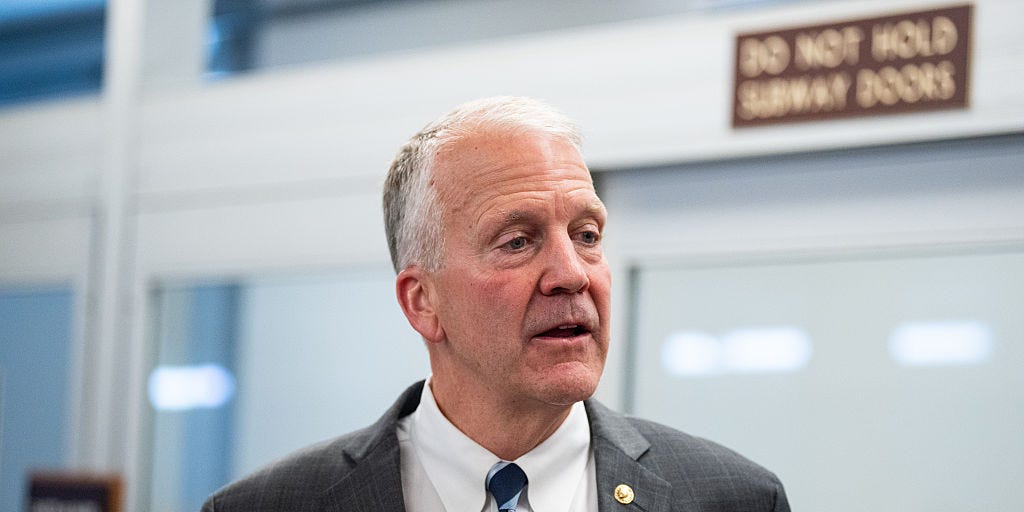
Two Republicans, Both Named Dan Sullivan, Are Running for the Same Alaska Office. Incredible Stuff.
Full Article
Original Source
Read the full article at Esquire →KhanList aggregates and links to publicly available news content. We do not host full articles from third-party sources. Always verify important information with original sources.