
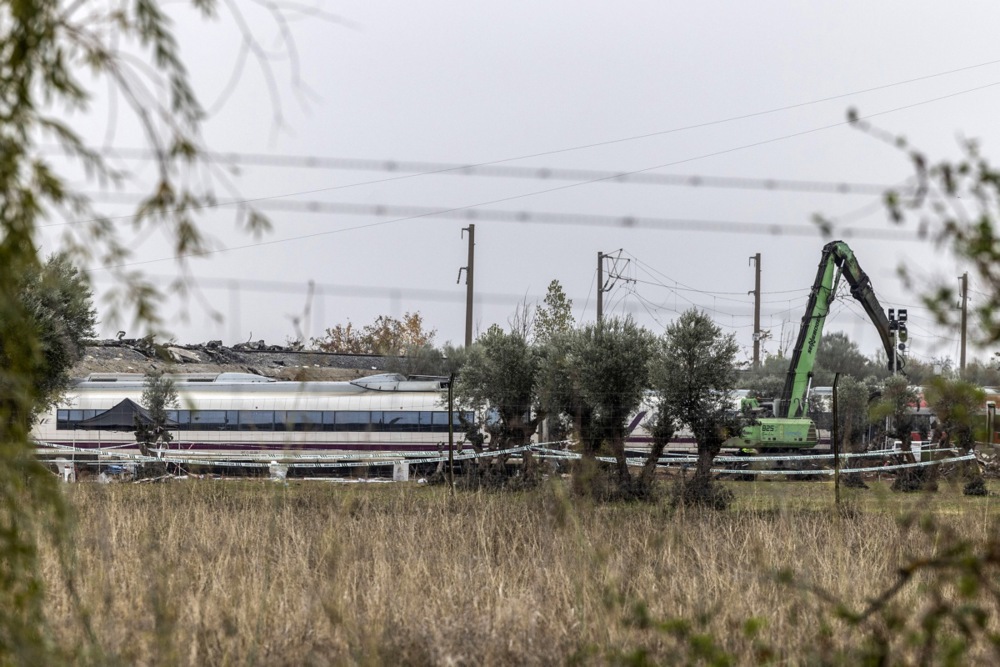
As recent headlines have made clear, at least 115 people have been killed in two major high-speed train accidents in Spain in 2026 – so far. Such events are, as many have said, inexplicable in a country such as Spain. A double-tragedy of this magnitude, which resulted in the resignation of the country’s transport minister earlier this week, is likely to turn into a political blow to the PSOE-led government ahead of key snap elections. And polls suggest the opposition is set to win these elections. The images of the 28 October high-speed collision near Urda, Toledo, which killed 69 people and injured around 200, have left the country in shock — again. People didn’t have time to recover from the images in January, when a high-speed train derailed near Córdoba, killing 46 people. “It’s inexplicable. I don’t know whether I feel angrier or sadder about it,” my mum told me yesterday as we discussed the events, just a few minutes before the country’s transport minister, Oscar Puentes, announced his resignation (something very uncommon in the country I know best). Once is an accident, twice is a pattern, goes the saying. And while this is far from a pattern, two fatal accidents of this scale in a year make last week's crash even harder to understand, raising serious questions about protocol and maintenance, leaving aside accountability. Spain has the largest high-speed rail network in Europe and the second-largest in the world, after China. I admit I didn't know this before, despite my nationality. But I wonder whether a country like Spain can actually afford such infrastructure. Critics have pointed to underinvestment, arguing that spending on maintenance has failed to keep pace with needs (as high-speed services have increased by 52 percent since 2019). Spain is also still operating under its 2023 budget, which has been rolled over for three consecutive years and may have affected spending in areas such as transport. The Spanish government, however, rejects these claims. The railway line (Madrid-Seville) where last week’s accident happened is undergoing a major modernisation plan, but it still mainly uses an older German safety system (LZB) dating back to 1992. When LZB is disrupted, trains rely on trackside signals and automatic braking systems to regulate traffic and stop trains passing red signals. In this case, all these safety measures failed. The LZB is being replaced by ERTMS, a newer EU system designed to improve and standardise railway safety across Europe. But the €93.8m EU-funded contract to replace the system, awarded in 2021, that should have been completed by January 2026, still hasn’t been. It is clear that railway safety cannot depend on a single technology. Safety systems are designed not to fail, and therefore are not expected to do so, but when they do, human control should step in.
Two fatal train disasters in less than a year: I never thought I would see this happen in my native Spain
Full Article
Original Source
Read the full article at Euobserver →KhanList aggregates and links to publicly available news content. We do not host full articles from third-party sources. Always verify important information with original sources.