
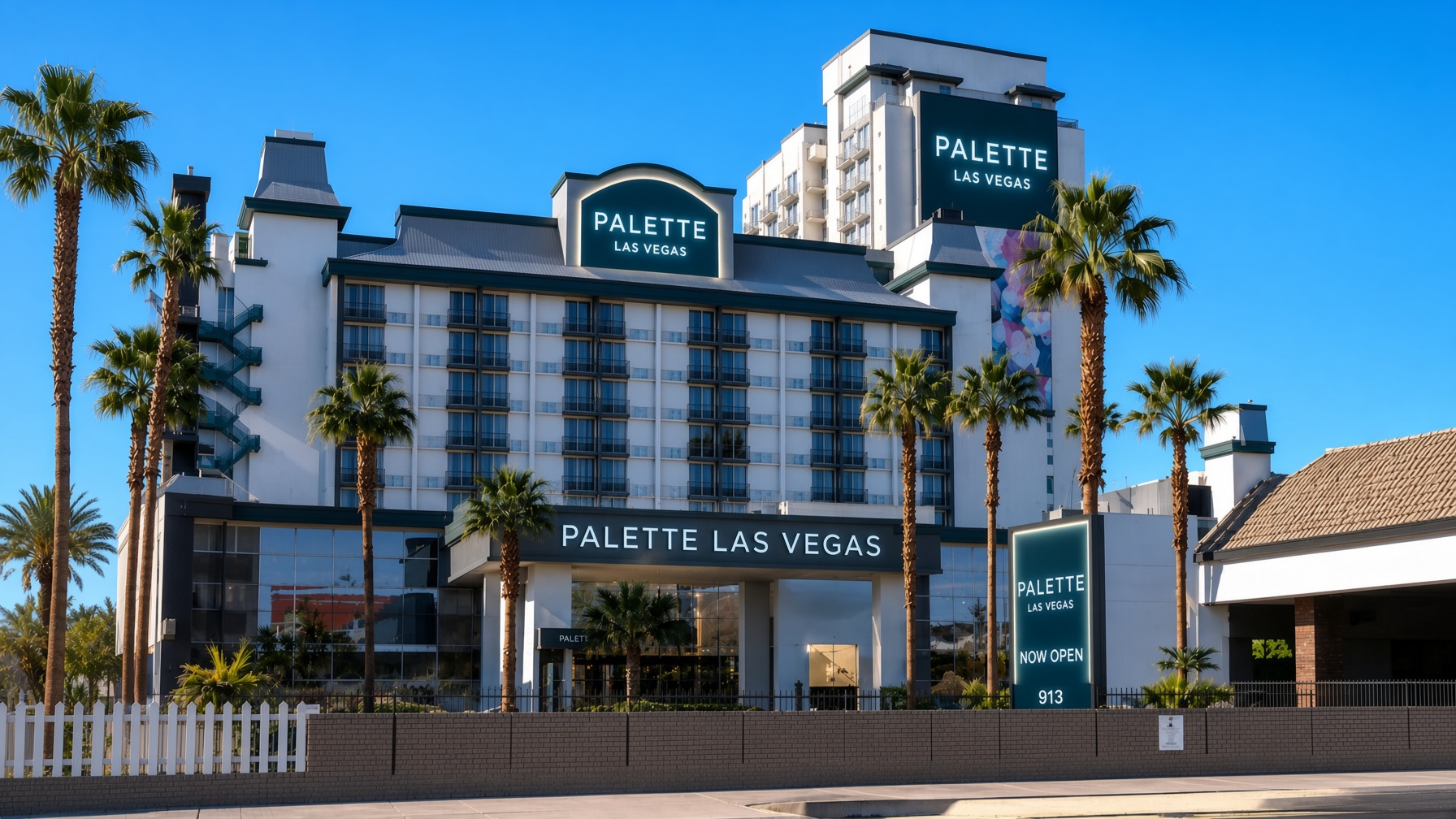
This story is absolutely insane, and I can’t say I’ve ever seen anything like it. Oyo Las Vegas is such a bad hotel that they stoop to selling rooms as cheap as $1… plus $50.96 resort fee. And, apparently, they also sell rooms under the name of a fake hotel property that doesn’t exist so that potential guests might think the place they’re booking isn’t as bad as Oyo? This is literally insane – the claim is that they’ve created an AI-generated hotel at basically the same address, with a different name and altered photos, that is a ‘marketing test’ to see if they can get more people in the door. “Palette” and “Collection O” are genuine brands belonging to OYO parent Prism, but the supposed Las Vegas properties advertised under those brands do not appear to operate as separate hotels. They are effectively virtual or “shadow” hotels carved out of OYO Las Vegas inventory. Palette Las Vegas at 117 E. Tropicana Avenue Collection O Las Vegas at 119 E. Tropicana Avenue Both pages say elsewhere that the hotel is located at 115 E. Tropicana, the real address of OYO Hotel & Casino Las Vegas Each of these hotels, Palette and Collection O, show digitally altered signage taking Oyo and replacing it with these other signs that aren’t actually there as far as I can tell (it’s apparently generated with AI). At least as of this writing, here’s a separate listing for Palette on Expedia, here’s Collection O on Travelocity. Both have listings on several other online travel agencies as well. The Expedia listing had a 2.0/10 score for Palette from one verified review. The guest said it was really OYO, there was no Palette signage, and elevator failures left guests without instructions or assistance, concluding: “Someone could have died.” Collection O’s Expedia page had a 4.0/10 score from 15 verified reviews (ten were 2/10 reviews). Guests variously report: It was OYO, not Collection O. The photographs did not correspond to reality; elevators stranded or trapped guests on upper floors; and rooms contained roaches, stains and significant cleanliness problems. The descriptions of these hotels don’t seem honest, either. Expedia describes Palette as a small, separate hotel and says OYO is “steps” away. Hotels.com describes Collection O as having no casino and that OYO’s is a three minute walk away. Trip.com says the hotels “opened in 2023,” while the rooms are actually inside the decades-old YO building that used to be Hooters. Palette shows having 20 rooms on Expedia and 25 on Trip.com. Collection O shows 16 on Expedia and 34 on Trip.com. And in the original viral guest report on this, she knew OYO’s reputation and purposely avoided booking it, choosing instead what Booking.com presented as an inexpensive, attractive, new property near the Strip. She says staff at the OYO confirmed that Palette was their hotel. They handled her check-in and supposedly explained that the alternate listing had been posted to see which advertisement would get more traction. When the guest said she felt tricked and asked for a refund, she says the hotel refused. Leaving aside deception, that’s not ‘testing’. A real test changes copy, images or prices while selling the same product. And I can’t imagine it’s legal. Surely, this violates Nevada’s deceptive trade practices law, which prohibits representing that services have characteristics, quality, status or benefits they do not have; representing one quality, style or model when another is supplied; advertising services without intending to sell them as advertised; and knowingly failing to disclose a material fact in a sale. It also seems pretty clearly (to me) to be a case of fraudulent inducement. And this seems like it would be a problem with Nevada Gaming Regulations which treat false or materially misleading advertising and a failure to conduct public relations with honesty as an unsuitable method of operation. What it looks like to me is reputation laundering using virtual brands, which we’ve seen in some ways in other markets and even in Las Vegas. Las Vegas is full of separately branded towers. But those disclose the hotel they’re inside of, how to check-in (don’t leave customers looking for signs that don’t exist), and the actual product offered. Here it seems like obscuring those things is literally the point. A decade ago Booking.com admitted listing a New York hotel twice under slightly different names and star ratings to see whether one would gain more traction. This goes even further, changing the location and signage of the hotel to attract bookings. And during the pandemic the connected Le Méridien and Sheraton Charlotte were sold at separate prices while only Le Méridien was operating. Those who booked the Sheraton got rooms at the nicer hotel. That let them charge different prices to different customers without discounting to those who actually wanted to book the Le Meridien, while saving on the operating costs of actually keeping the Sheraton open. It was deceptive (marketing something the hotel was never going to deliver) but the customer at least got something nominally better. That… isn’t the case here. Topics on this page
Two Fake Las Vegas Hotels Are Luring Guests With AI Photos — Both Lead To One Of The City’s Worst Hotels
Full Article
Original Source
Read the full article at Viewfromthewing →KhanList aggregates and links to publicly available news content. We do not host full articles from third-party sources. Always verify important information with original sources.