
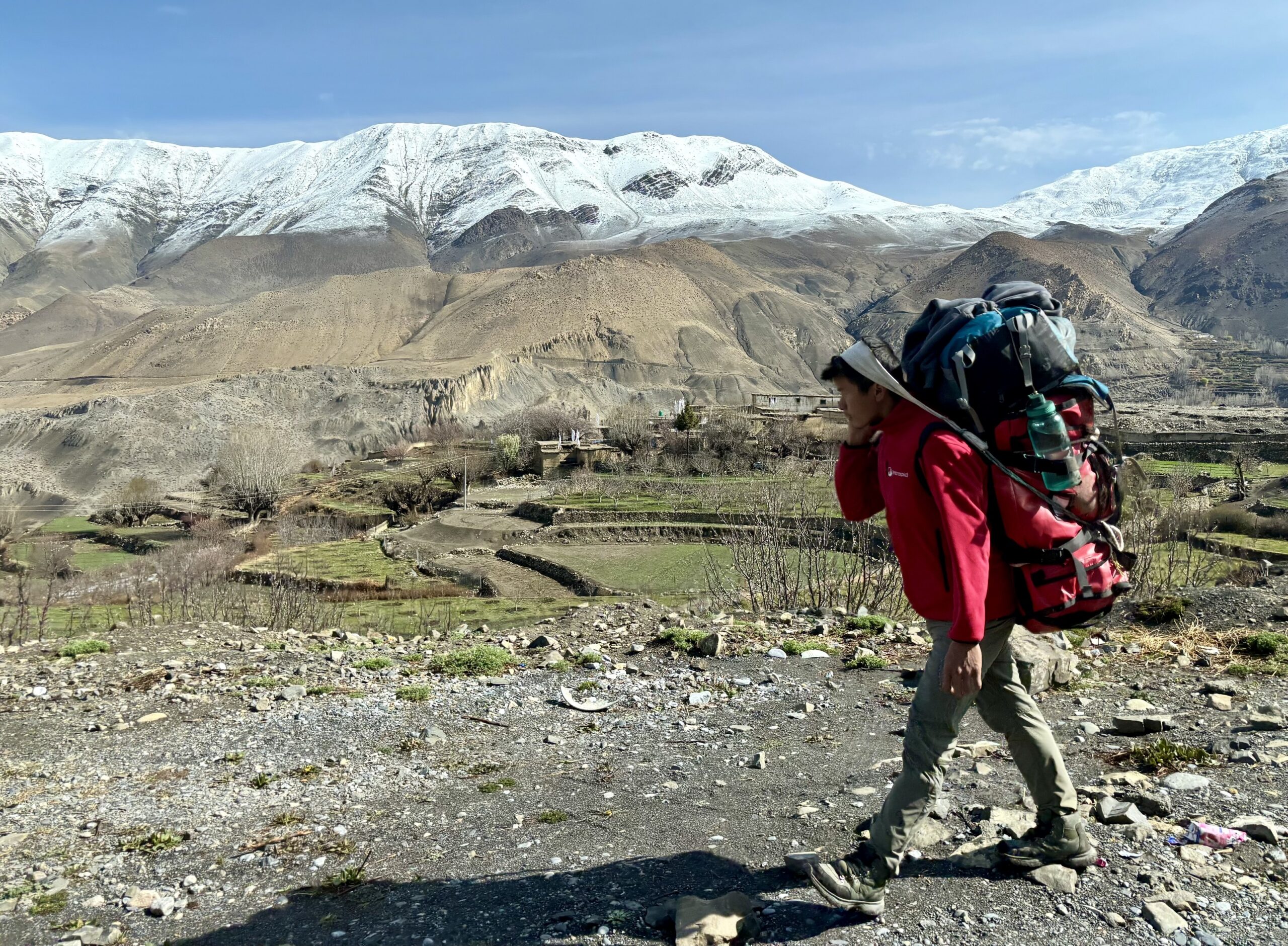
In September 2006, a helicopter crash killed 24 people, including then forest minister and senior officials from Nepal’s government and WWF — a day after they handed over a conservation area to resident communities.Since the crash, some conservationists say individual roles were replaced, but what was lost was never truly recovered, with visionary leadership growing scarcer since the accident.Nepal’s tiger population has more than tripled and forest cover has grown beyond 46%, built on the community forestry model the “lost generation”, but human-wildlife conflict and the emptying of hill villages remain as unresolved conservation issues.Devolving control of buffer zones to local communities remains incomplete two decades on, and even the crash’s own commemoration has largely lapsed, leaving current leaders to decide whether to keep running the old conservation model or build a new one. KATHMANDU — In September 2006, Nepal’s then Minister of Forests and Soil Conservation Gopal Rai and a contingent of conservation leaders flew to a remote village in eastern Nepal to hand over a conservation area to the people living there. On the evening of Sept. 22, Rai handed over management of the Kanchenjunga Conservation Area (KCA) to the community, hailing it as a milestone in Nepal’s conservation history. “For the community, this was the beginning,” Ghana Shyam Gurung, now WWF’s country representative, tells Mongabay. The next day, minutes after take-off, the contingent’s Russian-built Mi-8 helicopter crashed, killing all 20 passengers and four crew. Among the dead were the forest minister, his spouse, senior officials, a Finnish diplomat, a senior USAID official and WWF staff. Bad weather hampered rescue efforts for two days. No one in the capital Kathmandu could confirm what had happened until searchers reached the wreckage. Two decades later, the community-based approach to conservation pioneered by “dreamers” such as Harka and Chandra Gurung and Mingma Norbu Sherpa, all of whom were killed in the crash, still drives Nepal’s wildlife and forest recovery. The country’s tiger population has more than tripled and its forest cover has grown by six percentage points since the crash. But conservationists say progress has since stagnated. A generation lost The crash left empty seats at Nepal’s key conservation institutions. Conservationist Sarita Jnawali, then with the National Trust for Nature Conservation (NTNC), remembers the day the deaths were confirmed. “When people like that weren’t there, we felt a huge sense of vacuum,” she tells Mongabay. “It felt like there was nothing left in conservation.” The contingent onboard the crashed helicopter in eastern Nepal in 2006. Image courtesy of WWF. At the forest ministry, then oint Secretary Krishna Chandra Paudel lost his minister and Acting Secretary Damodar Parajuli. At the Department of National Parks and Wildlife Conservation, ecologist Shiv Raj Bhatta lost his supervisors, director general Narayan Poudel and former director general Tirtha Man Maskey. The two were of such international stature, Bhatta says, that there was no one to replace them, “I wondered how we would ever produce people of that height again.” WWF lost seven staff, “the single greatest loss of life in WWF’s 45-year history.” Among the dead was Mingma Norbu Sherpa, who had helped establish the Annapurna Conservation Area and led WWF Nepal at the time. “I’m a tough person,” Ghana Shyam Gurung from WWF says. “I could never endure that. That was hard..The hardest thing for me was meeting Mingma sir’s wife — meeting his widow. I haven’t cried that much even for my own mother. That was the first time.” A wound that left scar Paudel, who later served as the forest ministry’s secretary before retiring, describes the 20 years as a wound that left a deep scar. “It’s like when parents die suddenly, the family finds some comfort, and carries the ordinary rhythm of life forward,” he tells Mongabay. “But the old loss is never truly fulfilled.” For Jnawali, the story of the past two decades is one of replacement, not continuity. “The vacuum I imagined didn’t happen, because people from a new generation took over,” she says. “They don’t remember the old story, but the vacuum still got replaced.” Visionaries and people who dream a dream and see it through have grown scarcer, she says. This could be a result of government instability and weakening individual commitment as much as of the crash itself, she adds. “In the absence of dreamers who could shift paradigms, what came after 2006 was largely the same work repeated,” she says, referring to the shift from strict, exclusionary conservation to community-based management pioneered and led by the people on the helicopter. ‘Have we stopped dreaming?’ Gurung says the difficult question to answer now is: Have we stopped dreaming after 2006? “We keep talking about the same things, redoing the same work,” he says. “So what’s next? Why aren’t we looking for new green areas?” A forest in western Nepal photographed from an airplane. Image by Abhaya Raj Joshi/ Mongabay. Conservation needs a breakthrough on the scale of the 1990s shift to community-based management, he says — one built around climate and water. He points to a model of coexistence suited to a landscape that now holds far more wildlife and far fewer farming families than it did in 2006. “The world ahead is about water,” he says. Paudel disagrees with Gurung and Jnawali. Forest for Prosperity, the policy vision he says he pushed as secretary to tie conservation to household income, is a new dream by his own account. It aimed at prosperity rather than protection for its own sake. WIt was conservation becoming highly politicized that slowed the sector down, he argues, not that his generation stopped dreaming. Missed opportunities Jnawali counts the cost of the crash in missed opportunities for Nepal. Had the 2006 delegation lived, she says she believes that protected areas such as Annapurna and Manaslu might have followed Kanchenjunga into full community management, and new areas might have opened. “We didn’t just lose people that day,” she says. “We lost the pace we were moving at.” Ecologist Bhatta traces the sector’s shortcomings to a failure of collaboration more than to the crash itself. Nepal’s community-based model won international recognition for biodiversity outcomes, he says. That model included the Terai Arc Landscape approach, a transboundary corridor of protected forests linking Nepal and India. But it delivered less on livelihoods, he says, because other ministries never fully joined in. A man walks with his bicycle in the buffer zone of Bardiya National Park in Nepal. Image by Abhaya Raj Joshi/ Mongabay. He says he wants devolution and to hand more control from the government to local communities. Buffer zones, areas around national parks, should be transferred more completely to community control, he says, with the park warden no longer the central authority. “The core was always local people,” he adds. That handover, in his view, is unfinished business. Success in numbers Nepal’s tiger population has grown from 121 in 2010 to a record 429 this year. Its rhino population has grown from 645 in 2015 to 752 in 2021. “We’ve increased tigers, we’ve increased rhinos,” former Secretary of the Ministry of Forests Paudel says. “That’s a result of the dream that generation was dreaming at the time.” Part of that recovery rests on the community forestry system that the 2006 generation helped build. Nepal’s forest cover has grown from about 40% in the 1990s to more than 46% today — one of the sharpest reversals of deforestation anywhere. More than 23,000 community forest user groups now manage roughly 2.5 million hectares (6.2 million acres), and about a third of Nepal’s population belongs to one. The cost of success The recovering wildlife itself has become part of the strain. As tiger and rhino numbers have climbed, so has the toll of people killed or injured by the animals brought back by conservation efforts. A 2026 study of Nepal’s Terai Arc Landscape documented 245 tiger attacks on humans between 2010 and 2024 with 141 fatalities. The study also found a sharp surge in attacks in the Banke-Bardia complex between 2019 and 2023 — Bardia’s tiger population roughly doubled over the same period. Attacks declined after park authorities captured and relocated 21 tigers responsible for repeated conflicts, the study says. Soldiers patrol the forests and adjacent areas of Chitwan National Park. Image by Jonas Gratzer for Mongabay. Meanwhile, in the hills, people are abandoning their villages. In Taplejung, the district where the 2006 helicopter went down, data from officials in its Phungling Municipality reportedly say 245 to 330 families leave hill settlements every year with most citing crop losses due to monkeys. A memory fading In 2006 after the last rites of the deceased were performed and work resumed, the government instituted the National Conservation Day and a National Conservation Award to commemorate the memory of the deceased. WWF set up memorial scholarships that have since supported more than 200 students, many of them women from underserved communities. More than 20 memorial scholars have gone on to pursue master’s degrees in New Zealand, according to WWF’s Gurung. Two decades on, even the memory of the crash is fading unevenly. In Taplejung, a memorial features statue of the 24 deceased. In Kathmandu, the government-built statue park in Ramkot is overgrown and dilapidated, some names faded or gone. Paudel says observance of the disaster, once marked at the highest level of government, has all but lapsed. “Twenty years have passed and we have almost abandoned it for the last 10,” he says. Local problems demand local solutions Paudel says some progress has been made in tackling the challenges, but the measures don’t address the challenges completely. He points to compensation schemes for human-wildlife conflict deaths and insurance programs, both introduced since 2006, but argues that the answers Nepal needs next won’t come from Kathmandu. “Local governments should look for local solutions,” he says. “People know better.” Banner image: A man carries a backpack on a trek in the Annapurna Conservation Area in Nepal. Image by Abhaya Raj Joshi/ Mongabay. In Nepal, calls for reform grow louder in buffer zones Escalation in tourism, climate change leaves Nepal’s Mustang in fragile state Citation: Dhakal, B. K., Lamichhane, B. R., Kandel, S., Subedi, N., Low, M., & Silwal, T. (2026). Tigers in the neighborhood: Factors associated with fatal tiger attacks in a human‐dominated landscape, Nepal. Ecology and Evolution, 16(8). doi:10.1002/ece3.74206 Credits Topics
Two decades on, Nepal’s conservationists search for new ‘dream’ generation
Full Article
Original Source
Read the full article at News →KhanList aggregates and links to publicly available news content. We do not host full articles from third-party sources. Always verify important information with original sources.