
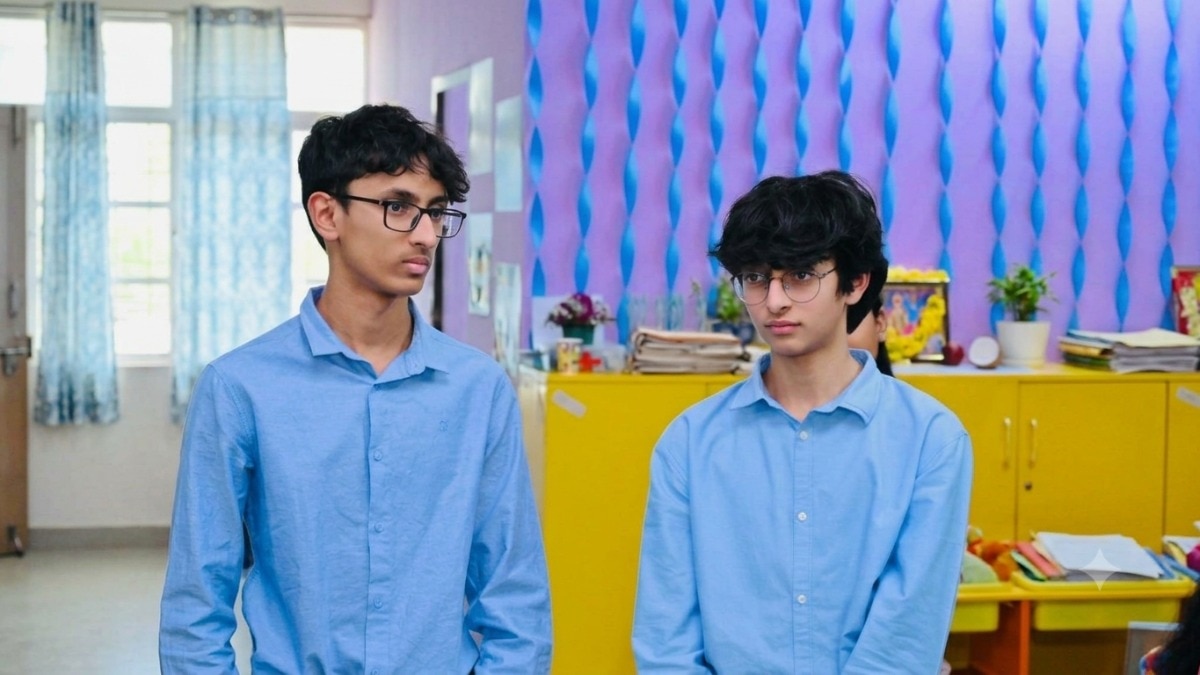
Meet Shloak Bihani and Aryaman Taparia, two Class 10 students whose AI-powered safety system, Sajag AI. The app turns existing CCTV cameras into real-time safety monitoring systems. Sajag AI has earned recognition from the Telangana government.Their first project was deployed at COWE India’s Aveksha day care centres in collaboration with the United Nations Development Programme (UNDP) in Hyderabad. Confederation Of Women Entrepreneurs (COWE) India is an organisation that works to empower women entrepreneurs and workers, while Aveksha is its day care initiative for children of women industrial workers and underprivileged families.Aryaman, who is from Noida, and Shloak, who is from Hyderabad, spent months learning coding, testing the system and troubleshooting technical glitches before getting it to work.When Shloak’s phone buzzed with an SMS alert, he knew their experiment had finally succeeded. His cousin, Aryaman, was watching the online monitoring portal when an alert, along with a snapshot of the incident, appeared on the screen. The two had deliberately staged a safety incident in front of a CCTV camera at a day care centre. Their AI-powered system had detected it and sent an alert. At COWE India’s Aveksha day care centre AN IDEA BORN OUT OF A MONITORING GAPThe idea emerged during a conversation between Shloak's father and COWE's founders at an earlier Aveksha event. One person was monitoring CCTV feeds from around 18 day care centres while handling several other responsibilities. Watching every screen effectively throughout the day was clearly a challenge. Could AI help? The possibility immediately excited the cousins, who had been experimenting with AI tools for nearly two years."We took it as a challenge to use AI to develop a solution," the cousins said.They divided the work, with Shloak developing the detection model and Aryaman building the alerting infrastructure. They taught themselves the basics, used Claude to design the high-level architecture and sought guidance from industry contacts.The journey was anything but smooth. An initial attempt using MediaPipe for pose detection did not work, prompting them to train their own model. They eventually built the prototype around a Raspberry Pi 5, although the cost of approximately Rs 23,000 exceeded their original Rs 15,000 target.HOW THE TECHNOLOGY WORKSSajag AI connects to existing CCTV feeds through a small computer installed at the centre. Its model, trained on more than 11,000 labelled images, looks for patterns associated with potential incidents such as hitting, pushing or rough handling.A single suspicious frame does not trigger an alarm. The system checks four consecutive detections over approximately three seconds before sending an SMS and email to caregivers and the monitoring team.The cousins say the video remains on the centre's premises, with only an alert snapshot and basic incident details shared through COWE's internal network.Getting it to work outside their laptops was another challenge. Poor internet connectivity initially prevented the live camera feed from coming through. They also had to tackle overheating, switch from an external SMS service to a hardware module and replace video alerts with snapshots.A PROMISING START, BUT MORE WORK AHEADIn their first live demonstration, two caregivers helped stage an incident. After an anxious wait, Shloak's phone buzzed."It took a few seconds, and those few seconds felt like forever," the students recalled.“The early live tests detected eight out of 10 staged incidents. Separately, an independent held-out test set recorded 97.3 per cent incident identification, 91.7 per cent overall accuracy and 85.5 per cent precision, according to the project's reported results,” Aryaman recalled.However, live testing also recorded approximately one false alarm every 30 minutes of normal play. Reducing false positives remains a priority before wider deployment, he added.The cousins were felicitated by the Telangana Government and UNDP representatives at the November 13 launch of COWE's workplace childcare collaboration. Aveksha operates 18 centres across Telangana, serving 20-30 children each, aged six months to six years.For the students, the purpose goes beyond technology. "Expensive daycares can pay someone to watch the CCTV all day. Centres for the children of daily-wage workers can't," they said, adding that Sajag AI is meant to support caregivers, not replace them.FROM CHILDCARE TO ELDERLY CARE?Beyond childcare, the cousins are already hearing from organisations interested in exploring how Sajag AI could be adapted for other safety needs.“In the last few days, we have received several enquiries about whether Sajag AI can be adapted for other settings. These include old-age homes, where it could potentially detect falls and other safety-related situations; factories, where it could identify if someone is sleeping on the job; and girls’ hostels, where it could help flag unsafe situations,” Shloak said.However, the cousins are keen to focus on their first project before taking on new applications.“Given our upcoming board exams, we haven’t been able to explore these possibilities in depth. Our immediate priority is to get the COWE/Aveksha–UNDP daycare set-up fully operational and extend the deployment across all 18 centres. We want to get this right before taking on other applications,” they said.Adapting the technology for settings such as elderly care would require further work, including new training data, posture tracking and support for infrared cameras for night-time monitoring, the cousins said, adding that these remain possibilities under consideration, not applications that have been deployed.“Once the 18 centres in Hyderabad move from the pilot stage to full production, we would like to make Sajag AI available to interested daycare centres in Noida,” the cousins added. The two cousins at a camp near Pune a couple of years ago With board examinations approaching, the project may take a short pause. But the two see AI-driven problem-solving as a longer-term pursuit, with plans to study technical subjects and explore sustainable ventures.“We can’t take away that worry completely, and no technology should claim to,” they said, referring to the concerns of working mothers who leave their children at daycare.“If a project made by two school students can make childcare even a little safer for the families who need it most, that’s more meaningful to us than any award,” they added.- Ends
Two Class 10 students built AI to protect children. Now old-age homes want their help
Full Article
Original Source
Read the full article at Indiatoday →KhanList aggregates and links to publicly available news content. We do not host full articles from third-party sources. Always verify important information with original sources.