
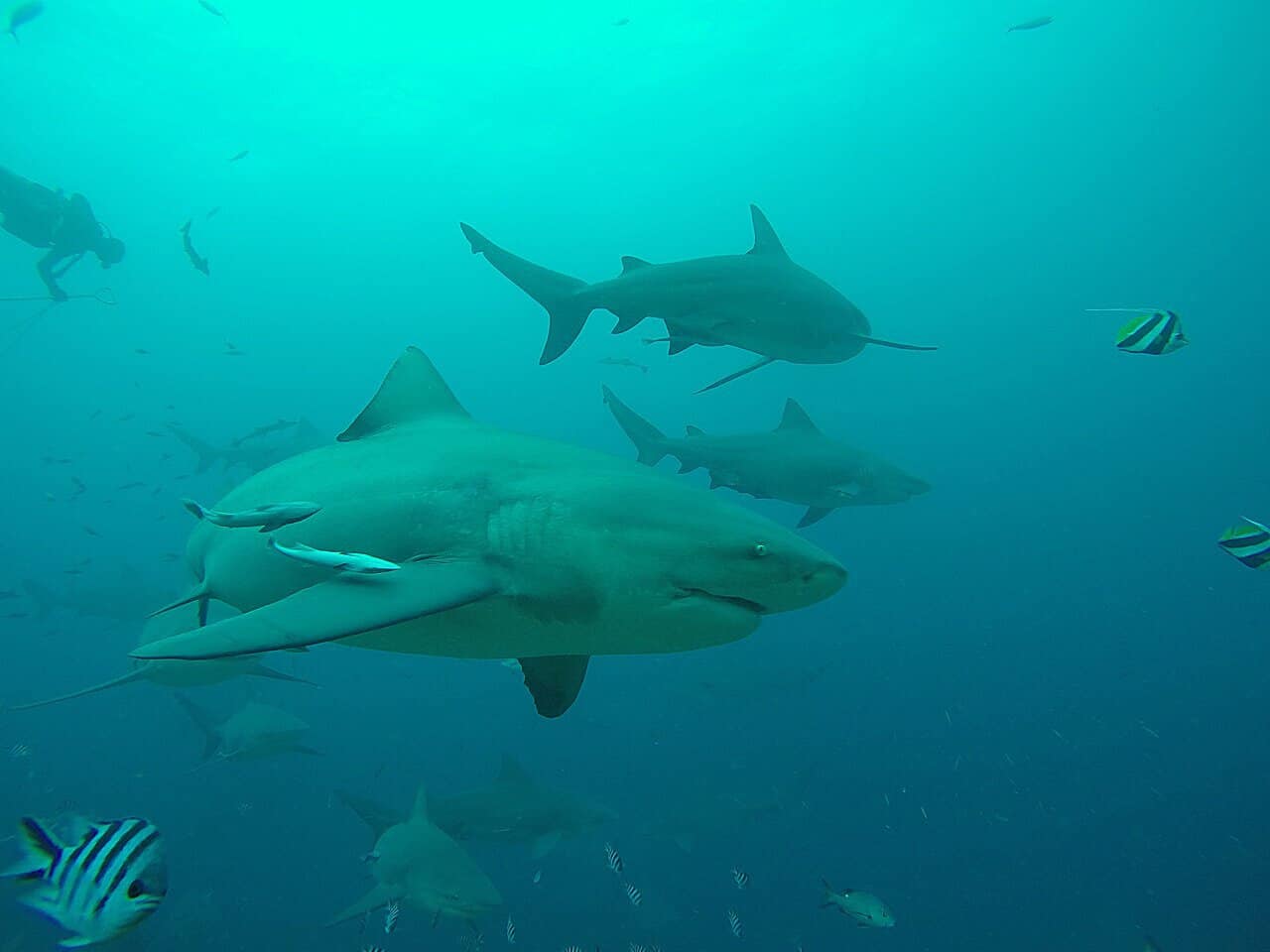
Two bull sharks, rays, pufferfish and several other fish species have been found dead in an estuary at Playa Langosta, just south of Tamarindo on Guanacaste’s northern Pacific coast, and environmental authorities are now investigating what killed them. The sharks drew the most attention. There had been no previous record of bull sharks entering this estuary, according to reports from the community. The animals were found in the San Francisco Estuary at Playa Langosta, not the better-known Tamarindo Estuary that separates Tamarindo from Playa Grande. The Ministry of Environment and Energy (MINAE) said it viewed the deaths with concern and that the National System of Conservation Areas (SINAC), working with other competent institutions, will investigate the causes. The ministry said the assessment will examine the natural closure of the estuary’s mouth, water quality, and possible effects of changing conditions linked to El Niño, including warmer water and shifts along the coast. The mouth of the estuary closed naturally about a week before the discovery, after sand built up where it meets the ocean. The Tamarindo Integral Development Association (ADIT), which alerted SINAC and requested attention to the case, said the agency attributed the changes at the beach to strong tides and sand accumulation at the outlet. The association has also filed a complaint over the deaths. Estuaries depend on a steady exchange of water. Seawater pushes in on high tides while rivers bring fresh water from inland. When river flow is too weak to keep the mouth open, a sand bar can form and cut that connection, trapping water and wildlife inside. One hypothesis is that the animals became trapped behind the sand barrier. Even at high tide, the water may not have been deep enough for them to cross back to the sea. Another possibility is a sharp drop in dissolved oxygen, which can be fatal to fish and other aquatic species in enclosed water. Bull sharks are among the few shark species that tolerate fresh and brackish water, and they are a familiar presence along Guanacaste’s coast, where the species is celebrated each year at the Bull Shark Festival in Playas del Coco. MINAE stressed that none of these explanations has been confirmed and said it would be premature to attribute the deaths to any specific cause before a technical assessment is complete. The closure comes during a dry year on the Pacific side, as El Niño drought conditions grip Guanacaste. Authorities are also monitoring the estuaries at Avellanas, Bejuco, Ostional, Junquillal and Bongo-Ario, some of which have closed naturally as well. MINAE asked the public not to alter the estuary mouth without authorization from environmental authorities while the assessment is underway. ADIT likewise urged residents not to dig or bring in machinery to open it, and asked the community to report any new incidents at 8704-6444. SINAC said it is continuing to monitor the site and other stretches of the coast as the investigation proceeds.
Two Bull Sharks Found Dead in a Guanacaste Estuary They Had Never Been Known to Enter
Full Article
Original Source
Read the full article at Ticotimes →KhanList aggregates and links to publicly available news content. We do not host full articles from third-party sources. Always verify important information with original sources.