
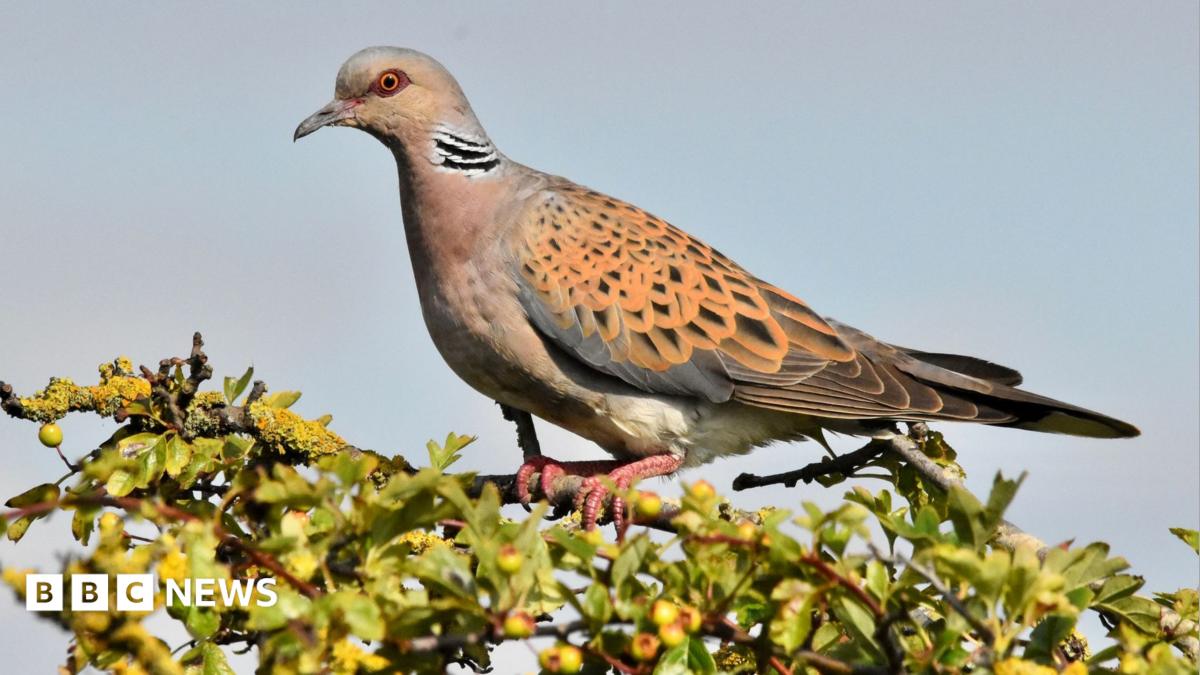
Image source, PA MediaImage caption, More than two dozen turtle doves were released in South Downs National Park in springConservationists have released more than two dozen turtle doves in the South Downs National Park in a bid to help the species, which is on the brink of extinction in the UK, to recover.The dove, famous for its place in the Twelve Days of Christmas song, is the country's fastest declining bird species according to the RSPB.In an attempt to boost population numbers, the national park authority released 30 birds in the Selborne area of Hampshire this spring.The authority said the plan was part of "urgent efforts" to restore the species, with a further 100 doves being prepared for another release next year."We all know the turtle dove from the festive carol, but the truth is they are now far too rare for such a Christmas gift," park ranger Paul Bushell said.He explained the birds were now "one of the fastest-declining bird species in Europe", with numbers plummeting by 98% in the UK between the late 1960s and 2023.Image source, PA MediaImage caption, The turtle dove is the fastest declining bird species in the UK, according to the RSPBThe turtle dove is currently on the Birds of Conservation Concern's red list - placing it at high list of extinction in the UK."There are still small numbers of turtle doves living in the national park and we hope that careful releases like this can help create a new and much-needed South Downs stronghold," Bushell said.Alongside their release, the authority have planted suitable plants for the birds to feed on - including "weedy" wildflowers like fumitory and vetch.Seven ponds for drinking and bathing have also been restored near to nesting sites in the hope that the birds - which are Europe's only migratory dove species - return next year.'Incredibly encouraging'Bushell said the 30 turtle doves released in the park during the spring "seem really happy"."Interestingly, one of the females has come back into the enclosure to lay some eggs, which is incredibly encouraging," he said."They really are a spectacularly beautiful bird and the males produce the most enchanting churring sound during the breeding season."It is such an incredible and moving experience to see and hear the birds back in the landscape where they belong."Over autumn, the birds are expected to fly 3,000 miles (4,800km) to their overwintering grounds in sub-Saharan Africa, before hopefully returning to the South Downs in Spring 2027.Get in touchMore on this storyRelated internet links
Turtle doves released in bid to stop extinction
Full Article
Original Source
Read the full article at Bbc →KhanList aggregates and links to publicly available news content. We do not host full articles from third-party sources. Always verify important information with original sources.