
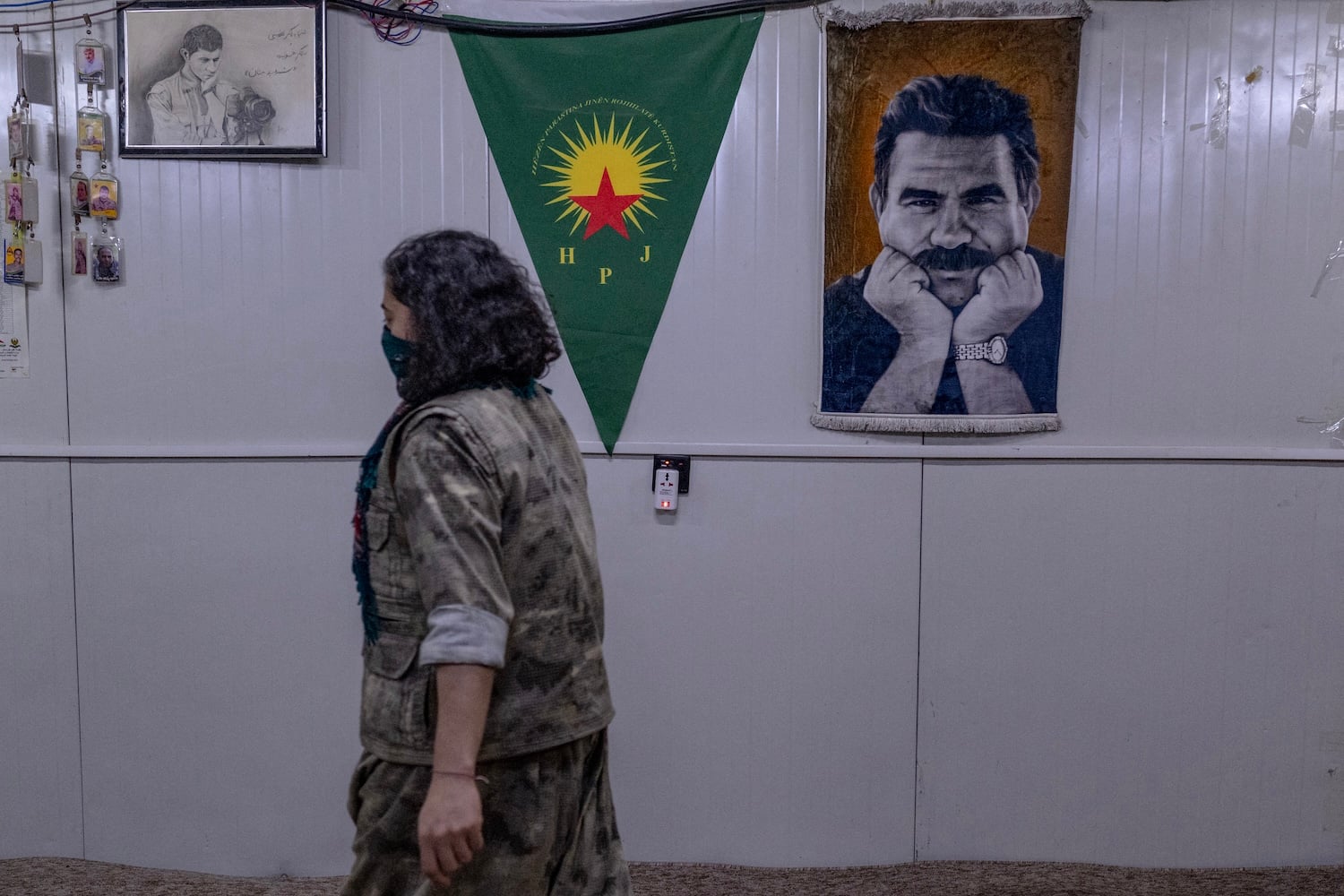
In August, Turkey’s parliament passed a law that will allow thousands of members of the Kurdistan Workers’ Party (PKK) to lay down their weapons and thousands more political prisoners and exiles to return to normal life. Over the coming months, hundreds of PKK members are expected to travel to Turkey to take advantage of the new law and reintegrate into a country that they left behind to take up arms against. This was unimaginable only a few years ago, when Turkey and the PKK were locked in a conflict that stretched across Turkey, Iraq, and Syria. Now, for the first time in 30 years of on-and-off negotiations between the PKK and the Turkish state, a legal basis for the end of armed conflict exists. For decades, a peaceful resolution to the Kurdish conflict was long seen as vital for Turkey’s full democratization. Yet last month’s development was met with widespread criticism from some of the most outspoken supporters of Turkish democracy. Their concern, which has been voiced widely in Turkey, is that the agreement is a cynical ploy by Turkish President Recep Tayyip Erdogan to win Kurdish support for perpetuating his authoritarian rule. Moreover, many question whether the government will actually follow through and provide real political concessions to the country’s Kurds. In August, Turkey’s parliament passed a law that will allow thousands of members of the Kurdistan Workers’ Party (PKK) to lay down their weapons and thousands more political prisoners and exiles to return to normal life. Over the coming months, hundreds of PKK members are expected to travel to Turkey to take advantage of the new law and reintegrate into a country that they left behind to take up arms against. This was unimaginable only a few years ago, when Turkey and the PKK were locked in a conflict that stretched across Turkey, Iraq, and Syria. Now, for the first time in 30 years of on-and-off negotiations between the PKK and the Turkish state, a legal basis for the end of armed conflict exists. For decades, a peaceful resolution to the Kurdish conflict was long seen as vital for Turkey’s full democratization. Yet last month’s development was met with widespread criticism from some of the most outspoken supporters of Turkish democracy. Their concern, which has been voiced widely in Turkey, is that the agreement is a cynical ploy by Turkish President Recep Tayyip Erdogan to win Kurdish support for perpetuating his authoritarian rule. Moreover, many question whether the government will actually follow through and provide real political concessions to the country’s Kurds. When it comes to Erdogan, suspicion is always prudent, and the concerns raised about the peace process are hardly unreasonable. It is true that Erdogan faces constitutional constraints on securing a third term that require him to navigate significant parliamentary hurdles. It is also true that he will seek to extract domestic political benefit from this process, as he does from most political developments. Yet this is not the full story. The government’s willingness to make peace with the PKK is also driven by important national security concerns. Understanding the agreement on foreign-policy terms is crucial to appreciating why it will likely succeed—and ultimately prove beneficial for Turkey. The primary drivers of this peace process have always lain beyond Turkey’s borders, in a cascading series of events that began with Hamas’s Oct. 7, 2023, attacks on Israel and led through the destruction of Hezbollah, fall of the Assad regime in Syria in December 2024, and the current war with Iran. The fall of the Assad regime “is a direct result of the blows we have inflicted on Iran and Hezbollah,” Israeli Prime Minister Benjamin Netanyahu claimed at the time. He was not wrong, and in Turkey, Devlet Bahceli, the leader of the ultranationalist Nationalist Movement Party (MHP) and Erdogan’s coalition partner, agreed with him: “The fire that began in Gaza spread to Lebanon, extended its shadow over Syria, reached Iraq, and ultimately produced a shock wave that penetrated the heart of Iran.” In October of 2024, shortly before the rebel assault that brought down Assad, Erdogan spoke at the opening of the Turkish parliament. In his speech, he warned that “Israel’s next target will be Turkey” and called for the “strengthening of the home front.” The very same day, Bahceli shook hands with pro-Kurdish Peoples’ Equality and Democracy Party representatives in parliament—something that he had previously refrained from doing with members of a party that he had called to be banned on multiple occasions. This action alone immediately ignited talks of a new peace process between Turkey and the Kurds. Amid these geopolitical dynamics, Erdogan’s domestic political concerns played a more complicated role in the process. While he no doubt ultimately hopes to secure Kurdish support for a new term in office, any concessions to the PKK or the Kurdish movement also risk an intense nationalist backlash. Erdogan has consistently appeared uncertain about how the process would be received by Turkish nationalists and whether the Kurdish support he may be banking on will be sufficient to carry him over the line in the next election. Indeed, it was precisely the same fears that led to the collapse of the last significant peace process between the two sides more than 10 years ago. In this context, Bahceli himself has often taken the lead in publicly promoting the process, working to overcome the delays by pushing for several measures that the government had been slow to implement. Initially, as Turkey’s regional anxieties overrode Erdogan’s political hesitations, the peace process got off to a hectic start. Numan Kurtulmus, the speaker of the Turkish parliament and a senior figure in Erdogan’s Justice and Development Party, framed the urgency of the new peace process through a familiar conspiratorial trope in Turkish nationalist and Islamist traditions: the belief that external powers seek to weaken and ultimately partition Turkey. Warning that “in the so-called ‘Greater Israel’ project, Turkey is seen as the primary force to be absorbed,” he argued that this reality requires Ankara to “fortify its home front.” Since the outset of the process, fortifying the home front against “global imperialist conspiracies and Zionist ambitions” has emerged as a central organizing concept across the Turkish government’s public messaging. While the Palestinian cause is an ideological issue for Erdogan, the widening instability in the region—and its implications for Kurdish aspirations—is a unifying concern for the entire Turkish political and security establishment. With Operation Midnight Hammer in 2025, a major fear for Turkey had become reality. Iran—the country with the second-largest Kurdish population after Turkey—was now in the crosshairs, and, after Iraq in 2003 and Syria in 2011, the Kurds once again appeared to be poised to take center stage. In both Syria and Iran, the most capable forces on the ground are PKK-affiliated groups—the Syrian Democratic Forces (SDF) and the Free Life Party of Kurdistan (PJAK), respectively. In an attempt to get ahead of the curve, the Turkish government turned to negotiating with the person whom both organizations see as their leader: Abdullah Ocalan. Ankara’s main concern was that regional upheaval, especially in Syria and Iran, could strengthen Kurdish autonomy or political leverage in ways that eventually reverberate inside Turkey. A second concern is the prospect of Israel deepening ties with Kurdish actors—again, especially in Syria and Iran. From Ankara’s perspective, closer Israeli-Kurdish relations would not only empower Kurdish movements in ways that complicate Turkey’s own domestic challenges but would also alter the regional balance of power by enhancing Israel’s reach and capabilities in the emerging Turkey-Israel regional rivalry. While it was widely reported last year that Syrian Kurdish officials had met with Israeli counterparts, such contacts remained far removed from the kind of sustained and institutional engagement that Ankara fears. Ankara regularly hosts Hamas, but we remain far from seeing the PKK in Tel Aviv. In effect, the presence and operational capabilities of the SDF and PJAK have given Ocalan more leverage in his negotiations with the Turkish government than the PKK ever possessed within Turkey alone. It is no coincidence, then, that the earliest and most visible outcomes of the negotiations have so far materialized in these two arenas. Ocalan reportedly intervened in Syria to help peacefully resolve the fighting between the SDF and the new government in Damascus at the beginning of this year, leading to the SDF’s integration into the new Syrian state. The Turkey-PKK peace process’s impact on Iran has yet to fully manifest itself, but Turkish columnist Abdulkadir Selvi—widely seen as a conduit for government messaging—recently argued that it prevented the United States from deploying PKK-affiliated groups into Iran during Operation Epic Fury, forcing Washington to instead engage with less-capable Kurdish organizations. The chain of regional events set in motion on Oct. 7, 2023, coupled with a need to transcend Turkey’s historic vulnerabilities, have both energized and unified Turkey’s ruling elites around a new Kurdish policy. Even the main opposition party has backed the peace process, despite its leading presidential contender, Ekrem Imamoglu, being imprisoned in what is widely viewed as a politically motivated trial. This exceptionally rare political consensus reflects a deeper, if paradoxical, reality: No other country has grasped the significance of Kurdish agency in the Middle East quite like Turkey has. In a recent statement, Bahceli characterized the peace process as “not merely a matter of security, but one of strengthening brotherhood, national unity, and solidarity.” In a country where a significant portion of the population has been willing to take up arms in pursuit of ethnic rights, there is a lot to do for true unity to be achieved. It will ultimately require legal and constitutional reforms that allow Kurds to govern their towns and their local economies without the risk of arbitrary intervention by the government. What’s more, it is unrealistic to expect Kurds to feel secure in their rights unless Turkey’s authoritarian downtrend is reversed and members of other political parties are no longer being systematically jailed. That said, the PKK’s immediate expectations are more limited and pragmatic than a wholesale democratization of Turkey. At the outset of negotiations, Ocalan made it clear that he had no cultural or ethnic preconditions for ending the armed struggle. At this stage, the process rests on the PKK’s confidence that it can transition from an armed movement into a legitimate political and civil actor without being dismantled or excluded from public life. The most immediate test for Ankara will be Ocalan’s status. The PKK expects improvements to his working conditions in prison and, crucially, greater access to the outside world so that he can communicate freely with the movement and play an effective role in managing its transition away from armed struggle. None of this necessarily requires Erdogan to stop repressing political opponents or suddenly embrace liberal democracy, and Ocalan’s willingness to bring the process this far without such commitments suggests that he does not regard broader democratization as a prerequisite for taking the first steps. But for the process to advance beyond disarmament, the PKK will need evidence that laying down its weapons creates political space rather than simply eliminating the only leverage that it has possessed for half a century. In that sense, the immediate question is less about whether Erdogan is prepared to democratize Turkey than whether he is prepared to accommodate the PKK’s transformation into a legitimate, exclusively civilian actor. Peace does not guarantee democracy, but it is a prerequisite for it. Pro-democracy critics of the current process should recognize that even while the fate of Turkish democracy will remain dangerously uncertain whatever happens with the Kurds, ending the state’s military conflict with the PKK is an important achievement in its own right. The PKK has now laid down its arms. If Turkey permanently ends its military operations against all Kurdish organizations, including those in Syria, Iraq, and Iran, then the process will have succeeded on geopolitical terms. This will measurably improve the lives of all people in the region and set the stage for the fight for democracy to continue on more favorable terrain. At a moment when the Middle East appears to be poised for prolonged turbulence, stabilizing the Kurdish question at home may prove to be Turkey’s most consequential strategic investment in its own future.
Turkey’s Kurdish Peace Process Is Not About Erdogan
Full Article
Original Source
Read the full article at Foreignpolicy →KhanList aggregates and links to publicly available news content. We do not host full articles from third-party sources. Always verify important information with original sources.