
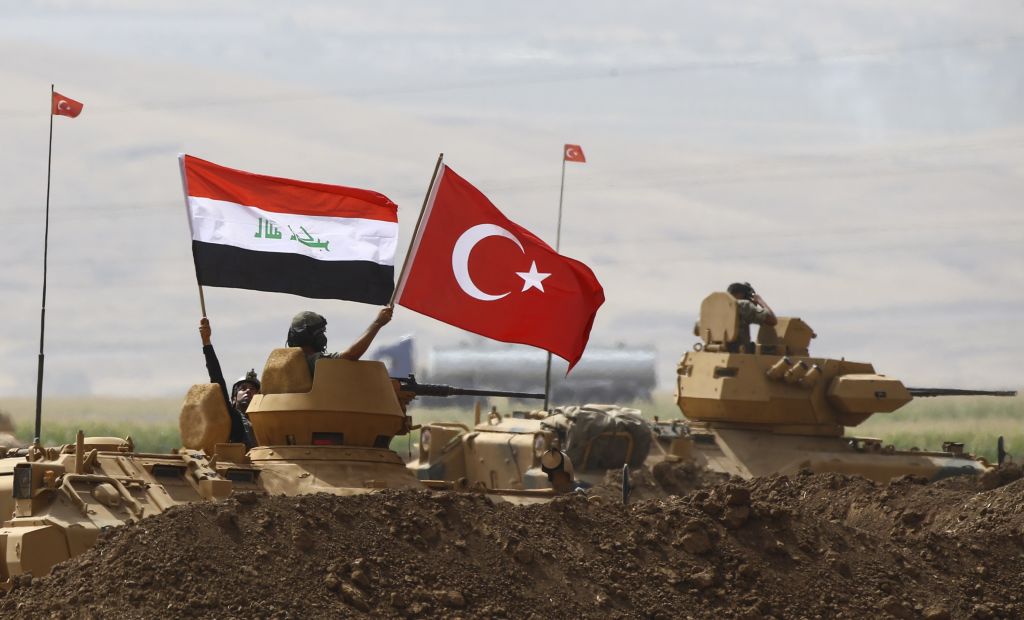
After 11 years of Turkish military presence, Ankara and Baghdad have agreed that Turkish troops will gradually withdraw from the Bashiqa-Zilkan camp in northern Iraq, though no firm timeline has been set. This announcement marks a notable step amid Turkey’s ongoing peace process with the Kurdistan Workers’ Party (PKK), which it has been fighting for more than 40 years in a conflict that has cost more than 40,000 lives. However, it manifestly does not signal a broader end to Turkey’s presence in Iraq: Ankara retains substantial interests in the country, particularly around oil and gas transit, and maintains numerous other military bases there. 4 Decades of Turkish Military Intervention in Iraq Turkey’s military footprint in Iraq traces back to 1984, when the PKK began its armed insurgency, using the mountains of northern Iraq as a refuge. Turkey responded by striking PKK positions across the border, establishing permanent bases in Iraq as the conflict wore on. Turkey then used its presence in northern Iraq to secure its border, aiming to prevent PKK fighters from crossing back into Turkish territory. Decades later, Turkey cited the fight against ISIS as its rationale for establishing a presence at Bashiqa in 2015. That deployment was condemned by the Iraqi parliament, which passed a resolution protesting it in October 2016. At its peak, Turkey stationed 500 to 1,000 soldiers at the base. Despite periodic promises from Ankara to leave, Baghdad repeatedly criticized its presence — at one point threatening to bring the matter before the UN Security Council. While Turkey is now withdrawing from Bashiqa, the key question of Turkey’s ongoing military presence in the rest of the country remains unresolved. Economic Concerns Fuel Withdrawal Turkey’s exit from Bashiqa isn’t just about security — it’s also about money. Bashiqa’s distance from the Turkish border may have made it costlier for Turkey to maintain than its other installations, which could explain why it was the easiest of more than 100 Turkish bases to trade away. And a March 2026 French court ruling left Turkey with no way to avoid paying Iraq’s federal government $1.47 billion in an arbitration case related to Kurdish oil, a dispute over Turkey’s unauthorized facilitation of Kurdish crude exports through the Iraq-Turkey pipeline to the Turkish port of Ceyhan. According to Iraqi and Turkish officials, the handover reflects progress Iraq has made in its own security measures. However, giving up a base it no longer needs operationally is a low-cost way for Ankara to rebuild the goodwill with Baghdad that it needs to resume oil exports and make up for that loss. That goodwill may also smooth the way toward creating the Iraq Development Road — a trade corridor from Iraq to Europe through Turkey. The withdrawal also comes amid two other major shifts. The PKK announced its dissolution in May 2025 and held a symbolic disarmament ceremony in July 2025. Separately, the United States is winding down its own decades-long military presence in Iraq. Together, these shifts suggest a broader realignment of foreign military presence in the country — not an isolated Turkish decision. U.S. Should Seek Clarity on Evolving Turkish Posture in Iraq Several questions merit congressional attention. As Washington finalizes troop withdrawals from Iraq and Syria, it will be important for Congress to clarify with the Department of Defense the role regional players like Turkey will take in counterterrorism operations moving forward. While the administration has emphasized burden sharing in the region, it is important for the United States to remain an active security partner in Iraq to counter Iranian proxies and thwart any reemergence of ISIS. The coming months will reveal whether the Bashiqa withdrawal was an isolated adjustment or the first domino in a larger Turkish drawdown, now that the PKK is laying down its weapons — and Washington should know which it is, and what it would mean for the security balance in northern Iraq, in advance. Helin Unal is a research fellow at the Foundation for Defense of Democracies (FDD). Sinan Ciddi is a senior fellow and director of the Turkey Program at FDD. For more analysis from Helin, Sinan, and FDD, please subscribe HERE. Follow Sinan on X @SinanCiddi. Follow FDD on X @FDD. FDD is a Washington, DC-based, nonpartisan research institute focusing on national security and foreign policy.
Turkey Maintains Extensive Presence in Iraq Despite Forthcoming Withdrawal From Key Base
Full Article
Original Source
Read the full article at Fdd →KhanList aggregates and links to publicly available news content. We do not host full articles from third-party sources. Always verify important information with original sources.