
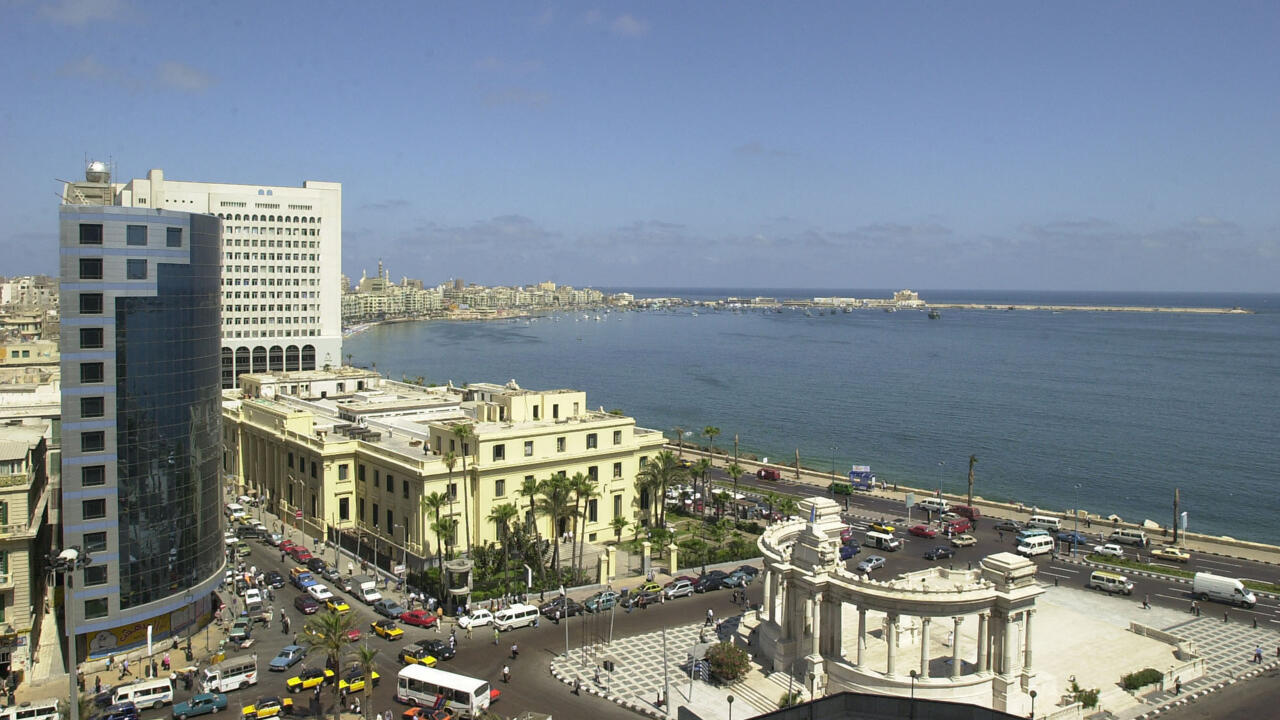
This week’s joint naval exercises between Turkey and Egypt in the eastern Mediterranean are the latest move in a burgeoning partnership, as Ankara intensifies its efforts to draw Cairo closer and loosen its bonds with Turkish rivals Greece, Cyprus and Israel. The "Sea of Friendship 2026" naval drills, held from 4-9 November off the coast of Alexandria, follow five years of rapprochement after nearly a decade of mistrust sparked by the 2013 ouster of Mohamed Morsi, a close ally of Turkish President Recep Tayyip Erdogan, by Egypt's President Abdel Fattah el-Sisi. It is the second year in a row that Turkey and Egypt have held the joint drills, after a 13-year break. “I think it's already a sign that the two countries are getting closer,” said Africa expert Elem Tepecikoglu of Ankara’s Social Sciences University. In her view, the naval exercises are part of an evolving partnership. “This normalisation process started five years ago in the diplomatic realm,” she explained. “And then we see cooperation in the security domain as well. So this is why I say I'm optimistic that Egypt might come closer to the Turkish side.” The strengthening alliance between Turkey and Egypt is stirring unease in Israel, at a time when Israeli-Turkish relations are already frayed by the war in Gaza and Ankara’s support for Hamas. “Obviously, Israel does not see this as necessarily positive, because of the heightened tensions between Israel and Turkey,” warned Turkey analyst Gallia Lindenstrauss of the Institute for National Security Studies at Tel Aviv University. She noted that Israel is growing ever more wary of Turkey’s expanding reach in the eastern Mediterranean. “There is concern that Turkey and Egypt can cooperate in ways that will squeeze Israel’s room to manoeuver, politically but also militarily.” Lindenstrauss said she does not see this as a likely scenario, affirming that the 1979 peace agreement between Israel and Egypt is “still very much in place, despite many geopolitical turnovers”. “But there was always a fear that the other countries surrounding it would unite and act against Israel,” the analyst added. Lindenstrauss believes Egypt’s strong ties with Turkey’s rivals, Greece and Cyprus, allay fears of Israeli encirclement. “It is very important that this relationship keeps going ahead because it is a source of stability in the eastern Mediterranean,” she said. Houthi war risks dragging Israel and Turkey into Horn of Africa standoff Turkish leverage Egypt, Greece, Cyprus and Israel are bound by a tightly knit strategic energy alliance centred on the Eastern Mediterranean Gas Forum, a regional organisation formed in 2020 that has its headquarters in Cairo. Just last month, they stood united in condemning the Libyan parliament's ratification of a maritime deal with Turkey that encroached on Greek and Egyptian waters. Still, Jalel Harchaoui, a regional expert at the Royal United Services Institute for Defence and Security Studies, a London-based think tank, observes that Turkey and Egypt are forging ever-closer collaboration on issues ranging from Libya to the Sudanese civil war to the Horn of Africa. Harchaoui suggests this growing cooperation is steadily boosting Ankara’s leverage over Cairo. “I think observers should ask, can Egypt afford to do without Turkey? And the answer is probably no, and Turkey probably is aware of it,” he said. Even so, Harchaoui doubts Cairo is ready to pivot fully toward Ankara. “If [Egypt] switches 180 degrees, it would be a disaster for the other side. I'm talking about Greece and Cyprus and Israel. So you could also ask yourself, can Egypt afford to anger its traditional friends?” Libya-Turkey maritime deal stokes tensions in eastern Mediterranean Egypt's balancing act Ankara is stepping up its diplomatic courtship of Cairo, hoping to lure Egypt away from its longstanding partners. But Turkish ambitions stumbled when Egypt declined to join the Mecca Defence Alliance with Turkey, Saudi Arabia and Pakistan in August. Analyst Lindenstrauss sees this as a clear sign of the boundaries in Turkish-Egyptian ties. “Egypt has already moved closer to Turkey than was imaginable a few years ago,” she said. “However, at the end of the day, there are limits to how much it can accept greater Turkish influence. I think Turkey pretty much reached where Egypt is willing to agree to, and it will not give Turkey concessions in the eastern Mediterranean that will endanger its relationship with Greece and Cyprus, or its peace agreement with Israel.” Lindenstrauss believes that despite diplomatic tensions with Israel over the war in Gaza, it still remains in Egypt’s interests to maintain ties with all sides. “Because of Egypt's importance in the region, I think it can definitely go ahead with this balancing act. It gives it all the gains and the risk is relatively low compared to having Egypt choose sides,” she added. Ankara stands ready to ramp up its campaign to win over Cairo as the battle for influence in the eastern Mediterranean intensifies. In the unfolding rivalry between between Turkey on one hand and Greece, Cyprus and Israel on the other, Egypt is emerging as the pivotal player.
Turkey courts Egypt to tip the scales in eastern Mediterranean power game
Full Article
Original Source
Read the full article at Rfi →KhanList aggregates and links to publicly available news content. We do not host full articles from third-party sources. Always verify important information with original sources.