
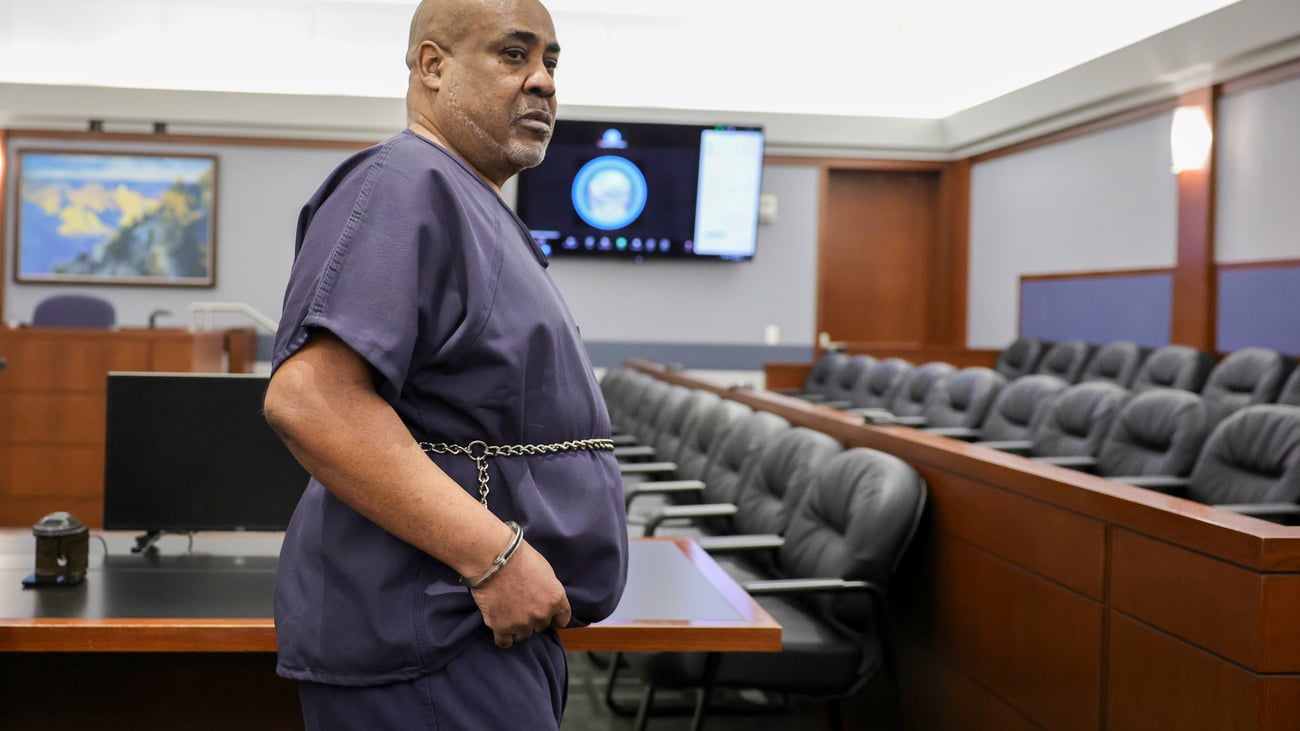
LAS VEGAS (CN) — Duane “Keffe D” Davis, facing a murder charge in the 1996 death of Tupac Shakur, didn’t fire the shots that killed the rapper.Instead, Davis’ anger over Shakur’s involvement in the beating of his nephew led him to acquire a gun, encounter Shakur in Las Vegas and hand the firearm to the man who would fire the fatal shots, Chief Deputy District Attorney Binu Palal said Monday.Delivering his opening statement on the first day of testimony, Palal said jurors would see that anger toward Shakur in a handful of statements Davis gave over the past three decades.“My nephew never jumped on him,” Davis, 63, said in a recording played to jurors. “He jumped on my nephew.”“Duane Davis knew that in his world, that required a response,” Palal said. “And now, nearly 30 years later, we’re finally going to ask you to hold Duane Davis accountable.”Representing Davis, defense attorney Michael Sanft told jurors his client was known to “bullshit.” Prosecutors had almost 30 years to charge Davis with a crime and waited until 2023.Additionally, prosecutors would call witnesses with criminal histories who would provide unreliable statements.“At the end of the day, there’s no actual facts,” Sanft added.The attorneys’ arguments set the stage for the high-profile Las Vegas trial expected to last into September. Palal said some people considered Shakur an icon and a highly successful musician who’d also appeared in movies.Palal detailed the law enforcement investigation and Davis’ multiple public statements over the years to draw a timeline for jurors.Davis had risen high in the South Side Compton Crips gang in Los Angeles. That gang had a rivalry with Mob Piru that escalated in 1996 when Davis’ nephew, Orlando Anderson, pulled a Death Row Records chain from a man affiliated with Mob Piru, Palal said.That man — Trevon Lane — and Anderson would encounter each other again on Sept. 7, 1996, in Las Vegas on the day Shakur was shot, the prosecutor added.Suge Knight, the co-founder and former CEO of Death Row Records who would employ Mob Piru members as security, and Shakur and Lane were at the MGM Grand for a Mike Tyson fight. Anderson also was present, and a fight broke out, Palal said.Knight, Shakur and Lane then left. Police responded and questioned Anderson, who opted against pressing charges or seeking medical attention, he added.Davis, who Palal said was in Las Vegas at the time, grew upset about his nephew’s beating. He sought retaliation, getting a gun from a man he knew and traveling to Club 662 with Anderson and two other men, Palal said.They planned to confront the other men at the club, but they never arrived. The group opted to buy liquor and enjoy the Las Vegas Strip, but en route, they spotted Knight and Shakur’s vehicle.Davis has said he would have fired the gun, but he was on the wrong side of the vehicle. He instead handed the gun to the backseat, where Anderson shot into Shakur’s vehicle, Palal said.Anderson denied involvement in the fatal shooting. He died in a 1998 shooting in Compton, California.Garry Dale, a former Las Vegas Metropolitan Police Department officer, testified Monday that he rode with Shakur in an ambulance to the hospital.“He was still talking, and I was trying to convince him to tell me the name of his assailants,” Dale said. “He said, ‘No, we’ll take care of it.’”Shakur died six days later.Davis, over the following decades, gave multiple statements about his involvement in Shakur’s shooting.In 1998, Davis initially denied responsibility when talking to the FBI. The following year, he told the FBI he was in Las Vegas, angry about his nephew’s beating, but had no role in the shooting, Palal said.Then, in a secretly recorded conversation with authorities in 2008, Davis said he had a role in the shooting. Davis made similar statements and released a book with information about the shooting over the next several years, the prosecutor added.“Duane Davis says, ‘All I want to do now is tell the truth,’” Palal said.Making his own opening statement, Sanft told jurors they’d have to parse fact from fiction.“What facts do they have after 30 years?” Davis’ attorney asked, questioning whether his client was in Las Vegas when Shakur was shot.Sanft characterized law enforcement’s investigation into the shooting as shoddy. Police had to keep the case file under lock and key for fear other officers in the department would access it. The last of three detectives assigned the case wanted to close it, though a search warrant revealed nothing of value. That detective then read from Davis’ own book before a grand jury.“He treats that book like it’s fact,” Sanft added.The defense attorney argued prosecutors have no corroborating evidence linking Davis to the shooting. His client, known to embellish stories, merely claiming he was present at the shooting, doesn’t warrant a murder accusation.Additionally, prosecutors can’t link Davis to the weapon used in Shakur’s shooting, Sanft said.“Ask yourself, what facts do they have to even put Keffe D in a car in Vegas on Sept. 7, 1996?” he asked, adding: “There’s no facts to that matter.”Categories / Arts, Criminal, MediaSubscribe to our free newslettersOur weekly newsletter Closing Arguments offers the latest about ongoing trials, major litigation and rulings in courthouses around the U.S. and the world, while the monthly Under the Lights dishes the legal dirt from Hollywood, sports, Big Tech and the arts.Additional Reads
Tupac murder suspect wanted revenge, prosecutors say at trial kickoff
Full Article
Original Source
Read the full article at Courthousenews →KhanList aggregates and links to publicly available news content. We do not host full articles from third-party sources. Always verify important information with original sources.