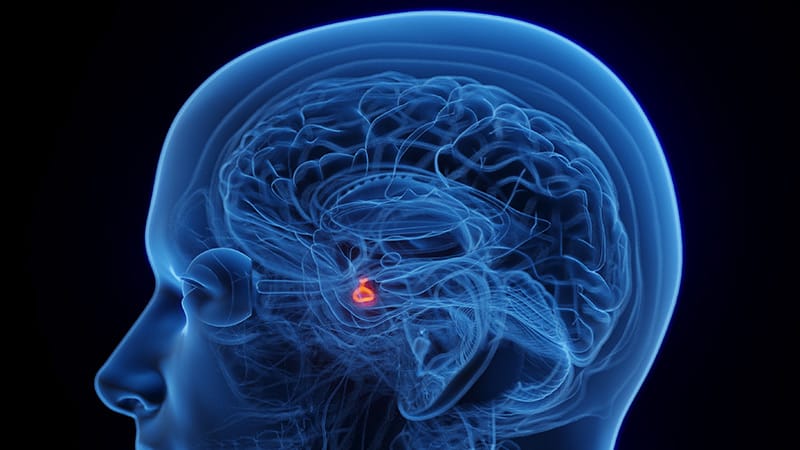
TOPLINEApproximately one in six patients developed new or worsening hormonal deficits following transsphenoidal surgery for non-functioning pituitary adenomas (NFPAs), with larger tumor volume emerging as the most consistent predictor of postoperative endocrine deterioration.METHODOLOGYA systematic review and meta-analysis examined predictors of new postoperative endocrine deterioration in adults undergoing transsphenoidal surgery for NFPAs, following PRISMA guidelines.Analysis included 11 observational studies (9 retrospective cohort studies and 2 prospective cohort studies) comprising 2350 patients, published between 2015 and 2022; 7 studies reported the proportion of patients who developed new or worsening postoperative pituitary deficits and were included in the pooled proportion meta-analysis.Studies were conducted across multiple countries, including Spain, Italy, France, Brazil, the United States, the United Kingdom, and China, with most centers using endoscopic transsphenoidal approaches.Predictors for the development of worsening pituitary function included patient-related factors (age, sex, BMI, comorbidities, preoperative visual impairment, and hyperprolactinemia), tumor-related factors (volume, diameter, cavernous sinus invasion, apoplexy, consistency, pituitary gland and stalk visibility), and surgical factors (extent of resection, surgeon experience, surgical approach, surgical goal, previous surgery, and postoperative cerebrospinal fluid leak).TAKEAWAYAcross the pooled cohort, roughly one in six patients developed a new postoperative hormonal deficit, with an overall pooled rate of 16% (95% CI, 13%-20%).Patients who developed new or worsened postoperative endocrine deficits had significantly larger baseline tumor volumes, with a mean difference of 4.3 mL (P = .02; 2 studies).Gross total resection was associated with reduced odds of developing new endocrine deficits compared with subtotal resection (odds ratio, 0.49; P = .04; 3 studies).Postoperative cerebrospinal fluid leak was significantly associated with new pituitary deficits, occurring in 2.8% of patients with preserved function vs 18.2% of those with new deficits (P = .028; 1 study).IN PRACTICE"Larger tumour volume was the most consistent predictor of post-operative endocrine deterioration, suggesting that progressive volumetric growth on serial imaging may represent a window of increasing endocrine risk. In this context, surgical intervention prior to the development of significant tumour enlargement or mass effect may be reasonable in selected patients with demonstrated tumour growth, with the aim of limiting exposure to higher tumour volumes and reducing the risk of postoperative hormonal compromise," wrote the authors of the study.SOURCEThe study was led by Daniel Ameen, Monash Health in Clayton, Melbourne, Australia. It was published online on August 1 in Endocrine.LIMITATIONSHeterogeneity in how endocrine outcomes were defined and reported across studies limited comparability and precluded meta-analysis for several predictors. Most included studies were retrospective with inconsistent multivariable adjustment. Endocrine assessment methods varied across studies.DISCLOSURESThis study did not receive any funding. The authors reported no relevant conflicts of interest.This article was created using several editorial tools, including AI, as part of the process. Human editors reviewed this content before publication.
Tumor Volume Tied to Hormonal Decline Post-Pituitary Surgery
Full Article
Original Source
Read the full article at Medscape →KhanList aggregates and links to publicly available news content. We do not host full articles from third-party sources. Always verify important information with original sources.