
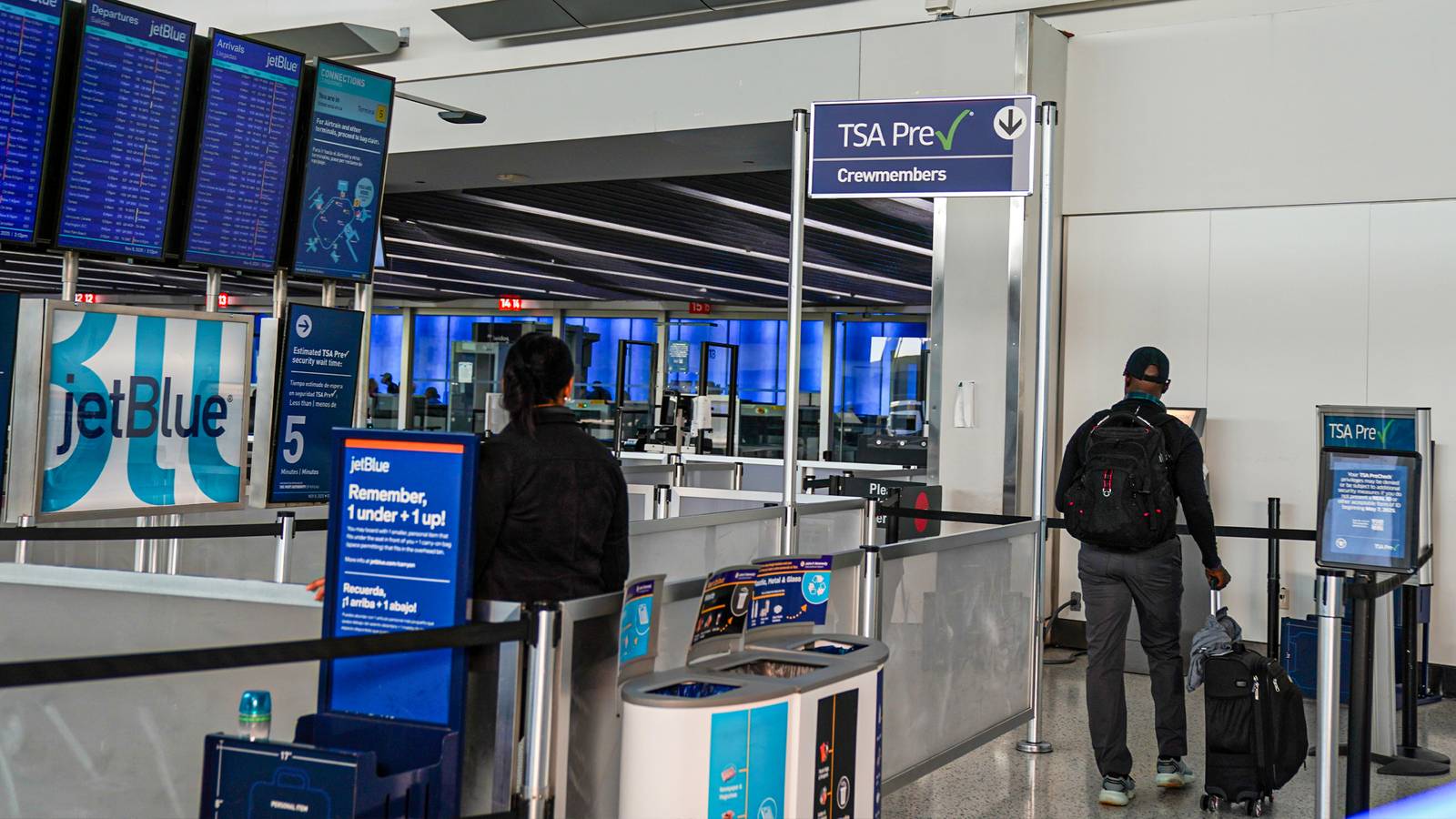
Published Oct 28, 2026, 10:00 AM EDT Jack comes to Simple Flying with a lifelong interest in all things aviation. He holds a degree in Aerospace Engineering from Georgia Tech, and is a certified private and remote pilot. Beyond these experiences, Jack previously worked for a corporate flight department where he gained first-hand experience in the world of business aviation. Currently, Jack works in the professional services industry and continues to build his flight hours outside of work. Airport security can turn a routine journey into a frustrating wait, particularly during holiday periods, early-morning departures, and busy summer weekends. TSA precheck and CLEAR+ offer two ways to reduce that inconvenience, but they work differently. TSA PreCheck provides access to expedited physical screening, while CLEAR+ uses biometric identity verification to help members bypass the standard identification-check line. Neither program eliminates every security step, and their value depends on the airports travelers use, how frequently they fly, and which parts of the process cause the greatest delays. For most travelers, TSA PreCheck is the better first purchase because it costs roughly $77 to $85 for five years, compared with $219 annually for CLEAR+. However, CLEAR+ can be worthwhile for frequent flyers whose home airports have long identity-verification queues. Travelers who qualify for CLEAR's combined enrollment offer can obtain both services for $219 initially, making the decision less straightforward than the headline prices suggest. The best choice in 2026 is therefore not simply the cheapest membership, but the option that saves meaningful time across a traveler's actual itinerary. Identity vs. Inspection: How Each Program Actually Works Credit: Elliott Cowand Jr | Shutterstock, Simple Flying TSA PreCheck is a United States government trusted-traveler program operated by the Transportation Security Administration (TSA). Approved members receive expedited screening at participating airport checkpoints when their boarding passes display the PreCheck indicator. They generally do not need to remove their shoes, belts, light jackets, laptops, or compliant small-liquid bags. The screening itself still takes place, and TSA retains the authority to subject any passenger to additional inspection. CLEAR+ addresses the identity-verification stage before physical screening. Members use biometric technology, including facial recognition, at dedicated CLEAR lanes to verify their identity rather than proceeding through the usual document-check process. They must still undergo TSA screening after that verification. CLEAR+ therefore does not replace PreCheck, and it does not independently provide the same relaxed screening procedures. This difference determines how each membership affects the journey. PreCheck can reduce the preparation and handling required at the checkpoint, while CLEAR+ can help members avoid a queue to have their travel documents checked. When both services are available and functioning, a traveler can use CLEAR+ for identity verification and then enter the PreCheck screening process. That combination addresses two separate stages, potentially saving more time than either membership alone. Neither option guarantees a fast passage. A short standard queue can make CLEAR+ unnecessary, while a closed PreCheck lane can reduce the benefit of enrollment. Security staffing, checkpoint layouts, passenger volume, and additional screening requirements all influence the outcome. TSA PreCheck Offers The Stronger Value For Most Travelers Credit: Adam McCullough | Shutterstock TSA PreCheck's five-year membership makes its cost comparatively modest. Depending on the approved enrollment provider and applicable pricing, new applicants generally pay approximately $76.75 to $85. At the upper end, that works out to $17 per year, or less than $1.42 per month. Even someone who takes only a handful of flights annually can benefit from avoiding repeated shoe removal, unpacking, and repacking at participating checkpoints. PreCheck is available at approximately 200 US airports and works with participating airlines. Its broad network makes it useful for people who travel from different cities rather than repeatedly using a single major hub. The benefit also follows the eligible passenger rather than being restricted to one home airport, provided the airport and airline support the program and the traveler receives the appropriate boarding-pass designation. The financial comparison is substantial. Five years of PreCheck costs $76.75 for the entire membership period, whereas five annual CLEAR+ renewals at $219 would total $1,095 before discounts or credits. At the upper PreCheck price of $85, the five-year cost is still only a small fraction of CLEAR+'s five-year expense. CLEAR+ must therefore save considerably more time, or provide additional value, to justify its recurring charge. Feature TSA PreCheck CLEAR+ Primary benefit Expedited physical security screening Faster identity verification Typical membership term Five years One year Published price example $79.75 for five years through IDEMIA $219 per year at the standard published rate Requires separate TSA PreCheck approval Yes, for PreCheck benefits No, but CLEAR+ alone does not provide PreCheck screening Best suited to Travelers seeking long-term value Frequent travelers prioritizing identity-check queues PreCheck is especially attractive to families and leisure travelers who fly a few times a year. Its lower cost leaves room in the travel budget for baggage, seat selection, or other expenses, while the relaxed screening procedures can make the airport experience less cumbersome. Children traveling with an enrolled parent or guardian may also qualify to use PreCheck under TSA's rules, depending on their age and reservation circumstances. The program's limitations are manageable for most passengers. Enrollment requires an application and security assessment, and membership does not guarantee that every flight will receive expedited screening. Nevertheless, its long validity period, broad airport coverage, and comparatively low price make it the most sensible starting point for travelers who have not enrolled in either service. CLEAR+ Can Be Valuable When Identity Lines Are The Bottleneck Credit: Port Authority of New York and New Jersey CLEAR+ costs $219 per year at its standard rate and operates at 62 airports, according to the company's published network information. Its narrower coverage and annual fee make it a more specialized purchase than PreCheck. The strongest case for paying for it arises when a traveler repeatedly departs from an airport where the regular document-check line is slow and CLEAR lanes are available at the relevant terminal and checkpoint. At a congested airport, the time spent verifying identification can be a substantial part of the security wait. CLEAR+ lets members move through that stage using biometric verification, potentially reaching the physical screening queue sooner. However, its advantage depends on the length of the CLEAR line, the availability of staff and equipment, and the queue that members encounter after identity verification. If the regular ID line is short, the paid shortcut may save little time. CLEAR+ alone still leads to standard physical screening, where travelers may need to remove shoes, separate electronics, or follow other instructions. PreCheck alone provides easier screening but does not necessarily let members bypass a long identity-check queue. Using both can address both sources of delay, although the total time saved varies by airport and time of day. CLEAR+ is most persuasive for people who travel frequently through airports with established CLEAR operations, particularly during busy periods. A traveler taking several round trips each month may value predictable access more than someone flying twice a year. The calculation should nevertheless be based on actual usage, not the assumption that every airport visit will be faster. Bundling Changes The Financial Calculation Credit: Elliott Cowand Jr | Shutterstock CLEAR offers a combined enrollment promotion for customers who apply for TSA PreCheck through its authorized enrollment process. According to CLEAR's published terms, an eligible new applicant can pay $85 for five years of PreCheck and receive a promotional offer for the first year of CLEAR+ at $134, bringing the combined initial cost to $219. Online renewals may qualify for a different breakdown, with $73 for PreCheck and $146 for the first year of CLEAR+. The promotion has conditions, including use of the designated enrollment process and promotional code. This arrangement makes the first year of both services cost the same as a standard annual CLEAR+ membership. For someone already considering CLEAR+, obtaining PreCheck through the offer can be a sensible way to add the government screening benefit without increasing the initial total. However, the offer should not be interpreted as making both programs free or locking in the combined price indefinitely. The longer-term expense remains central. CLEAR+ renews annually at its standard price unless the member qualifies for a discount, credit, or new promotion. PreCheck remains valid for five years, so the two memberships follow different renewal cycles. After the initial year, a traveler must decide whether CLEAR+ continues to save enough time to justify another annual payment. The value should be reassessed rather than assumed. Some eligible credit cards and airline loyalty programs offer CLEAR+ statement credits or reduced membership pricing. Those benefits can lower the effective cost, but cardholders should check current terms, eligibility, and annual fees before treating a credit as savings. A credit is most useful when the card is already worth holding for other reasons, not when it encourages someone to pay for an otherwise unnecessary product. The practical lesson is to compare the amount actually paid, not just the advertised rates. For travelers who want both services, the bundle can be attractive during the first year. For those who rarely encounter long security lines, paying for PreCheck alone and avoiding CLEAR+'s annual renewal may deliver a better long-term return. Availability, Disruptions, And Privacy Deserve Attention Credit: Elliott Cowand Jr | Shutterstock Security shortcuts depend on airport operations, so membership does not guarantee access during every disruption. In March 2026, a partial federal government shutdown contributed to severe TSA staffing shortages. Houston's George Bush Intercontinental Airport (IAH) temporarily suspended both TSA PreCheck and CLEAR+ at some checkpoints, illustrating that a paid identity-verification service cannot function independently of the wider screening operation. Houston Airports later reported that availability could change with staffing conditions. That episode does not mean either service is routinely unreliable, but shows that both remain dependent on airport infrastructure, staffing, and operating decisions beyond an individual member's control. Privacy is another consideration, especially for CLEAR+. The service relies on biometric identity verification, so prospective members should review the company's current privacy disclosures and understand how their information is collected, stored, used, and protected. TSA PreCheck also involves submitting personal information for eligibility screening, but it does not require using CLEAR's biometric identity service. The decision may therefore involve not only price and convenience, but also individual comfort with the technology. Neither membership replaces the need for an acceptable travel document. Travelers must still comply with identification requirements, follow officer instructions, and allow time for baggage screening and any additional checks. People with accessibility needs or specific medical circumstances should consult the TSA's guidance rather than assume that an expedited lane will eliminate every screening step. A final practical point is that CLEAR+ and PreCheck coverage should be checked against the airports and terminals actually used. A membership that is valuable at a home airport may offer little benefit on a trip departing from a smaller airport without CLEAR lanes. Buy For Your Airport Habits, Not The Promise Of A Shortcut Credit: Transportation Security Administration, Simple Flying For most travelers in 2026, TSA PreCheck is the strongest value because it is inexpensive, lasts five years, and improves the physical screening experience across a broad network of participating airports. CLEAR+ is better viewed as an optional layer for frequent flyers whose usual airports have persistent identity-check queues. The combined enrollment offer makes both services worth considering, but the annual renewal cost should remain part of the decision. Looking ahead, the value of these programs will depend increasingly on how airports manage biometric technology, staffing, and checkpoint design. If identity verification becomes faster across standard lanes, CLEAR+'s incremental benefit could narrow. If airport congestion continues to concentrate at document checks, the service may remain useful for frequent travelers. PreCheck's longer-term appeal will likewise depend on its availability and how consistently expedited screening is delivered. The smartest approach is to begin with the low-cost benefit, then add the more expensive one only when repeated airport experience justifies it. Check the airports you use most, compare real queue conditions, and revisit the decision when prices or travel habits change. The best security shortcut is the one that reliably saves time on your own journeys, not necessarily the one with the most prominent marketing.
TSA PreCheck Vs. Clear: Which Airport Security Shortcut Is Worth Paying For In 2026?
Full Article
Original Source
Read the full article at Simpleflying →KhanList aggregates and links to publicly available news content. We do not host full articles from third-party sources. Always verify important information with original sources.